Department of Biochemistry and Molecular Biology, Shahjalal University of Science and Technology, Sylhet, 3114, Bangladesh.
BMC Public Health. 2022 Sep 8;22(1):1707. doi: 10.1186/s12889-022-14087-8.
Obesity and hypertension are global health concerns. Both are linked with increased risks of all-cause and cardiovascular mortality. Several early studies reported the prevalence of obesity and hypertension in Bangladeshi adults, but the associated factors in this country population are not clear yet. We aimed to estimate the prevalence and related risk factors of general and abdominal obesity and hypertension in rural and urban adults in Bangladesh.
In this cross-sectional study, data (n = 1410) was collected on rural (n = 626) and urban (n = 784) adults from eight divisional regions of Bangladesh. Both anthropometric and socio-demographic measurements were recorded in a standardized questionnaire form. General and abdominal obesity were defined based on WHO proposed cut-off values and hypertension was defined by SBP ≥ 140 mmHg and/or, DBP ≥ 90 mmHg and/or, intake of anti-hypertensive drugs at the time of data collection. Multivariable logistic regression analyses were performed to assess the relationship of general and abdominal obesity and hypertension with various factors.
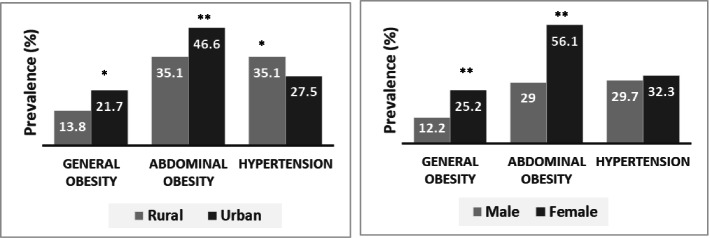
The overall prevalence of general obesity, abdominal obesity and hypertension was 18.2, 41.9 and 30.9%, respectively. The women had a higher prevalence of general obesity (25.2%), abdominal obesity (56.1%) and hypertension (32.3%) compared to the men (12.2, 29.0, and 29.7%, respectively). The prevalence of both general and abdominal obesity was higher in urban participants (21.7 and 46.6%, respectively) than in the rural participants (13.8 and 35.1%, respectively), whereas, the rural participants had a higher prevalence of hypertension (35.1%) compared to the urban participants (27.5%). In geographical region comparison, the prevalence of general and abdominal obesity and hypertension were higher in participants enrolled from Dhaka (30.8%), Khulna (63.6%) and Mymensingh (43.5%) regions, respectively compared to other regions. In regression analysis, increased age, place of residence and less physical activity were positively associated with the increased risk of both types of obesity and hypertension. The analysis also showed a significant positive association between high BMI and an increased risk of hypertension.
This study shows a high prevalence of obesity and hypertension in rural and urban adults. Increased age, inadequate physical activity and place of residence were significant determinants of general and abdominal obesity and hypertension. A comprehensive intervention program focusing on modifiable risk factors such as lifestyles and food habits is needed to increase awareness and prevent the burden of obesity and hypertension in the Bangladeshi population.
肥胖和高血压是全球健康关注的问题。两者都与全因和心血管死亡率的增加有关。一些早期的研究报告了孟加拉国成年人肥胖和高血压的患病率,但该国人群的相关因素尚不清楚。我们旨在估计孟加拉国农村和城市成年人中普通和腹部肥胖以及高血压的患病率和相关危险因素。
在这项横断面研究中,数据(n=1410)来自孟加拉国八个行政区的农村(n=626)和城市(n=784)成年人。在标准化问卷表中记录了人体测量和社会人口统计学测量。根据世界卫生组织提出的临界值定义了普通和腹部肥胖,高血压定义为收缩压≥140mmHg 和/或舒张压≥90mmHg 和/或在数据收集时服用抗高血压药物。进行多变量逻辑回归分析,以评估普通和腹部肥胖与高血压与各种因素的关系。
普通肥胖、腹部肥胖和高血压的总患病率分别为 18.2%、41.9%和 30.9%。与男性(分别为 12.2%、29.0%和 29.7%)相比,女性的普通肥胖(25.2%)、腹部肥胖(56.1%)和高血压(32.3%)患病率更高。与农村参与者(分别为 13.8%和 35.1%)相比,城市参与者的普通和腹部肥胖患病率更高(分别为 21.7%和 46.6%),而农村参与者的高血压患病率更高(35.1%)与城市参与者(27.5%)相比。在地理区域比较中,来自达卡(30.8%)、库尔纳(63.6%)和迈门辛格(43.5%)地区的参与者的普通和腹部肥胖以及高血压的患病率均高于其他地区。在回归分析中,年龄增长、居住地和较少的身体活动与两种类型的肥胖和高血压风险增加呈正相关。分析还表明,较高的 BMI 与高血压风险增加之间存在显著的正相关。
本研究显示农村和城市成年人肥胖和高血压的患病率较高。年龄增长、身体活动不足和居住地是普通和腹部肥胖以及高血压的重要决定因素。需要一个以生活方式和饮食习惯等可改变的危险因素为重点的综合干预计划,以提高认识并防止肥胖和高血压在孟加拉国人口中的负担。