Department of Ophthalmology, Nippon Medical School, Bunkyo-ku, Tokyo 113-8603, Japan.
Department of Analytic Human Pathology, Nippon Medical School, Bunkyo-ku, Tokyo 113-8603, Japan.
Int J Mol Sci. 2022 Aug 29;23(17):9774. doi: 10.3390/ijms23179774.
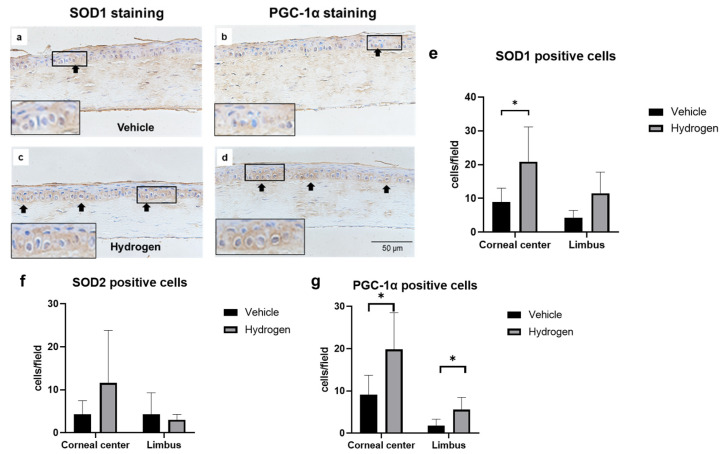
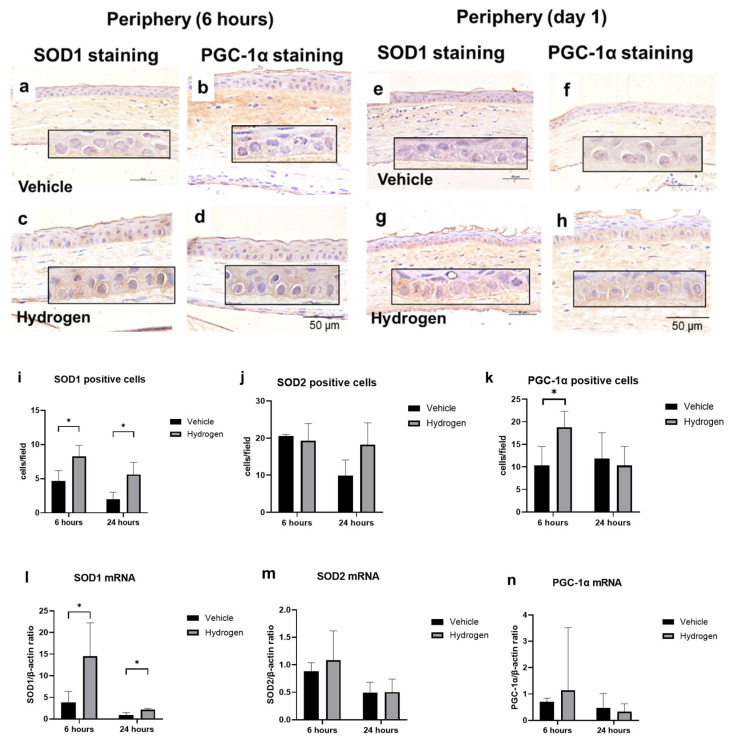
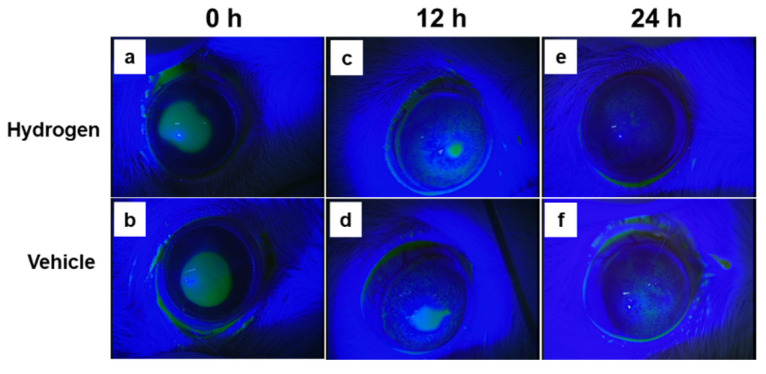
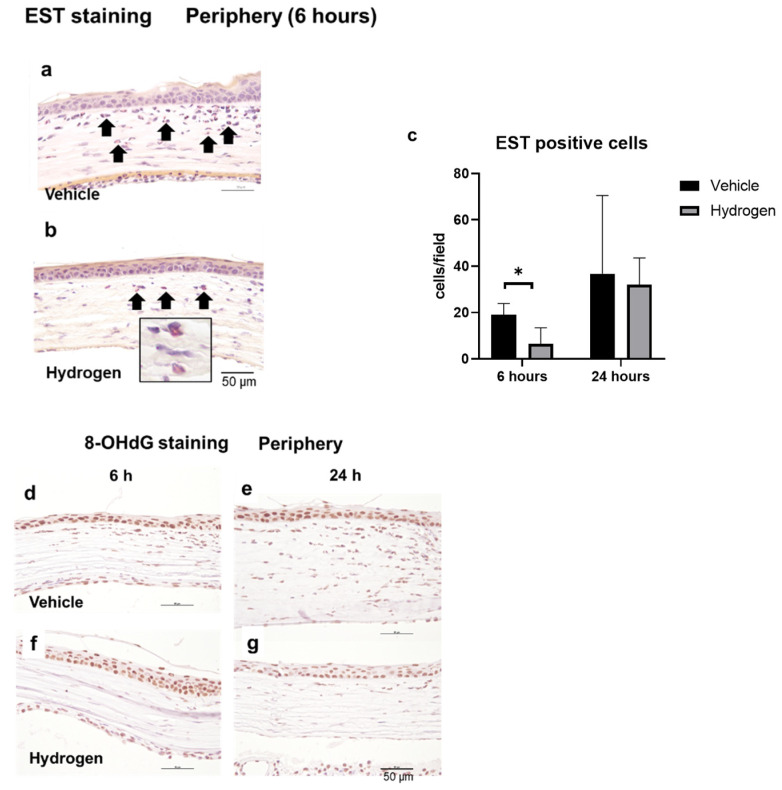
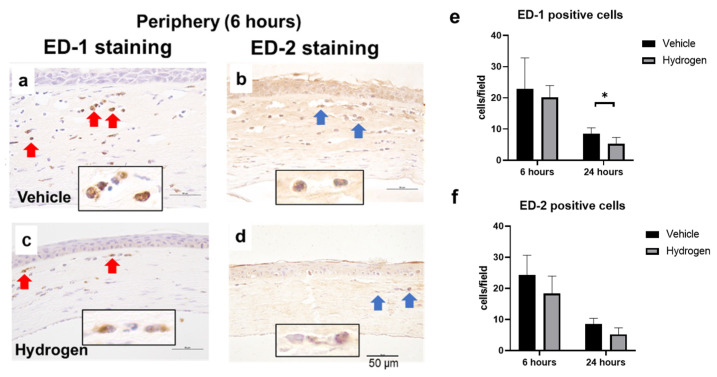
Many studies have demonstrated the therapeutic effects of hydrogen in pathological conditions such as inflammation; however, little is known about its prophylactic effects. The purpose of this study is to investigate the prophylactic effects of hydrogen-rich water instillation in a rat corneal alkali burn model. Hydrogen-rich water (hydrogen group) or physiological saline (vehicle group) was instilled continuously to the normal rat cornea for 5 min. At 6 h after instillation, the cornea was exposed to alkali. The area of corneal epithelial defect (CED) was measured every 6 h until 24 h after alkali exposure. In addition, at 6 and 24 h after injury, histological and immunohistochemical observations were made and real-time reverse transcription polymerase chain reaction (RT-PCR) was performed to investigate superoxide dismutase enzyme (SOD)1, SOD2, and peroxisome proliferator-activated receptor gamma coactivator 1-alpha (PGC-1α) mRNA expression. CED at 12 h and the number of inflammatory infiltrating cells at 6 h after injury were significantly smaller in the hydrogen group than the vehicle group. Furthermore, SOD1 expression was significantly higher in the hydrogen group than the vehicle group at both 6 and 24 h, and the number of PGC-1α-positive cells was significantly larger in the hydrogen group than the vehicle group at 6 h after injury. In this model, prophylactic instillation of hydrogen-rich water suppressed alkali burn-induced inflammation, likely by upregulating expression of antioxidants such as SOD1 and PGC-1α. Hydrogen has not only therapeutic potential but also prophylactic effects that may suppress corneal scarring following injury and promote wound healing.
许多研究已经证明了氢气在炎症等病理条件下的治疗作用;然而,其预防作用知之甚少。本研究旨在探讨富氢水在大鼠角膜碱烧伤模型中的预防作用。富氢水(氢气组)或生理盐水(载体组)连续滴注正常大鼠角膜 5 分钟。滴注后 6 小时,角膜暴露于碱中。在碱暴露后 6 小时至 24 小时,每 6 小时测量角膜上皮缺损(CED)的面积。此外,在损伤后 6 小时和 24 小时进行组织学和免疫组织化学观察,并进行实时逆转录聚合酶链反应(RT-PCR),以研究超氧化物歧化酶 1(SOD1)、SOD2 和过氧化物酶体增殖物激活受体γ共激活因子 1-α(PGC-1α)mRNA 表达。氢气组在 12 小时时的 CED 和损伤后 6 小时时的炎症浸润细胞数量明显小于载体组。此外,氢气组在损伤后 6 小时和 24 小时时 SOD1 表达明显高于载体组,且氢气组在损伤后 6 小时时 PGC-1α 阳性细胞数量明显多于载体组。在该模型中,预防性滴注富氢水抑制了碱烧伤诱导的炎症,可能是通过上调 SOD1 和 PGC-1α 等抗氧化剂的表达。氢气不仅具有治疗潜力,而且具有预防作用,可能抑制损伤后角膜瘢痕形成并促进伤口愈合。