National Health Commission Key Laboratory of Reproductive Health, Institute of Child and Adolescent Health, School of Public Health, Peking University, Beijing 100191, China.
Department of Epidemiology, School of Public Health, Cheeloo College of Medicine, Shandong University, Jinan 250012, China.
Nutrients. 2022 Aug 29;14(17):3551. doi: 10.3390/nu14173551.
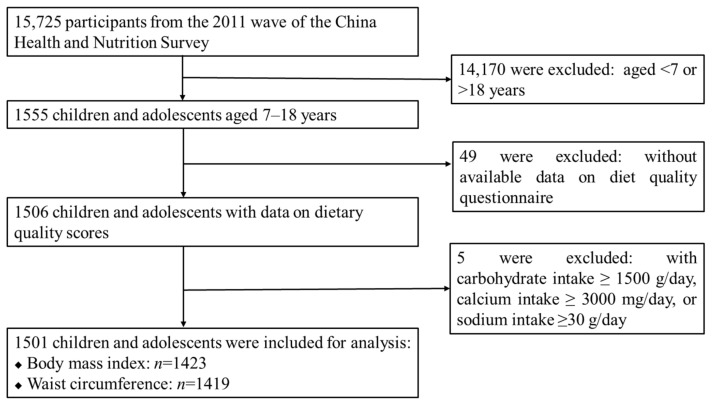
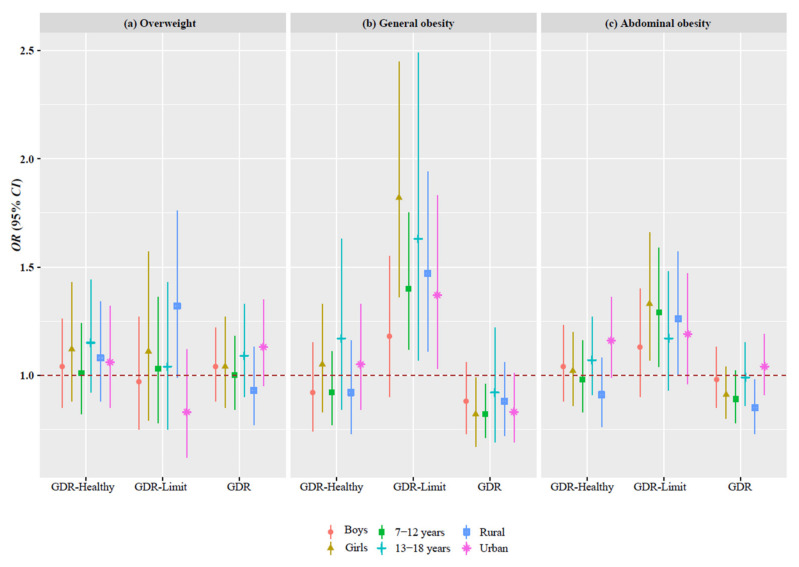
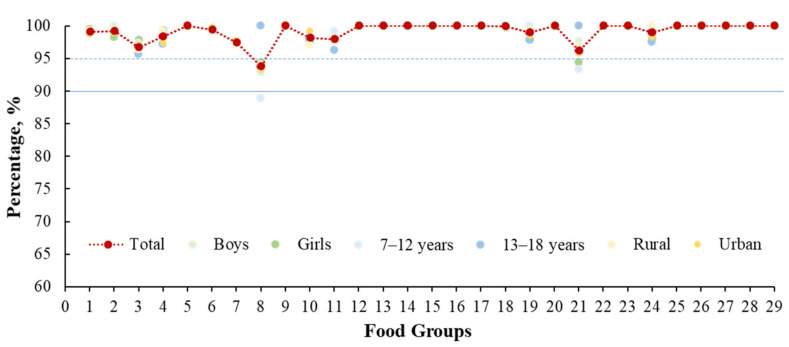
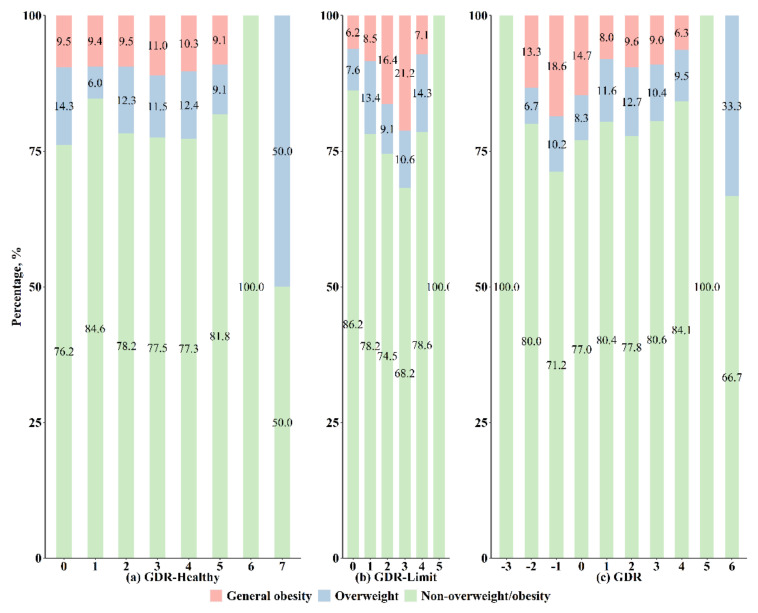
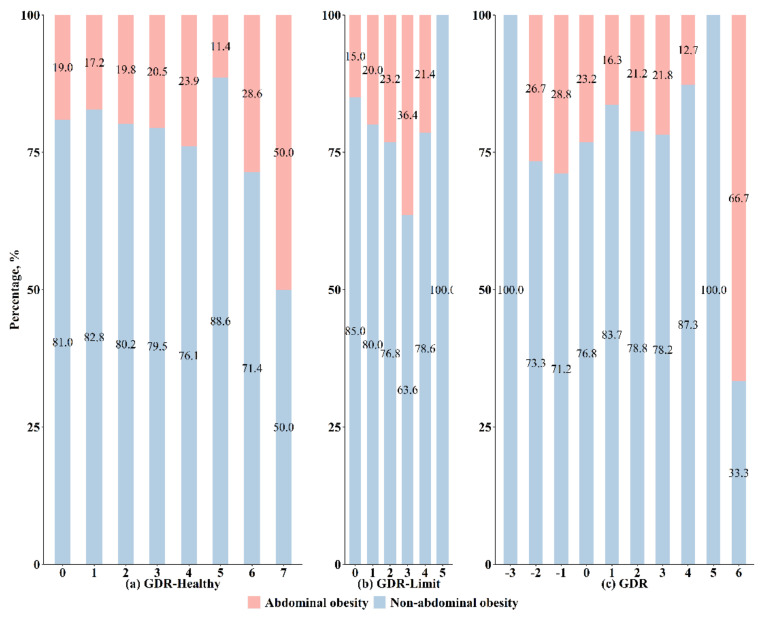
The low-burden Diet Quality Questionnaire (DQQ) has been developed to rapidly assess diet quality globally. Poor diet is often correlated with body size, and certain dietary risk factors can result in overweight and obesity. We aimed to examine the extent to which the DQQ captured food group consumption among children and adolescents in China, and to understand the association of several new indicators of diet quality scores derived from the DQQ with overweight and obesity, using the 2011 wave of the China Health and Nutrition Survey. The DQQ questions are constructed using sentinel foods-that is, food items that are intended to capture a large proportion of the population consuming the food groups. The overall Global Dietary Recommendations (GDR) score, GDR-Healthy score, and GDR-Limit score are novel indicators of diet quality that reflect dietary risk factors for non-communicable diseases derived from the DQQ questions. Multivariable logistic regression analysis was used to examine the associations of the GDR scores with overweight and obesity in the sample. The DQQ questions captured over 95% of children who consumed the food groups. Additionally, we found that the GDR-Limit score was positively associated with general obesity (odds ratio (OR) = 1.43, 95% confidence interval (CI): 1.17-1.74) and abdominal obesity (OR = 1.22, 95% CI: 1.05-1.43), whereas the overall GDR score was negatively related to general obesity (OR = 0.85, 95% CI: 0.74-0.97). The low-burden DQQ could be a valid tool to assess diet quality for the Chinese pediatric population aged 7-18 years. Poor diet quality, as determined by the GDR-Limit score, is associated with the increased risk of obesity in Chinese children and adolescents.
低负担饮食质量问卷(DQQ)已被开发出来,用于快速评估全球的饮食质量。不良的饮食通常与体型有关,某些饮食风险因素会导致超重和肥胖。我们旨在研究 DQQ 在多大程度上能够捕捉中国儿童和青少年的食物组消费情况,并了解 DQQ 衍生的几个新的饮食质量评分指标与超重和肥胖的关联,使用 2011 年中国健康与营养调查的数据。DQQ 问题是使用哨兵食物构建的,即旨在捕捉大部分人群食用食物组的食物项目。整体全球饮食建议 (GDR) 评分、GDR-健康评分和 GDR-限制评分是从 DQQ 问题中得出的、反映非传染性疾病饮食风险因素的饮食质量的新指标。多变量逻辑回归分析用于研究 GDR 评分与样本中超重和肥胖的关联。DQQ 问题涵盖了超过 95%食用食物组的儿童。此外,我们发现 GDR-限制评分与普通肥胖(比值比 (OR) = 1.43,95%置信区间 (CI):1.17-1.74)和腹部肥胖(OR = 1.22,95% CI:1.05-1.43)呈正相关,而整体 GDR 评分与普通肥胖呈负相关(OR = 0.85,95% CI:0.74-0.97)。低负担的 DQQ 可能是评估 7-18 岁中国儿科人群饮食质量的有效工具。GDR-限制评分所确定的饮食质量差与中国儿童和青少年肥胖风险增加有关。