Institute for Diabetes Research and Metabolic Diseases of the Helmholtz Center Munich at the University of Tübingen, Tübingen, Germany.
German Center for Diabetes Research (DZD e.V.), Neuherberg, Germany.
JCI Insight. 2022 Sep 22;7(18):e161498. doi: 10.1172/jci.insight.161498.
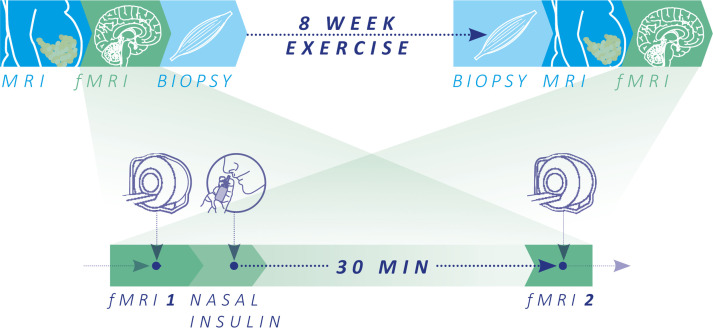
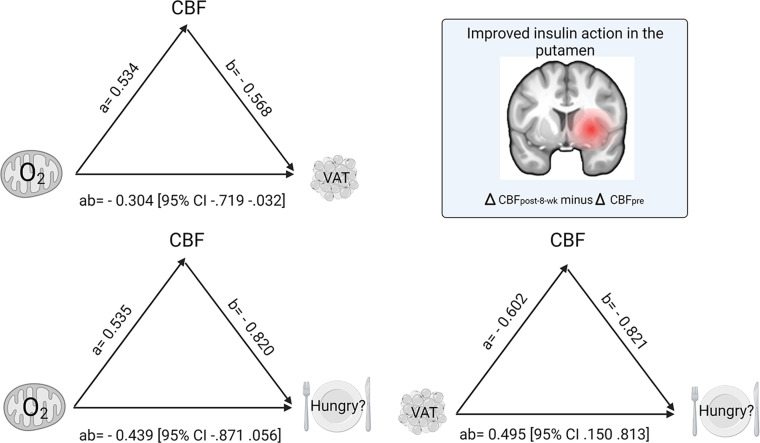
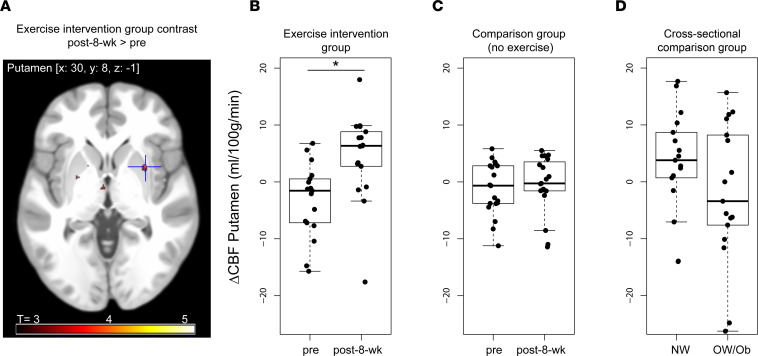
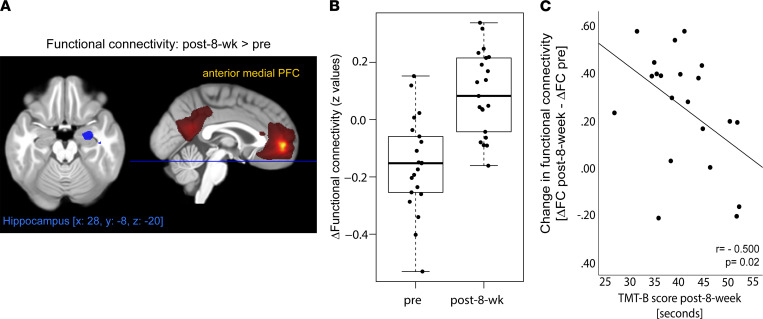
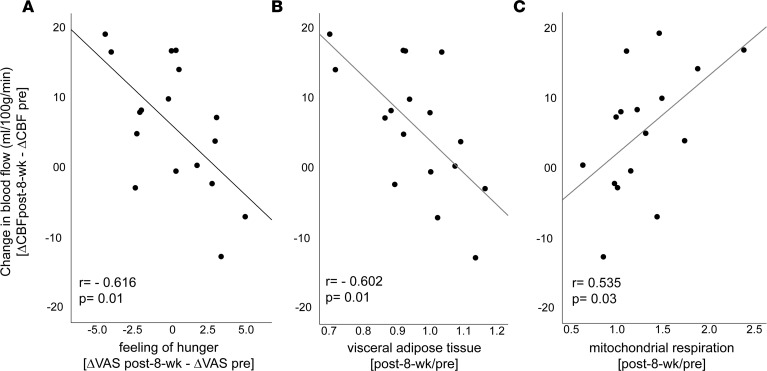
BACKGROUNDInsulin resistance of the brain can unfavorably affect long-term weight maintenance and body fat distribution. Little is known if and how brain insulin sensitivity can be restored in humans. We aimed to evaluate the effects of an exercise intervention on insulin sensitivity of the brain and how this relates to exercise-induced changes in whole-body metabolism and behavior.METHODSIn this clinical trial, sedentary participants who were overweight and obese underwent an 8-week supervised aerobic training intervention. Brain insulin sensitivity was assessed in 21 participants (14 women, 7 men; age range 21-59 years; BMI range 27.5-45.5 kg/m2) using functional MRI, combined with intranasal administration of insulin, before and after the intervention.RESULTSThe exercise program resulted in enhanced brain insulin action to the level of a person of healthy weight, demonstrated by increased insulin-induced striatal activity and strengthened hippocampal functional connectivity. Improved brain insulin action correlated with increased mitochondrial respiration in skeletal muscle, reductions in visceral fat and hunger, as well as improved cognition. Mediation analyses suggest that improved brain insulin responsiveness helps mediate the peripheral exercise effects leading to healthier body fat distribution and reduced perception of hunger.CONCLUSIONOur study demonstrates that an 8-week exercise intervention in sedentary individuals can restore insulin action in the brain. Hence, the ameliorating benefits of exercise toward brain insulin resistance may provide an objective therapeutic target in humans in the challenge to reduce diabetes risk factors.TRIAL REGISTRATIONClinicalTrials.gov (NCT03151590).FUNDINGBMBF/DZD 01GI0925.
大脑的胰岛素抵抗可能会对长期的体重维持和体脂分布产生不利影响。目前尚不清楚人类的大脑胰岛素敏感性是否以及如何能够恢复。我们旨在评估运动干预对大脑胰岛素敏感性的影响,以及这种影响如何与运动引起的全身代谢和行为变化相关。
在这项临床试验中,久坐不动的超重和肥胖参与者接受了 8 周的监督性有氧运动干预。在干预前后,通过功能性磁共振成像(fMRI)结合鼻内胰岛素给药,对 21 名参与者(14 名女性,7 名男性;年龄范围 21-59 岁;BMI 范围 27.5-45.5kg/m2)的大脑胰岛素敏感性进行评估。
运动方案导致大脑胰岛素作用增强,达到健康体重人群的水平,表现为纹状体活动增强和海马功能连接增强。改善的大脑胰岛素作用与骨骼肌线粒体呼吸增加、内脏脂肪减少和饥饿感减轻以及认知能力提高相关。中介分析表明,改善的大脑胰岛素反应有助于介导外周运动效应,导致更健康的体脂分布和减少饥饿感。
我们的研究表明,8 周的静坐个体运动干预可以恢复大脑中的胰岛素作用。因此,运动对大脑胰岛素抵抗的改善益处可能为人类提供一个减少糖尿病危险因素的客观治疗目标。
ClinicalTrials.gov(NCT03151590)。
BMBF/DZD 01GI0925。