The Third Clinical Medical College, Guangzhou University of Chinese Medicine, Guangzhou, China.
Department of Clinical Laboratory, The Third Affiliated Hospital of Guangzhou University of Chinese Medicine, Guangzhou, China.
Plant Signal Behav. 2022 Dec 31;17(1):2129290. doi: 10.1080/15592324.2022.2129290.
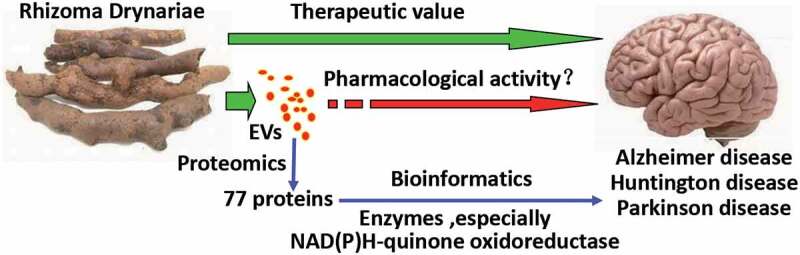
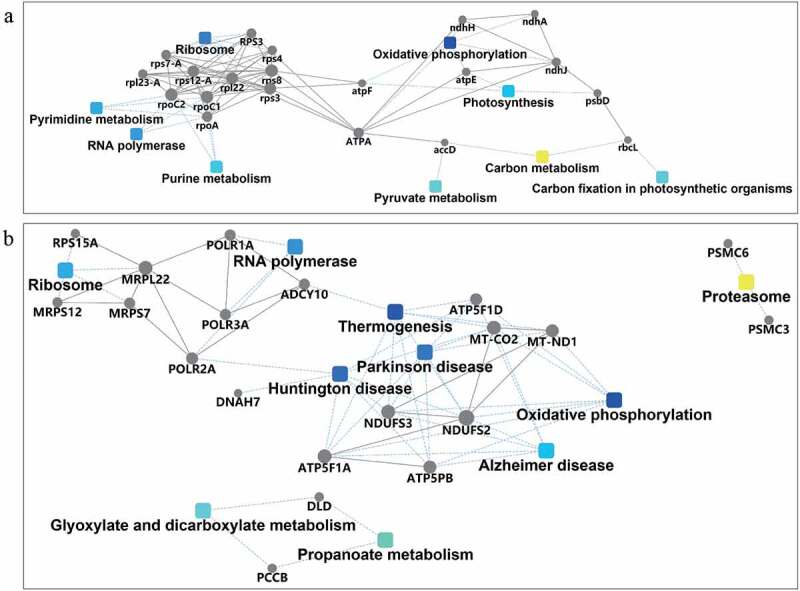
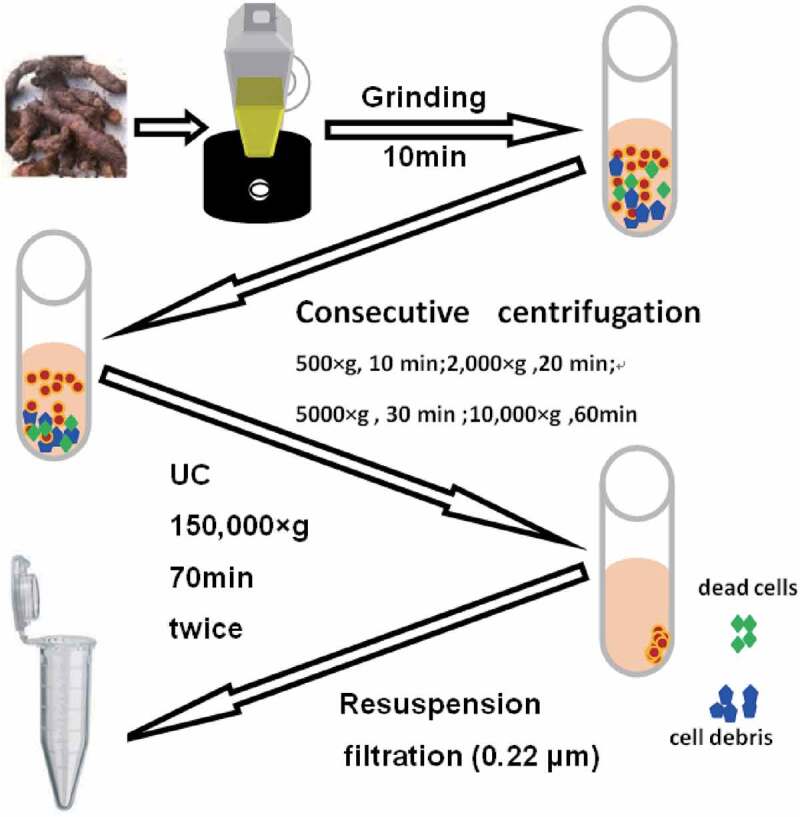
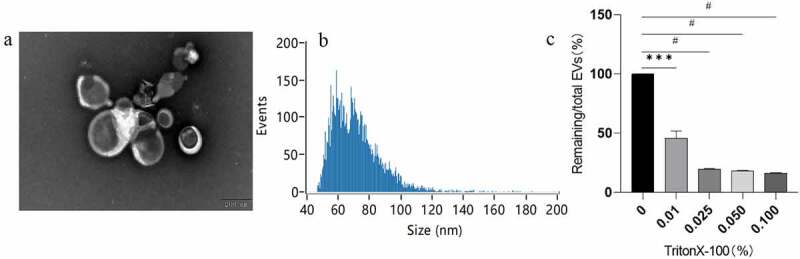
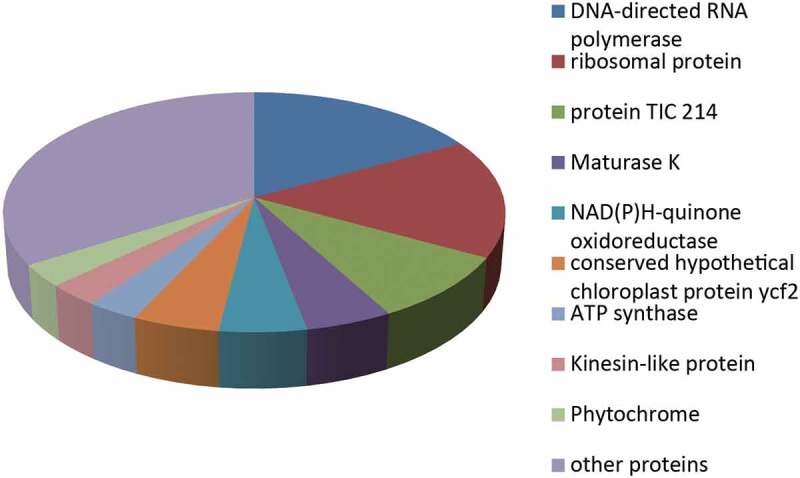
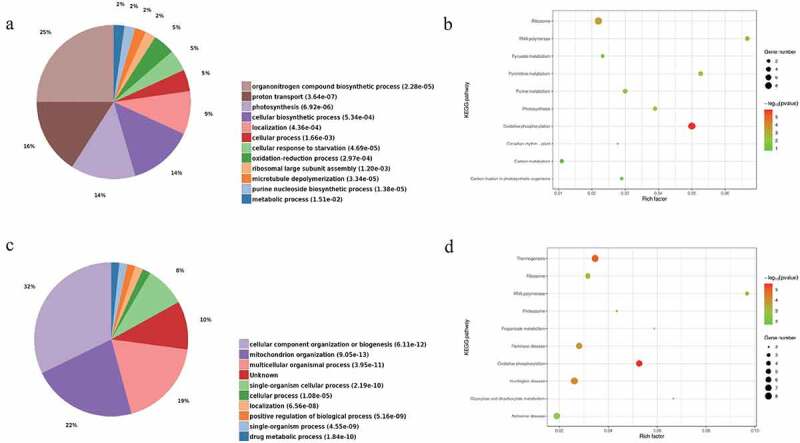
Extracellular vesicles (EVs) are nano-sized membrane vesicles released by various cell types. Mammalian EVs have been studied in-depth, but the role of plant EVs has rarely been explored. For the first time, EVs from roots were isolated and identified using transmission electron microscopy and a flow nano analyzer. Proteomics and bioinformatics were applied to determine the protein composition and complete the functional analysis of the EVs. Seventy-seven proteins were identified from root-derived EVs, with enzymes accounting for 47% of the proteins. All of the enzymes were involved in important biological processes in plants. Most of them, including NAD(P)H-quinone oxidoreductase, were enriched in the oxidative phosphorylation pathway in plants and humans, and Alzheimer's disease, Huntington's disease, and Parkinson's disease, which are associated with oxidative stress in humans. These findings suggested that EVs from roots could alleviate such neurological diseases and that enzymes, especially NAD(P)H-quinone oxidoreductase, might play an important role in the process.
细胞外囊泡(EVs)是各种细胞释放的纳米大小的膜囊泡。哺乳动物 EVs 已经得到了深入研究,但植物 EVs 的作用很少被探索。首次使用透射电子显微镜和流式纳米分析仪分离和鉴定了来自根的 EVs。蛋白质组学和生物信息学被应用于确定 EVs 的蛋白质组成并完成其功能分析。从根衍生的 EVs 中鉴定出 77 种蛋白质,其中酶占蛋白质的 47%。所有这些酶都参与了植物中的重要生物过程。其中大多数酶,包括 NAD(P)H-醌氧化还原酶,在植物和人类的氧化磷酸化途径中富集,与人类的氧化应激相关的阿尔茨海默病、亨廷顿病和帕金森病也与之相关。这些发现表明,根来源的 EVs 可能缓解这些神经退行性疾病,并且酶,特别是 NAD(P)H-醌氧化还原酶,可能在该过程中发挥重要作用。