Department of Electrical and Computer Engineering, University of California, San Diego, La Jolla, CA, USA.
Department of Neuroscience, Columbia University, New York, NY, USA; Mortimer B. Zuckerman Mind Brain Behavior Institute, Columbia University, New York, NY, USA.
Cell Rep. 2022 Oct 4;41(1):111453. doi: 10.1016/j.celrep.2022.111453.
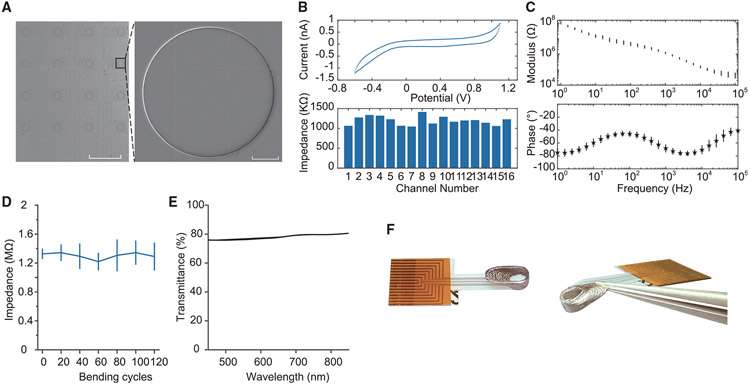
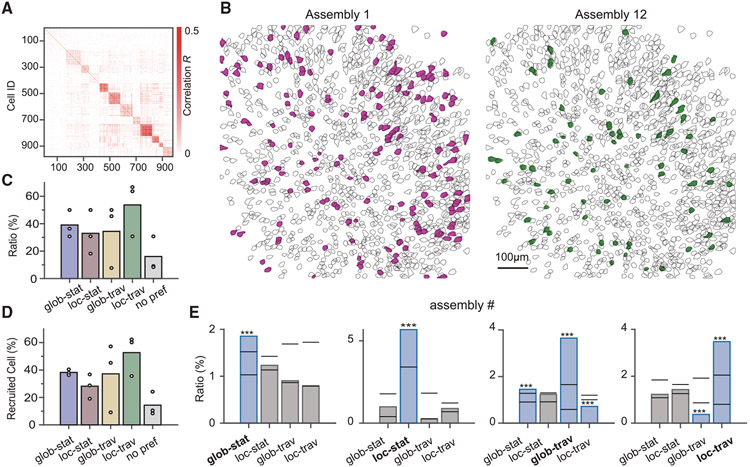
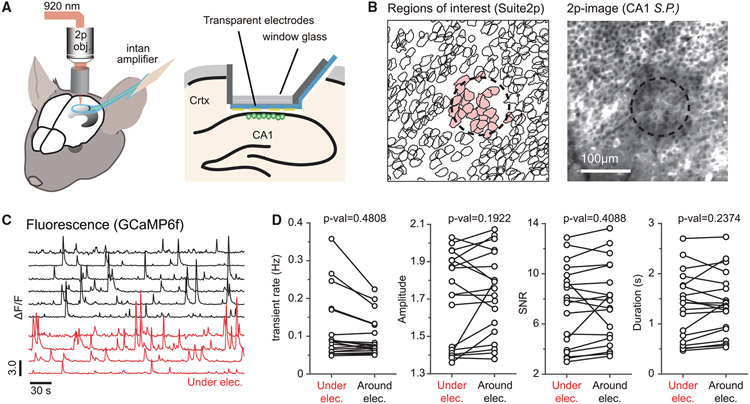
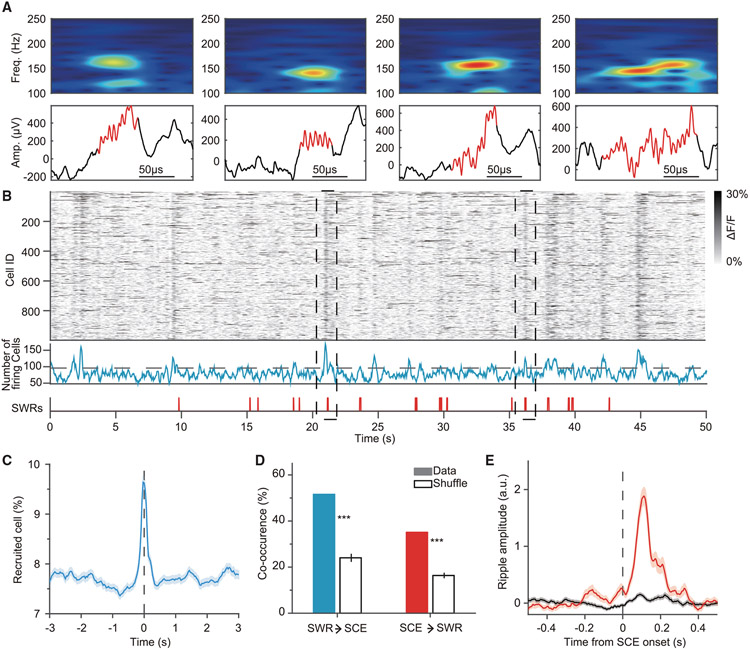
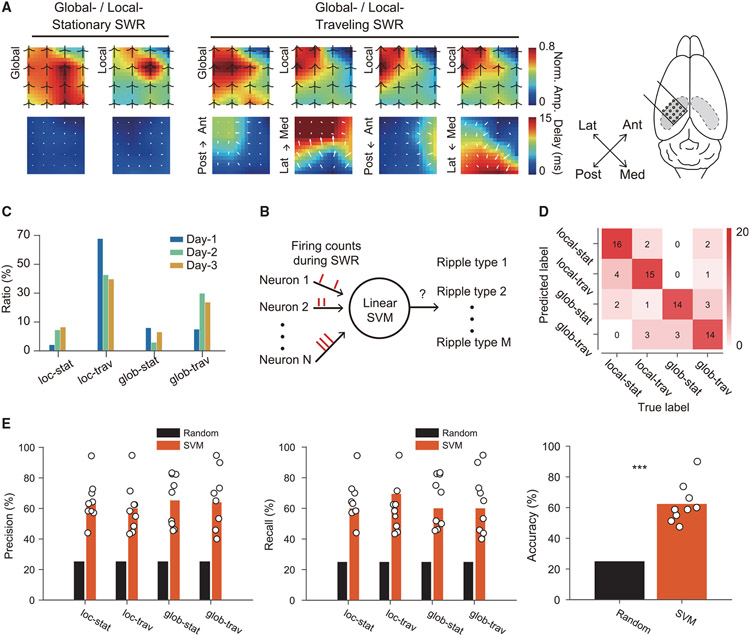
The hippocampus plays a critical role in spatial navigation and episodic memory. However, research on in vivo hippocampal activity dynamics mostly relies on single modalities, such as electrical recordings or optical imaging, with respectively limited spatial and temporal resolution. Here, we develop the E-Cannula, integrating fully transparent graphene microelectrodes with imaging cannula, which enables simultaneous electrical recording and two-photon calcium imaging from the exact same neural populations across an anatomically extended region of the mouse hippocampal CA1 stably across several days. The large-scale multimodal recordings show that sharp wave ripples (SWRs) exhibit spatiotemporal wave patterns along multiple axes in two-dimensional (2D) space with different spatial extents and temporal propagation modes. Notably, distinct SWR wave patterns are associated with the selective recruitment of orthogonal CA1 cell assemblies. These results demonstrate the utility of the E-Cannula as a versatile neurotechnology with the potential for future integration with other optical components.
海马体在空间导航和情景记忆中起着关键作用。然而,体内海马体活动动力学的研究主要依赖于单一的模态,如电记录或光学成像,分别具有有限的空间和时间分辨率。在这里,我们开发了 E-Cannula,它将完全透明的石墨烯微电极与成像套管集成在一起,使我们能够在数天内从同一个解剖学上扩展的小鼠海马体 CA1 区的相同神经群中,稳定地进行同时的电记录和双光子钙成像。大规模的多模态记录表明,尖锐波涟漪(SWR)在二维(2D)空间的多个轴上表现出时空波模式,具有不同的空间范围和时间传播模式。值得注意的是,不同的 SWR 波模式与正交 CA1 细胞组合的选择性募集有关。这些结果表明 E-Cannula 作为一种多功能神经技术的实用性,具有与其他光学组件未来集成的潜力。