Katz D R, Drzymala M, Turton J A, Hicks R M, Hunt R, Palmer L, Malkovský M
Br J Exp Pathol. 1987 Jun;68(3):343-50.
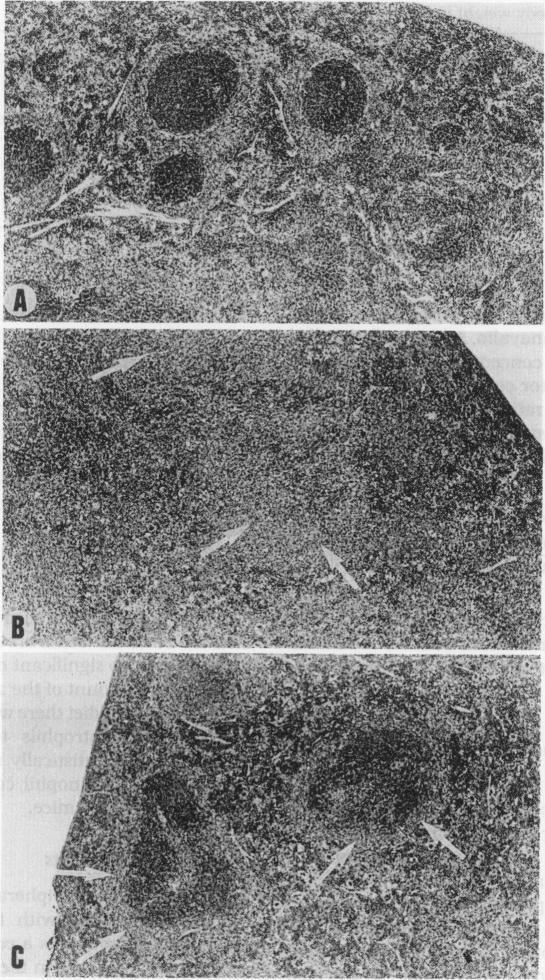
This study examines the effects of in-vivo immune regulation by vitamin A acetate (VAA) and 13-cis-retinoic acid (13-CRA) on in-vitro accessory cell function. Mice were fed a control diet, or diet containing VAA or 13-CRA, and monitored by body weight gains and diet consumptions at weekly intervals. At 4, 7 and 12 weeks mice were killed, differential blood counts performed and accessory cells isolated from lymphomedullary tissues. Histology confirmed that the chief feature of the lymphomedullary organs of the VAA-fed animals was an expansion of the splenic marginal zone and the paracortical region of the lymph nodes. There was an increase in the number of accessory cells present, and this included both dendritic cells and macrophages. The accessory cell function of these cells was also increased, as evidenced by both alloproliferative and allocytotoxic responses in vitro. In 13-CRA-fed animals the effects were similar to those seen with VAA, but were less pronounced. We suggest that the primary effects of these compounds on in-vivo immunoregulation could be due to their promotion of accessory cell function.
本研究考察了醋酸维生素A(VAA)和13-顺式维甲酸(13-CRA)的体内免疫调节对体外辅助细胞功能的影响。给小鼠喂食对照饮食或含VAA或13-CRA的饮食,并每周监测其体重增加和饮食消耗情况。在第4、7和12周处死小鼠,进行血液细胞分类计数,并从淋巴髓组织中分离辅助细胞。组织学证实,喂食VAA的动物的淋巴髓器官的主要特征是脾边缘区和淋巴结副皮质区扩大。存在的辅助细胞数量增加,这包括树突状细胞和巨噬细胞。这些细胞的辅助细胞功能也增强,体外的同种异体增殖反应和同种异体细胞毒性反应均证明了这一点。在喂食13-CRA的动物中,效果与VAA相似,但不那么明显。我们认为,这些化合物对体内免疫调节的主要作用可能是由于它们促进了辅助细胞功能。