Anand Santosh, Sowbhagya Ramachandregowda, Ansari Mohammad Azam, Alzohairy Mohammad A, Alomary Mohammad N, Almalik Asiyah I, Ahmad Wasim, Tripathi Takshashila, Elderdery Abozer Y
Department of Biotechnology, School of Applied Sciences, REVA University, Bangalore 560064, Karnataka, India.
Department of Biotechnology and Genetics, Ramaiah College of Arts, Science and Commerce, Bangalore 560064, Karnataka, India.
Life (Basel). 2022 Oct 19;12(10):1639. doi: 10.3390/life12101639.
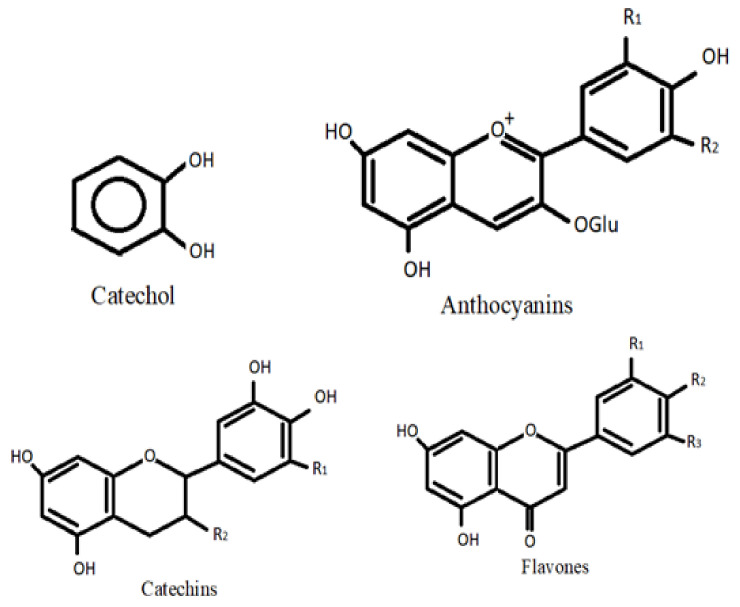
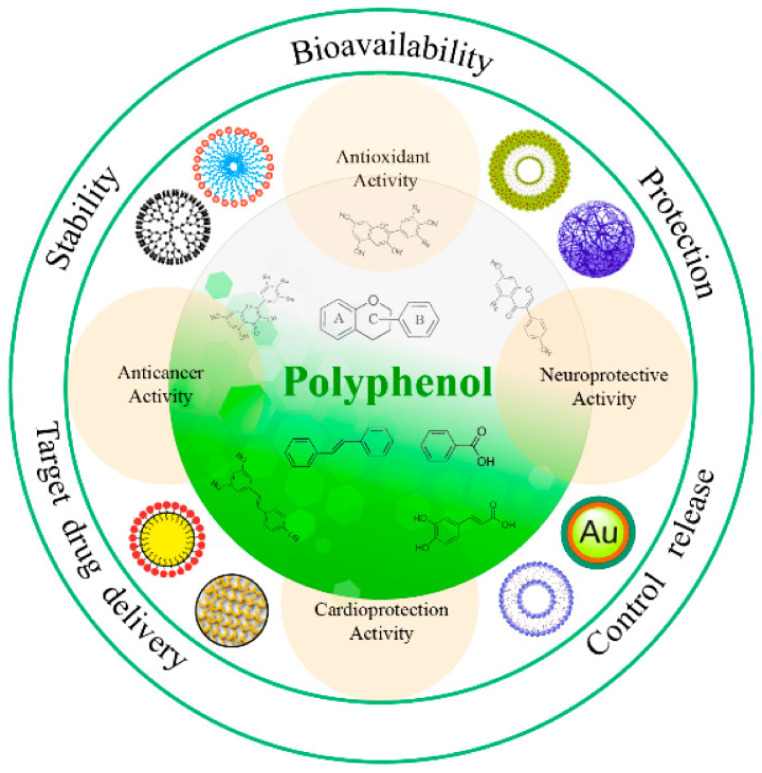
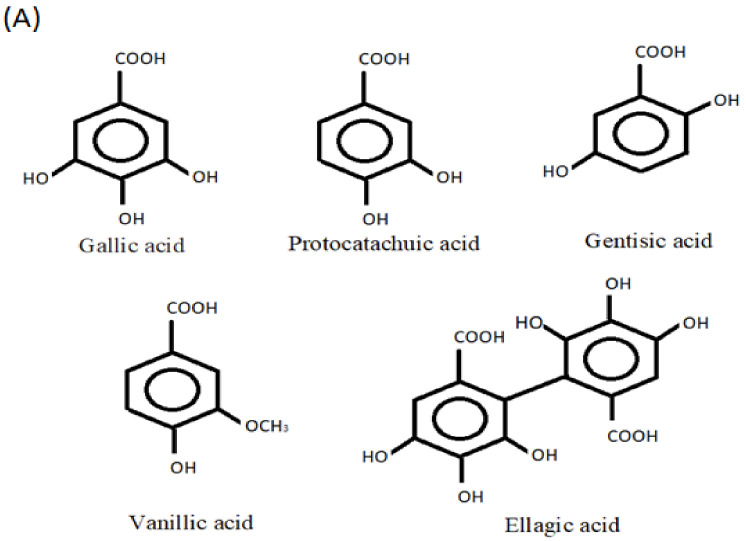
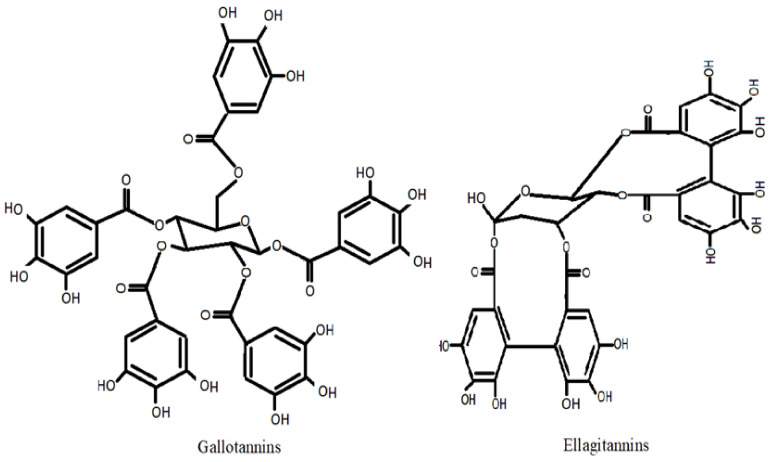
Polyphenols are the secondary metabolites synthesized by the plants as a part of defense machinery. Owing to their antioxidant, anti-inflammatory, anticancerous, antineoplastic, and immunomodulatory effects, natural polyphenols have been used for a long time to prevent and treat a variety of diseases. As a result, these phytochemicals may be able to act as therapeutic agents in treating cancer and cardiovascular and neurological disorders. The limited bioavailability of polyphenolic molecules is one issue with their utilization. For the purpose of increasing the bioavailability of these chemicals, many formulation forms have been developed, with nanonization standing out among them. The present review outlines the biological potential of nanoformulated plant polyphenolic compounds. It also summarizes the employability of various polyphenols as nanoformulations for cancer and neurological and cardiovascular disease treatment. Nanoencapsulated polyphenols, singular or in combinations, effective both in vitro and in vivo, need more investigation.
多酚是植物合成的次生代谢产物,作为其防御机制的一部分。由于具有抗氧化、抗炎、抗癌、抗肿瘤和免疫调节作用,天然多酚长期以来一直被用于预防和治疗多种疾病。因此,这些植物化学物质可能能够作为治疗癌症以及心血管和神经疾病的治疗剂。多酚分子的生物利用度有限是其应用中的一个问题。为了提高这些化学物质的生物利用度,已经开发了许多制剂形式,其中纳米化尤为突出。本综述概述了纳米制剂化植物多酚化合物的生物学潜力。它还总结了各种多酚作为纳米制剂用于癌症以及神经和心血管疾病治疗的适用性。纳米封装的多酚,无论是单一的还是组合的,在体外和体内均有效,需要更多的研究。