Uzun Ozsahin Dilber, Mustapha Mubarak Taiwo, Bartholomew Duwa Basil, Ozsahin Ilker
Department of Medical Diagnostic Imaging, College of Health Science, University of Sharjah, Sharjah 27272, United Arab Emirates.
Operational Research Centre in Healthcare, Near East University, TRNC Mersin 10, Nicosia 99138, Turkey.
Diagnostics (Basel). 2022 Nov 5;12(11):2702. doi: 10.3390/diagnostics12112702.
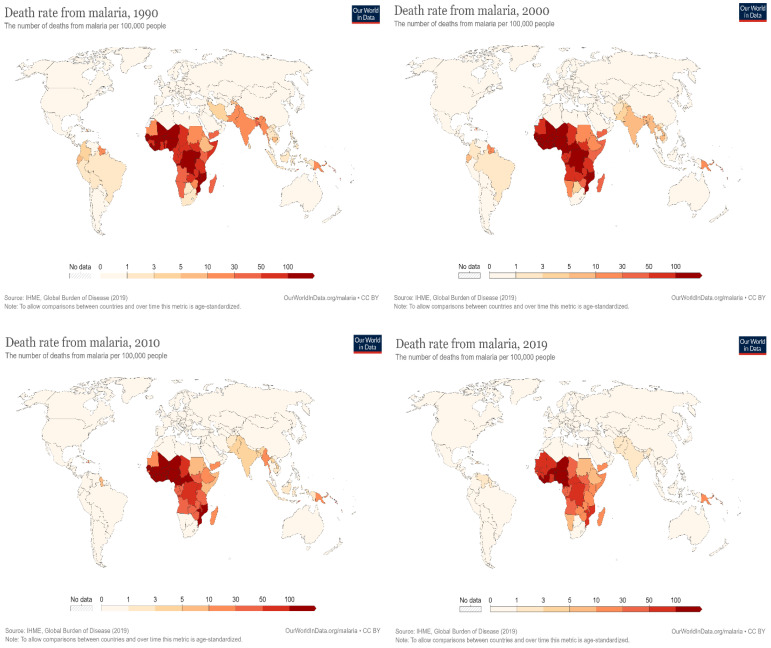
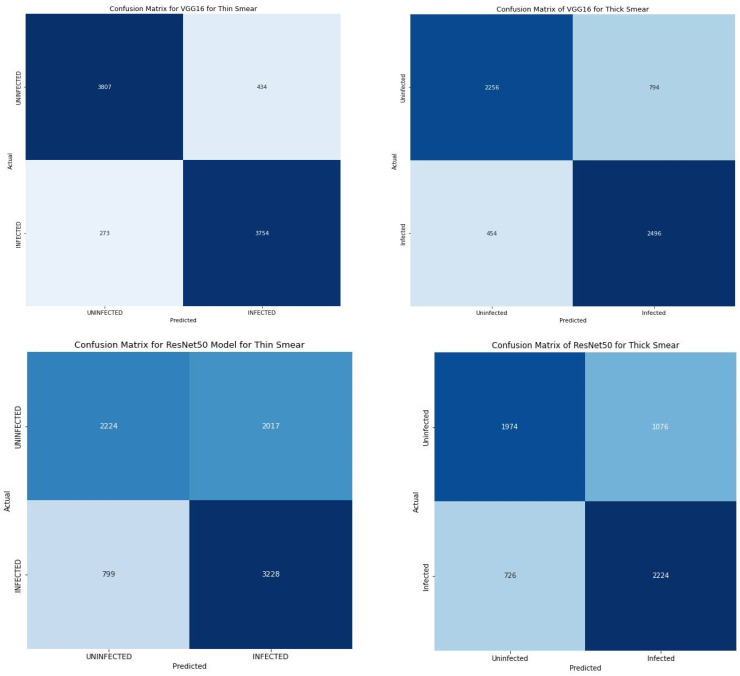
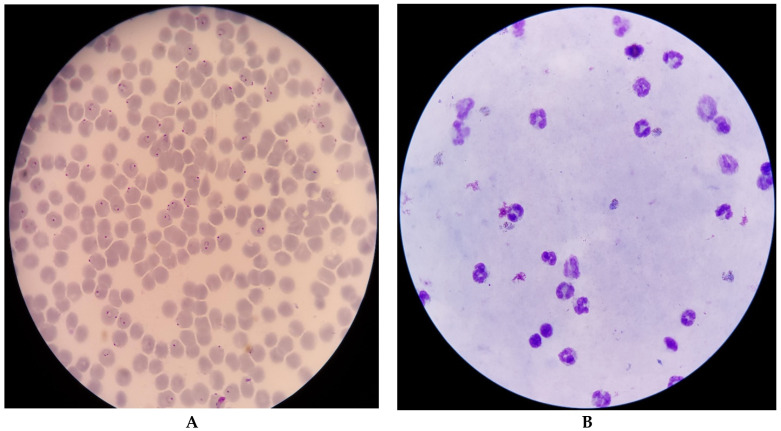
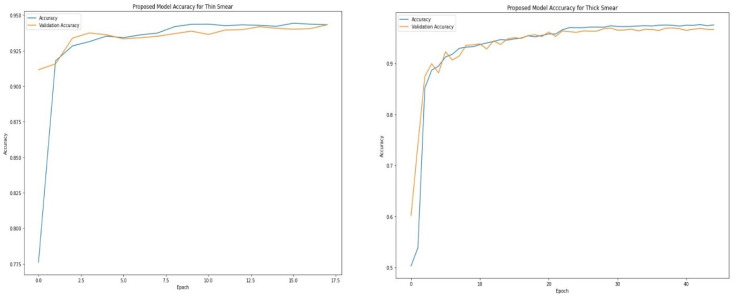
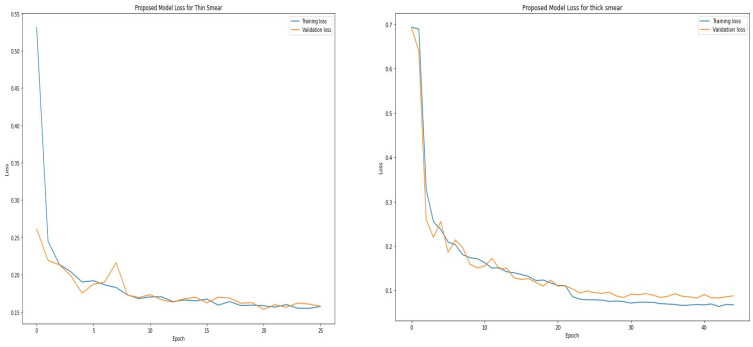
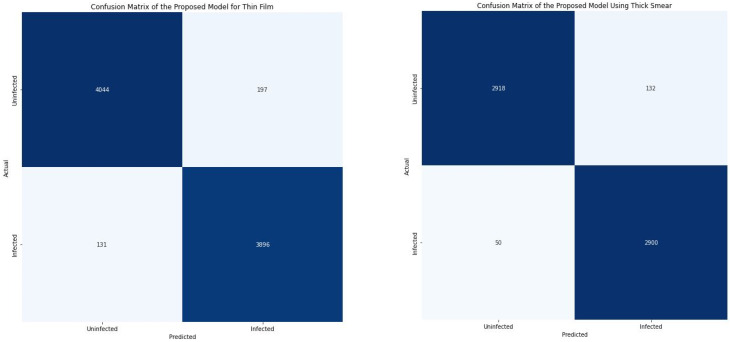
Malaria is a significant health concern in many third-world countries, especially for pregnant women and young children. It accounted for about 229 million cases and 600,000 mortality globally in 2019. Hence, rapid and accurate detection is vital. This study is focused on achieving three goals. The first is to develop a deep learning framework capable of automating and accurately classifying malaria parasites using microscopic images of thin and thick peripheral blood smears. The second is to report which of the two peripheral blood smears is the most appropriate for use in accurately detecting malaria parasites in peripheral blood smears. Finally, we evaluate the performance of our proposed model with commonly used transfer learning models. We proposed a convolutional neural network capable of accurately predicting the presence of malaria parasites using microscopic images of thin and thick peripheral blood smears. Model evaluation was carried out using commonly used evaluation metrics, and the outcome proved satisfactory. The proposed model performed better when thick peripheral smears were used with accuracy, precision, and sensitivity of 96.97%, 97.00%, and 97.00%. Identifying the most appropriate peripheral blood smear is vital for improved accuracy, rapid smear preparation, and rapid diagnosis of patients, especially in regions where malaria is endemic.
疟疾在许多第三世界国家是一个重大的健康问题,尤其是对孕妇和幼儿而言。2019年,全球疟疾病例约达2.29亿例,死亡60万人。因此,快速准确的检测至关重要。本研究专注于实现三个目标。第一个目标是开发一个深度学习框架,能够利用薄血膜和厚血膜外周血涂片的显微图像自动且准确地对疟原虫进行分类。第二个目标是报告两种外周血涂片中哪一种最适合用于准确检测外周血涂片中的疟原虫。最后,我们将我们提出的模型与常用的迁移学习模型的性能进行评估。我们提出了一种卷积神经网络,能够利用薄血膜和厚血膜外周血涂片的显微图像准确预测疟原虫的存在。使用常用的评估指标进行模型评估,结果令人满意。当使用厚血膜涂片时,所提出的模型表现更佳,准确率、精确率和灵敏度分别为96.97%、97.00%和97.00%。确定最合适的外周血涂片对于提高准确率、快速制备涂片以及快速诊断患者至关重要,尤其是在疟疾流行地区。