• 文献检索
  • 文档翻译
  • 深度研究
  • 学术资讯
  • Suppr Zotero 插件Zotero 插件
  • 邀请有礼
  • 套餐&价格
  • 历史记录
应用&插件
Suppr Zotero 插件Zotero 插件浏览器插件Mac 客户端Windows 客户端微信小程序
定价
高级版会员购买积分包购买API积分包
服务
文献检索文档翻译深度研究API 文档MCP 服务
关于我们
关于 Suppr公司介绍联系我们用户协议隐私条款
关注我们

Suppr 超能文献

核心技术专利:CN118964589B侵权必究
粤ICP备2023148730 号-1Suppr @ 2026

文献检索

告别复杂PubMed语法,用中文像聊天一样搜索,搜遍4000万医学文献。AI智能推荐,让科研检索更轻松。

立即免费搜索

文件翻译

保留排版,准确专业,支持PDF/Word/PPT等文件格式,支持 12+语言互译。

免费翻译文档

深度研究

AI帮你快速写综述,25分钟生成高质量综述,智能提取关键信息,辅助科研写作。

立即免费体验

可解释机器学习方法预测重症机械通气患者拔管:台湾中部的回顾性研究。

Explainable machine learning approach to predict extubation in critically ill ventilated patients: a retrospective study in central Taiwan.

机构信息

College of Engineering, Tunghai University, Taichung, Taiwan.

Artificial Intelligence Center, Tunghai University, Taichung, Taiwan.

出版信息

BMC Anesthesiol. 2022 Nov 14;22(1):351. doi: 10.1186/s12871-022-01888-y.

DOI:10.1186/s12871-022-01888-y
PMID:36376785
原文链接:https://pmc.ncbi.nlm.nih.gov/articles/PMC9664699/
Abstract

BACKGROUND

Weaning from mechanical ventilation (MV) is an essential issue in critically ill patients, and we used an explainable machine learning (ML) approach to establish an extubation prediction model.

METHODS

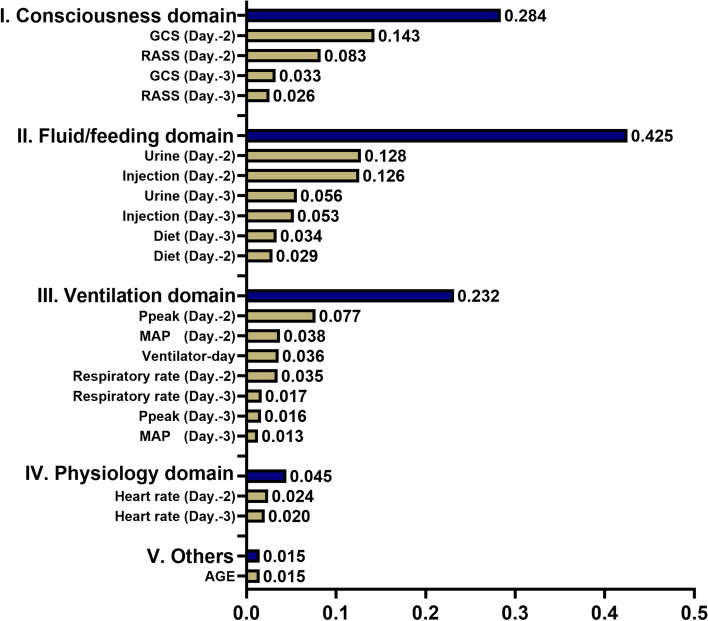
We enrolled patients who were admitted to intensive care units during 2015-2019 at Taichung Veterans General Hospital, a referral hospital in central Taiwan. We used five ML models, including extreme gradient boosting (XGBoost), categorical boosting (CatBoost), light gradient boosting machine (LightGBM), random forest (RF) and logistic regression (LR), to establish the extubation prediction model, and the feature window as well as prediction window was 48 h and 24 h, respectively. We further employed feature importance, Shapley additive explanations (SHAP) plot, partial dependence plot (PDP) and local interpretable model-agnostic explanations (LIME) for interpretation of the model at the domain, feature, and individual levels.

RESULTS

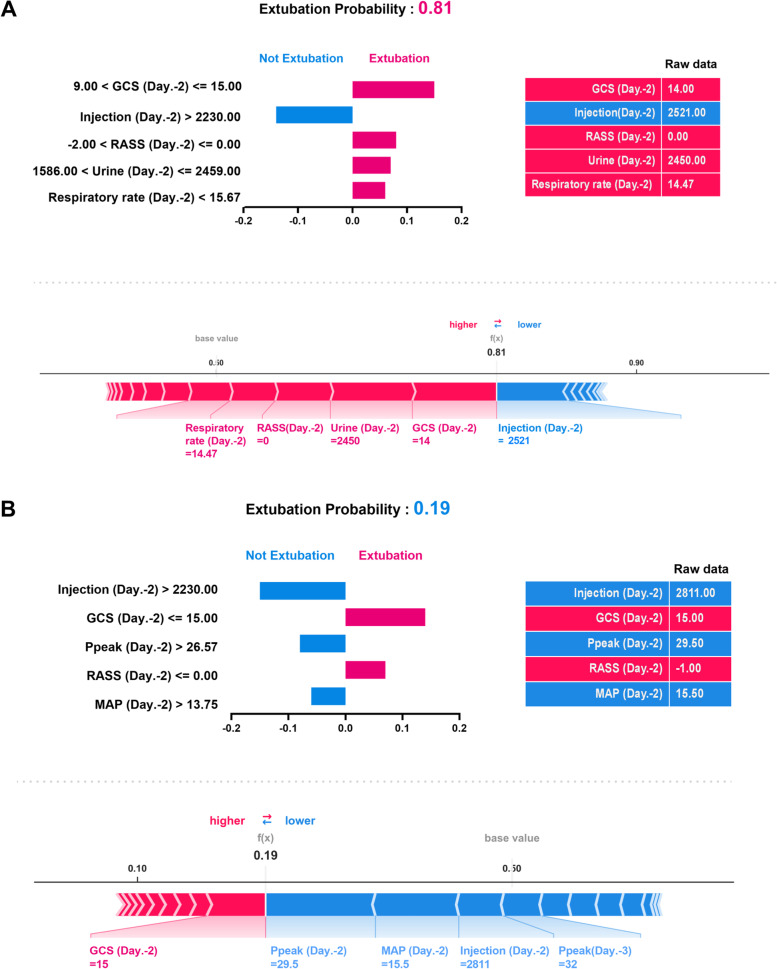
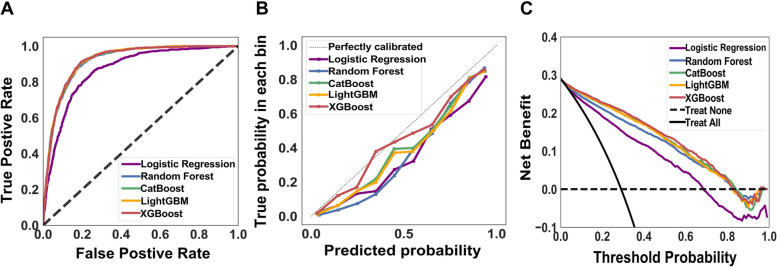
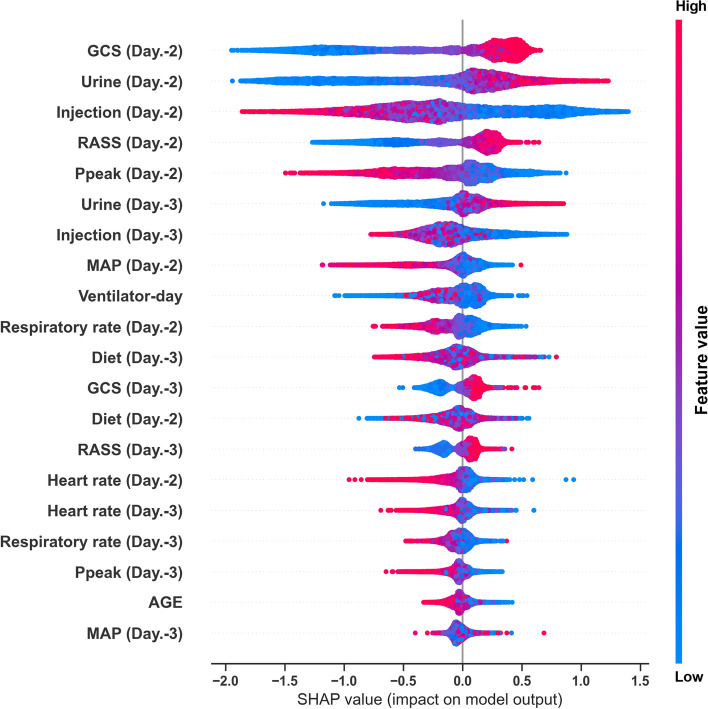
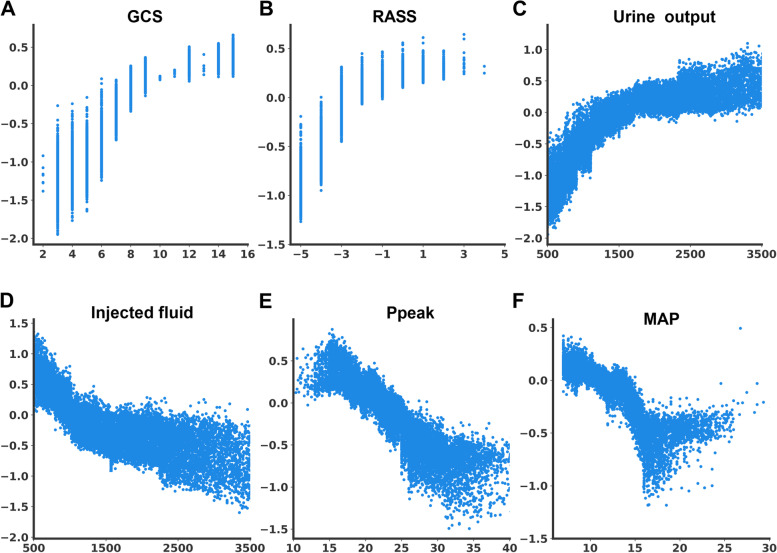
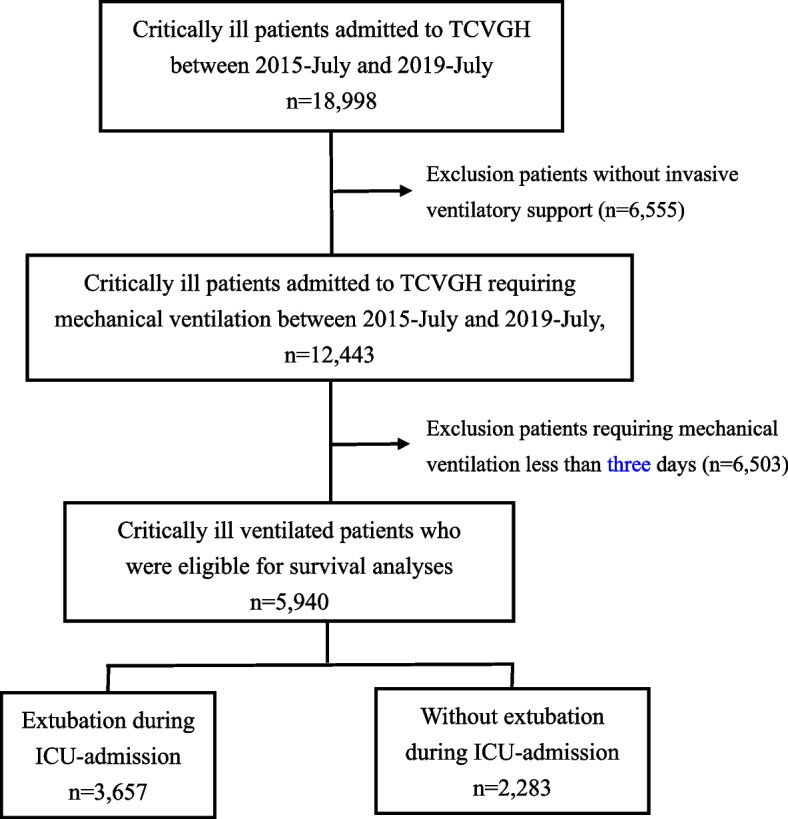
We enrolled 5,940 patients and found the accuracy was comparable among XGBoost, LightGBM, CatBoost and RF, with the area under the receiver operating characteristic curve using XGBoost to predict extubation was 0.921. The calibration and decision curve analysis showed well applicability of models. We also used the SHAP summary plot and PDP plot to demonstrate discriminative points of six key features in predicting extubation. Moreover, we employed LIME and SHAP force plots to show predicted probabilities of extubation and the rationale of the prediction at the individual level.

CONCLUSIONS

We developed an extubation prediction model with high accuracy and visualised explanations aligned with clinical workflow, and the model may serve as an autonomous screen tool for timely weaning.

摘要

背景

机械通气(MV)撤机是危重症患者的一个重要问题,我们采用可解释的机器学习(ML)方法来建立拔管预测模型。

方法

我们纳入了 2015 年至 2019 年期间在台湾中部转诊医院台中荣民总医院重症监护病房住院的患者。我们使用了五种 ML 模型,包括极端梯度提升(XGBoost)、分类梯度提升(CatBoost)、轻梯度提升机(LightGBM)、随机森林(RF)和逻辑回归(LR),来建立拔管预测模型,特征窗口和预测窗口分别为 48 小时和 24 小时。我们进一步在域、特征和个体层面上使用特征重要性、Shapley 加性解释(SHAP)图、部分依赖图(PDP)和局部可解释模型不可知解释(LIME)对模型进行解释。

结果

我们共纳入了 5940 名患者,发现 XGBoost、LightGBM、CatBoost 和 RF 的准确率相当,XGBoost 预测拔管的受试者工作特征曲线下面积为 0.921。校准和决策曲线分析表明模型具有良好的适用性。我们还使用 SHAP 总结图和 PDP 图展示了在预测拔管中六个关键特征的区分点。此外,我们采用 LIME 和 SHAP 力图展示了在个体水平上的拔管预测概率和预测依据。

结论

我们开发了一种具有高准确率的拔管预测模型,并提供了与临床工作流程一致的可视化解释,该模型可以作为一种自主的拔管筛查工具。
https://cdn.ncbi.nlm.nih.gov/pmc/blobs/03d8/9664699/52999d79fedc/12871_2022_1888_Fig6_HTML.jpg
https://cdn.ncbi.nlm.nih.gov/pmc/blobs/03d8/9664699/a61c41037e85/12871_2022_1888_Fig1_HTML.jpg
https://cdn.ncbi.nlm.nih.gov/pmc/blobs/03d8/9664699/8e37a4f36a95/12871_2022_1888_Fig2_HTML.jpg
https://cdn.ncbi.nlm.nih.gov/pmc/blobs/03d8/9664699/dc271269e6e5/12871_2022_1888_Fig3_HTML.jpg
https://cdn.ncbi.nlm.nih.gov/pmc/blobs/03d8/9664699/d6880c52a663/12871_2022_1888_Fig4_HTML.jpg
https://cdn.ncbi.nlm.nih.gov/pmc/blobs/03d8/9664699/8a66f4c6a73e/12871_2022_1888_Fig5_HTML.jpg
https://cdn.ncbi.nlm.nih.gov/pmc/blobs/03d8/9664699/52999d79fedc/12871_2022_1888_Fig6_HTML.jpg
https://cdn.ncbi.nlm.nih.gov/pmc/blobs/03d8/9664699/a61c41037e85/12871_2022_1888_Fig1_HTML.jpg
https://cdn.ncbi.nlm.nih.gov/pmc/blobs/03d8/9664699/8e37a4f36a95/12871_2022_1888_Fig2_HTML.jpg
https://cdn.ncbi.nlm.nih.gov/pmc/blobs/03d8/9664699/dc271269e6e5/12871_2022_1888_Fig3_HTML.jpg
https://cdn.ncbi.nlm.nih.gov/pmc/blobs/03d8/9664699/d6880c52a663/12871_2022_1888_Fig4_HTML.jpg
https://cdn.ncbi.nlm.nih.gov/pmc/blobs/03d8/9664699/8a66f4c6a73e/12871_2022_1888_Fig5_HTML.jpg
https://cdn.ncbi.nlm.nih.gov/pmc/blobs/03d8/9664699/52999d79fedc/12871_2022_1888_Fig6_HTML.jpg

相似文献

1
Explainable machine learning approach to predict extubation in critically ill ventilated patients: a retrospective study in central Taiwan.可解释机器学习方法预测重症机械通气患者拔管:台湾中部的回顾性研究。
BMC Anesthesiol. 2022 Nov 14;22(1):351. doi: 10.1186/s12871-022-01888-y.
2
Explainable machine learning to predict long-term mortality in critically ill ventilated patients: a retrospective study in central Taiwan.可解释的机器学习用于预测重症通气患者的长期死亡率:台湾中部的一项回顾性研究
BMC Med Inform Decis Mak. 2022 Mar 25;22(1):75. doi: 10.1186/s12911-022-01817-6.
3
Explainable Machine Learning to Predict Successful Weaning Among Patients Requiring Prolonged Mechanical Ventilation: A Retrospective Cohort Study in Central Taiwan.可解释机器学习用于预测需要长期机械通气患者的成功撤机:台湾中部的一项回顾性队列研究
Front Med (Lausanne). 2021 Apr 23;8:663739. doi: 10.3389/fmed.2021.663739. eCollection 2021.
4
Explainable Machine Learning to Predict Successful Weaning of Mechanical Ventilation in Critically Ill Patients Requiring Hemodialysis.可解释的机器学习用于预测需要血液透析的危重症患者机械通气的成功撤机
Healthcare (Basel). 2023 Mar 21;11(6):910. doi: 10.3390/healthcare11060910.
5
Using a machine learning approach to predict mortality in critically ill influenza patients: a cross-sectional retrospective multicentre study in Taiwan.运用机器学习方法预测危重症流感患者的死亡率:台湾一项跨中心回顾性研究
BMJ Open. 2020 Feb 25;10(2):e033898. doi: 10.1136/bmjopen-2019-033898.
6
Machine Learning for Prediction of Successful Extubation of Mechanical Ventilated Patients in an Intensive Care Unit: A Retrospective Observational Study.机器学习在 ICU 机械通气患者拔管成功预测中的应用:一项回顾性观察研究。
J Nippon Med Sch. 2021 Nov 17;88(5):408-417. doi: 10.1272/jnms.JNMS.2021_88-508. Epub 2021 Mar 9.
7
Using machine-learning models to predict extubation failure in neonates with bronchopulmonary dysplasia.使用机器学习模型预测患有支气管肺发育不良的新生儿拔管失败。
BMC Pulm Med. 2024 Jul 1;24(1):308. doi: 10.1186/s12890-024-03133-3.
8
Machine learning for prediction of in-hospital mortality in lung cancer patients admitted to intensive care unit.机器学习在预测 ICU 收治的肺癌患者院内死亡率中的应用。
PLoS One. 2023 Jan 26;18(1):e0280606. doi: 10.1371/journal.pone.0280606. eCollection 2023.
9
An explainable machine learning-based model to predict intensive care unit admission among patients with community-acquired pneumonia and connective tissue disease.基于可解释机器学习的模型,用于预测社区获得性肺炎和结缔组织病患者入住重症监护病房的情况。
Respir Res. 2024 Jun 18;25(1):246. doi: 10.1186/s12931-024-02874-3.
10
Development and Validation of a Machine-Learning Model for Prediction of Extubation Failure in Intensive Care Units.重症监护病房拔管失败预测机器学习模型的开发与验证
Front Med (Lausanne). 2021 May 17;8:676343. doi: 10.3389/fmed.2021.676343. eCollection 2021.

引用本文的文献

1
Role of artificial intelligence in enhancing mechanical ventilation - A peek into the future.人工智能在改善机械通气中的作用——展望未来。
Indian J Anaesth. 2025 Jul;69(7):722-728. doi: 10.4103/ija.ija_995_24. Epub 2025 Jun 12.
2
Using ML techniques to predict extubation outcomes for patients with central nervous system injuries in the Yun-Gui Plateau.运用机器学习技术预测云贵高原中枢神经系统损伤患者的拔管结局。
Sci Rep. 2025 May 22;15(1):17773. doi: 10.1038/s41598-025-98861-9.
3
Artificial Intelligence in the Management of Patients with Respiratory Failure Requiring Mechanical Ventilation: A Scoping Review.

本文引用的文献

1
Stop Explaining Black Box Machine Learning Models for High Stakes Decisions and Use Interpretable Models Instead.停止为高风险决策解释黑箱机器学习模型,转而使用可解释模型。
Nat Mach Intell. 2019 May;1(5):206-215. doi: 10.1038/s42256-019-0048-x. Epub 2019 May 13.
2
Explainable machine learning to predict long-term mortality in critically ill ventilated patients: a retrospective study in central Taiwan.可解释的机器学习用于预测重症通气患者的长期死亡率:台湾中部的一项回顾性研究
BMC Med Inform Decis Mak. 2022 Mar 25;22(1):75. doi: 10.1186/s12911-022-01817-6.
3
The Feasibility of a Machine Learning Approach in Predicting Successful Ventilator Mode Shifting for Adult Patients in the Medical Intensive Care Unit.
人工智能在需要机械通气的呼吸衰竭患者管理中的应用:一项范围综述
J Clin Med. 2024 Dec 11;13(24):7535. doi: 10.3390/jcm13247535.
4
Multitask learning to predict successful weaning in critically ill ventilated patients: A retrospective analysis of the MIMIC-IV database.多任务学习预测重症机械通气患者成功撤机:对MIMIC-IV数据库的回顾性分析
Digit Health. 2024 Oct 8;10:20552076241289732. doi: 10.1177/20552076241289732. eCollection 2024 Jan-Dec.
5
Transparency and precision in the age of AI: evaluation of explainability-enhanced recommendation systems.人工智能时代的透明度与精准度:对可解释性增强型推荐系统的评估
Front Artif Intell. 2024 Sep 5;7:1410790. doi: 10.3389/frai.2024.1410790. eCollection 2024.
6
Application of Machine Learning in Predicting Perioperative Outcomes in Patients with Cancer: A Narrative Review for Clinicians.机器学习在预测癌症患者围手术期结局中的应用:临床医生的叙述性综述。
Curr Oncol. 2024 May 11;31(5):2727-2747. doi: 10.3390/curroncol31050207.
7
Using Artificial Intelligence to Predict Mechanical Ventilation Weaning Success in Patients with Respiratory Failure, Including Those with Acute Respiratory Distress Syndrome.利用人工智能预测呼吸衰竭患者(包括急性呼吸窘迫综合征患者)机械通气撤机成功率
J Clin Med. 2024 Mar 5;13(5):1505. doi: 10.3390/jcm13051505.
机器学习方法在预测成人患者在重症监护病房中成功切换呼吸机模式的可行性。
Medicina (Kaunas). 2022 Mar 1;58(3):360. doi: 10.3390/medicina58030360.
4
A Simple Weaning Model Based on Interpretable Machine Learning Algorithm for Patients With Sepsis: A Research of MIMIC-IV and eICU Databases.基于可解释机器学习算法的脓毒症患者简易撤机模型:MIMIC-IV和eICU数据库研究
Front Med (Lausanne). 2022 Jan 18;8:814566. doi: 10.3389/fmed.2021.814566. eCollection 2021.
5
Predictors for extubation failure in COVID-19 patients using a machine learning approach.使用机器学习方法预测 COVID-19 患者拔管失败的因素。
Crit Care. 2021 Dec 27;25(1):448. doi: 10.1186/s13054-021-03864-3.
6
US, Canada, and UK Collaborate on New Guidance for Machine Learning.美国、加拿大和英国合作制定机器学习新指南。
JAMA. 2021 Dec 7;326(21):2121. doi: 10.1001/jama.2021.21554.
7
Mechanical Ventilation.机械通气
JAMA. 2021 Oct 12;326(14):1452. doi: 10.1001/jama.2021.13084.
8
Prediction of weaning from mechanical ventilation using Convolutional Neural Networks.使用卷积神经网络预测机械通气撤机。
Artif Intell Med. 2021 Jul;117:102087. doi: 10.1016/j.artmed.2021.102087. Epub 2021 May 5.
9
Development and Validation of a Machine-Learning Model for Prediction of Extubation Failure in Intensive Care Units.重症监护病房拔管失败预测机器学习模型的开发与验证
Front Med (Lausanne). 2021 May 17;8:676343. doi: 10.3389/fmed.2021.676343. eCollection 2021.
10
Artificial intelligence in clinical care amidst COVID-19 pandemic: A systematic review.COVID-19大流行期间临床护理中的人工智能:一项系统综述。
Comput Struct Biotechnol J. 2021;19:2833-2850. doi: 10.1016/j.csbj.2021.05.010. Epub 2021 May 7.