School of Public Health, Sun Yat-sen University, Guangzhou, 510080, Guangdong Province, China.
Guangzhou Nansha District Center for Disease Control and Prevention, Guangzhou, China.
BMC Microbiol. 2022 Nov 14;22(1):274. doi: 10.1186/s12866-022-02686-9.
Dozens of studies have demonstrated gut dysbiosis in COVID-19 patients during the acute and recovery phases. However, a consensus on the specific COVID-19 associated bacteria is missing. In this study, we performed a meta-analysis to explore whether robust and reproducible alterations in the gut microbiota of COVID-19 patients exist across different populations.
A systematic review was conducted for studies published prior to May 2022 in electronic databases. After review, we included 16 studies that comparing the gut microbiota in COVID-19 patients to those of controls. The 16S rRNA sequence data of these studies were then re-analyzed using a standardized workflow and synthesized by meta-analysis.
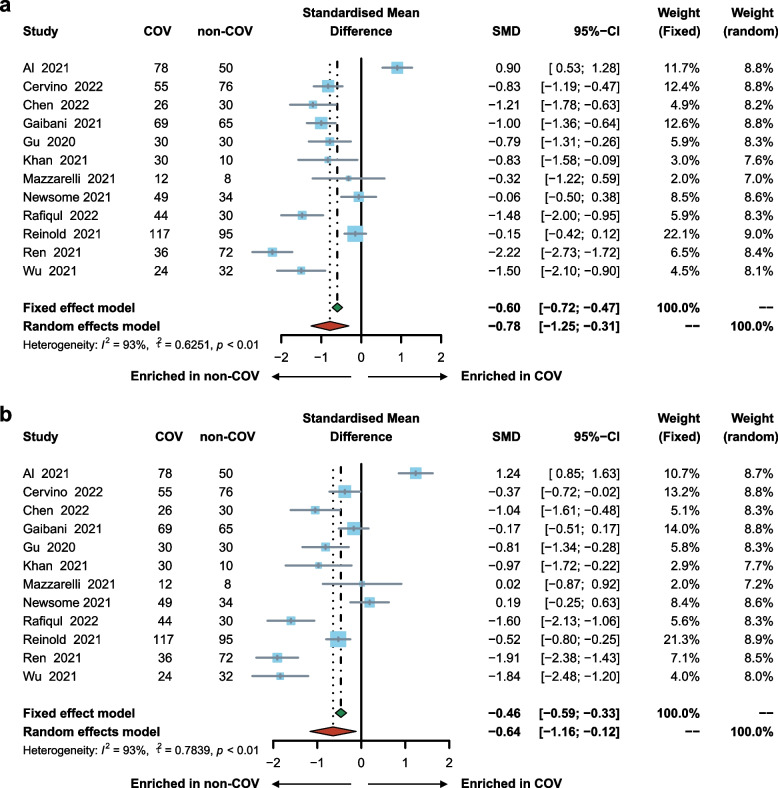
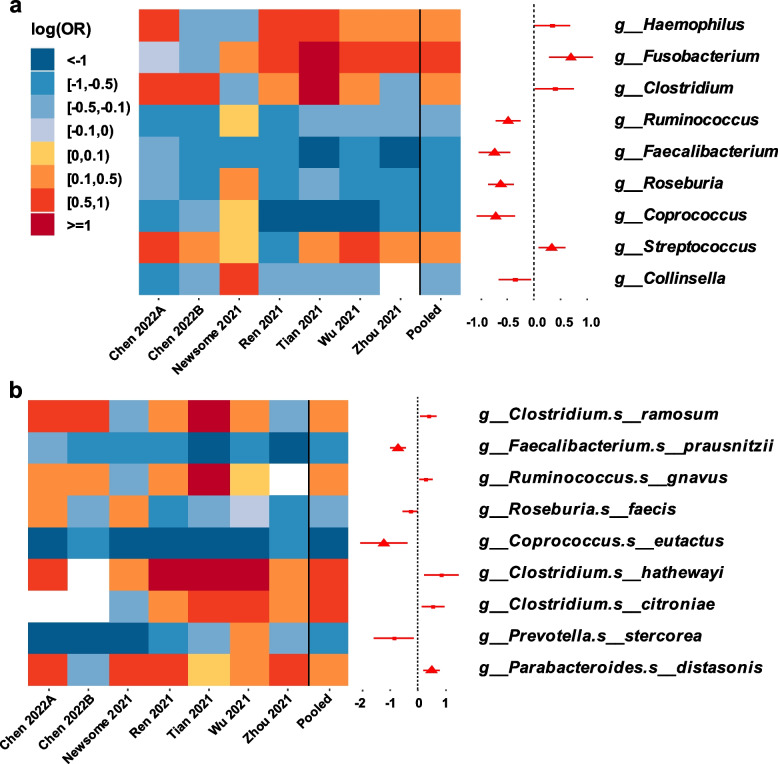
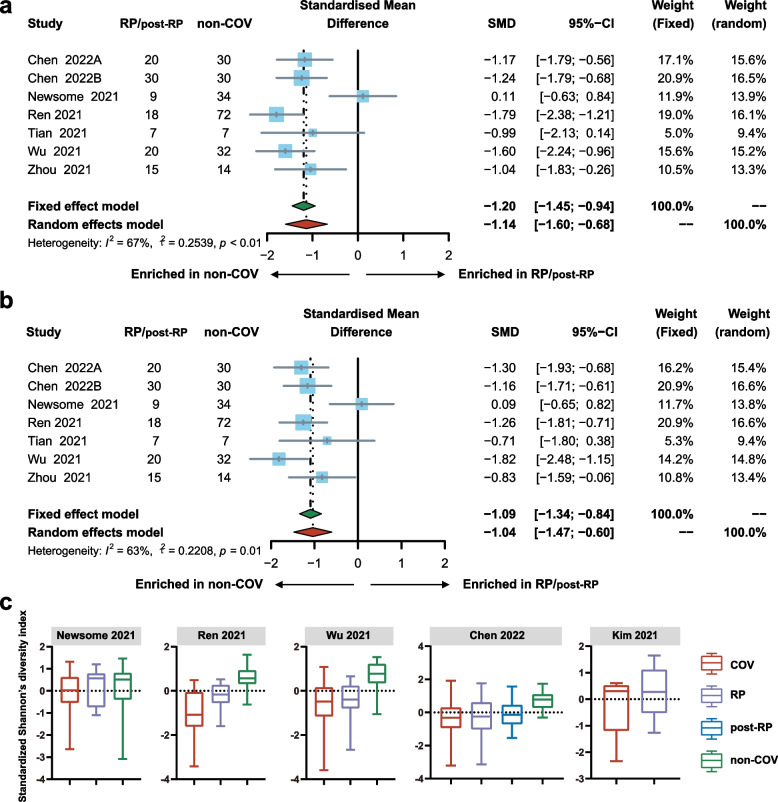
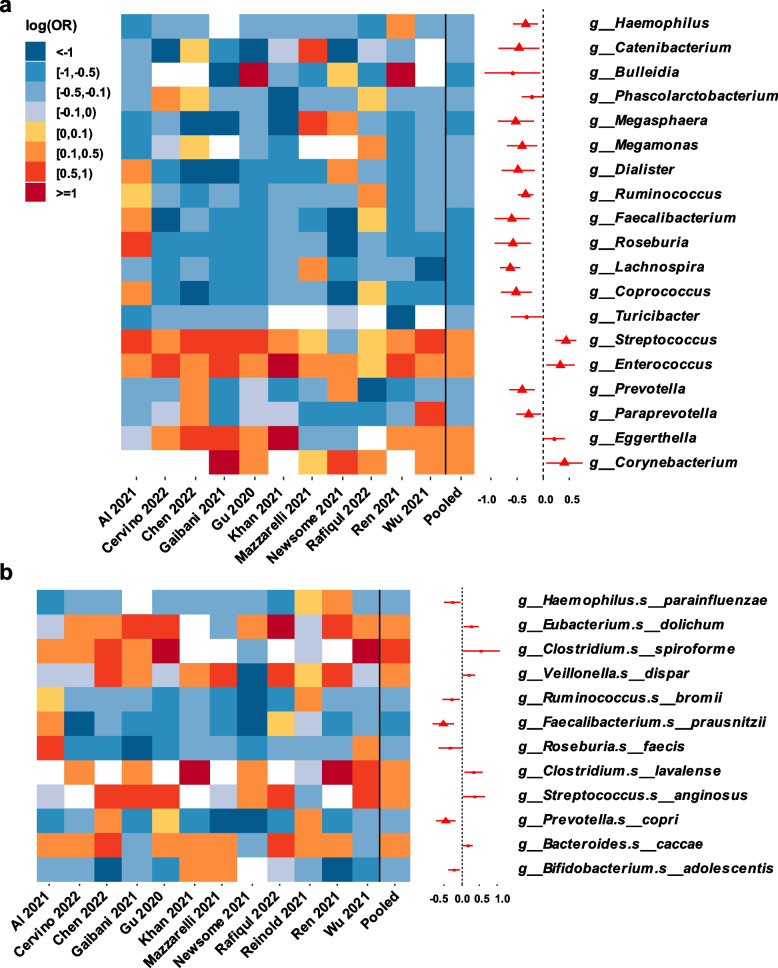
We found that gut bacterial diversity of COVID-19 patients in both the acute and recovery phases was consistently lower than non-COVID-19 individuals. Microbial differential abundance analysis showed depletion of anti-inflammatory butyrate-producing bacteria and enrichment of taxa with pro-inflammatory properties in COVID-19 patients during the acute phase compared to non-COVID-19 individuals. Analysis of microbial communities showed that the gut microbiota of COVID-19 recovered patients were still in unhealthy ecostates.
Our results provided a comprehensive synthesis to better understand gut microbial perturbations associated with COVID-19 and identified underlying biomarkers for microbiome-based diagnostics and therapeutics.
数十项研究表明,COVID-19 患者在急性期和恢复期存在肠道菌群失调。然而,对于与 COVID-19 相关的特定细菌,尚未达成共识。在这项研究中,我们进行了一项荟萃分析,以探究 COVID-19 患者的肠道微生物组是否存在广泛存在且可重复的变化。
对截至 2022 年 5 月前在电子数据库中发表的研究进行了系统综述。经过审查,我们纳入了 16 项将 COVID-19 患者与对照组的肠道微生物组进行比较的研究。然后,使用标准化工作流程对这些研究的 16S rRNA 序列数据进行重新分析,并通过荟萃分析进行综合。
我们发现 COVID-19 患者在急性期和恢复期的肠道细菌多样性均明显低于非 COVID-19 个体。微生物差异丰度分析显示,与非 COVID-19 个体相比,COVID-19 患者在急性期时抗炎性丁酸盐产生菌减少,促炎性类群富集。对微生物群落的分析表明,COVID-19 恢复期患者的肠道微生物组仍处于不健康的生态位。
我们的研究结果提供了一个综合的综合分析,以更好地了解与 COVID-19 相关的肠道微生物失调,并确定基于微生物组的诊断和治疗的潜在生物标志物。