Jiang Wanru, Qi Jiaxin, Li Xu, Chen Gang, Zhou Di, Xiao Wei, Li Ning
Shenyang Key Laboratory for TCM Material Basis Study and Innovative Drug Development, School of Traditional Chinese Materia Medica, Shenyang Pharmaceutical University, Shenyang 110016, China.
Jiangsu Kanion Parmaceutical Co., Ltd., Lianyungang 222001, China.
Chin Herb Med. 2022 Sep 28;14(4):494-510. doi: 10.1016/j.chmed.2022.09.002. eCollection 2022 Oct.
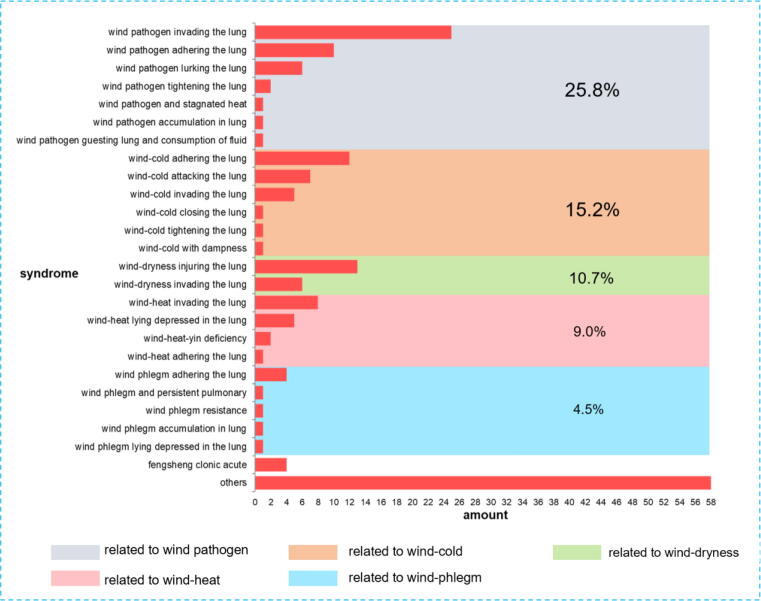
The application of traditional Chinese medicines (TCMs) has a history of more than 2000 years, which have the characteristics of multi-component, multi-target, and high safety. Post-infectious cough (PIC) is a respiratory disease with high incidence. It belongs to subacute cough and accounts for as much as 40%-50%. Cough is the main clinical manifestation of PIC. PIC seriously affects people's life quality because of complex etiology, long-term course of disease, treatment difficulties and other characteristics. Western medicines are based on the principle of symptomatic treatment, so they are often difficult to control PIC fundamentally. These factors could due to that PIC is prolonged and unable to heal repeatedly. TCMs have obvious advantages in treating PIC, with accurate curative effects, less side effects and adverse reactions and are effective in improving PIC-related symptoms and indicators, enhancing patients' life quality and reducing pain. TCMs, guided by holistic concept and syndrome differentiation, advocate determine treatment on the basis of pattern types, and have remarkable clinical treatment effects. As for TCMs etiology, pathogenesis and syndrome types of PIC, TCM scholars have not yet reached a unified standard. However, most of them think that wind pathogen can cause PIC alone, or it can be combined with other evils, which might be the main mechanism of PIC. This paper discusses the advantages and limitations of TCMs in PIC treatment from etiology, pathogenesis, distribution of syndrome types and treatment of TCMs. This article focuses on the treatment methods and pharmacodynamic material basis of wind pathogen, providing ideas in treating PIC of TCMs clinically and innovative drug development.
中药的应用已有2000多年的历史,具有多成分、多靶点、安全性高的特点。感染后咳嗽(PIC)是一种发病率较高的呼吸系统疾病。它属于亚急性咳嗽,占比高达40%-50%。咳嗽是PIC的主要临床表现。由于病因复杂、病程长、治疗困难等特点,PIC严重影响人们的生活质量。西药基于对症治疗的原则,因此往往难以从根本上控制PIC。这些因素可能导致PIC病程迁延、反复不愈。中药在治疗PIC方面具有明显优势,疗效确切,副作用和不良反应少,能有效改善PIC相关症状和指标,提高患者生活质量,减轻痛苦。中药以整体观念和辨证论治为指导,主张辨证论治,临床治疗效果显著。关于PIC的中医病因、病机和证型,中医界尚未达成统一标准。然而,大多数人认为风邪可单独导致PIC,或与其他邪气合而致病,这可能是PIC的主要病机。本文从病因、病机、证型分布及中药治疗等方面探讨中药治疗PIC的优势与局限。本文重点阐述风邪的治疗方法和药效物质基础,为中医临床治疗PIC及创新药物研发提供思路。