Capodistrias Paula, Szulecka Julia, Corciolani Matteo, Strøm-Andersen Nhat
Food Banks Norway, Ole Deviks vei 20, 0666, Oslo, Norway.
TIK Centre for Technology, Innovation and Culture, University of Oslo, P.O. Box 1108, Blindern, NO-0317, Oslo, Norway.
Socioecon Plann Sci. 2022 Aug;82:101187. doi: 10.1016/j.seps.2021.101187. Epub 2021 Nov 3.
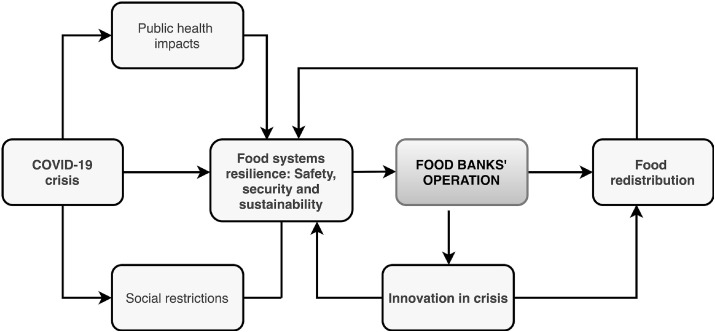
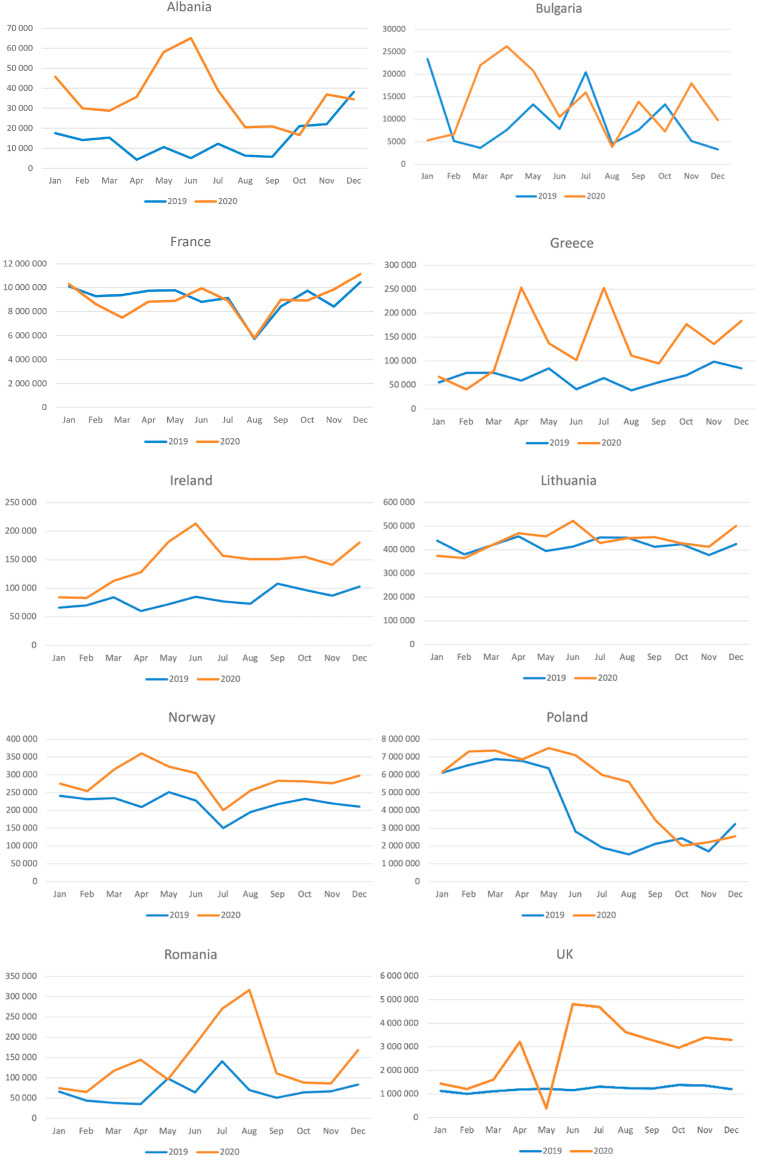
This paper examines the impact of the COVID-19 crisis on the functioning of European food banks and how resilient European food banks were in coping with the pandemic in 2020. We apply a multiple case study to assess how the first year of the pandemic affected European food banks' operations and the amount of redistributed food. We further investigate innovation practices that have been developed to cope with the new situation, hoping to draw lessons for imminent future waves of the pandemic and other social crises. Our study finds that, compared to 2019, in 2020 food banks were able to redistribute a significantly higher amount of food despite numerous social restrictions and other challenges associated with the pandemic. To explain this, we delve into the organizational innovations implemented by the studied food banks and find that the introduction of new strategies and new internal structures, as well as the establishment of new types of external network relations with other firms and/or public organizations, proved to be particularly important, enabling food banks to respond quickly and effectively to the new emergency. The study thus highlights the role of food banks in food redistribution and food waste reduction in times of crisis.
本文考察了新冠疫情危机对欧洲食品银行运作的影响,以及2020年欧洲食品银行在应对疫情时的韧性。我们采用多案例研究方法,以评估疫情第一年对欧洲食品银行运营及食品再分配量的影响。我们进一步调查为应对新情况而开展的创新实践,希望能为即将到来的新一轮疫情及其他社会危机吸取经验教训。我们的研究发现,与2019年相比,尽管存在诸多社会限制以及与疫情相关的其他挑战,但2020年食品银行能够再分配数量显著更多的食品。为解释这一点,我们深入研究了所研究食品银行实施的组织创新,发现引入新策略和新内部结构,以及与其他公司和/或公共组织建立新型外部网络关系,被证明尤为重要,这使食品银行能够迅速有效地应对新的紧急情况。该研究因此凸显了食品银行在危机时期食品再分配和减少食物浪费方面的作用。