Faculty of Medicine, City of São Paulo University, Surgical Skills and Operative Technique Unit - São Paulo (SP), Brazil.
São Camilo Hospital, Pompéia Unit, Department of Digestive, Bariatric and Metabolic Surgery, São Paulo (SP), Brazil.
Arq Bras Cir Dig. 2022 Dec 19;35:e1707. doi: 10.1590/0102-672020220002e1707. eCollection 2022.
Dysbiosis of the gut microbiota is frequently found in cases of obesity and related metabolic diseases, such as type 2 diabetes mellitus. The composition of the microbiota in diabetics is similar to that of obese people, thereby causing increased energy uptake efficiency in the large intestine of obese people, maintenance of a systemic inflammatory state, and increased insulin resistance. Bariatric surgery seems to entail an improvement in gut dysbiosis, leading to an increased diversity of the gut microbiota.
This study aimed to present a literature review on obesity-associated gut dysbiosis and its status post-bariatric surgery.
A systematic review of primary studies was conducted in PubMed, SciELO, BIREME, LILACS, Embase, ScienceDirect, and Scopus databases using DeCS (Health Science Descriptors) with the terms "obesity," "intestinal dysbiosis," "bariatric surgery," and "microbiota."
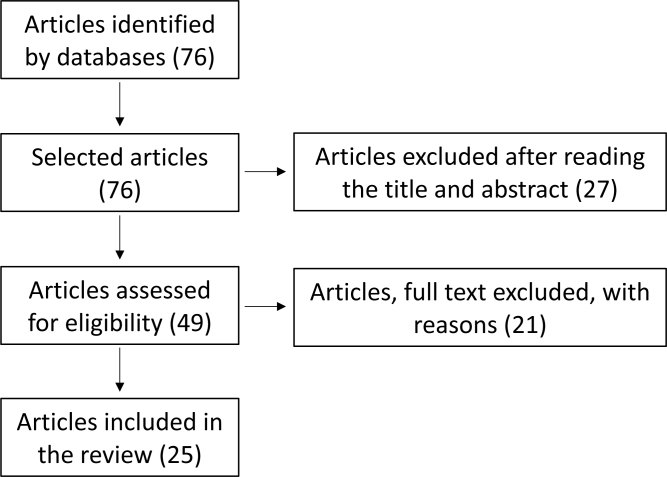
We analyzed 28 articles that had clinical studies or literature reviews as their main characteristics, of which 82% (n=23) corresponded to retrospective studies. The sample size of the studies ranged from 9 to 257 participants and/or fecal samples. The epidemiological profile showed a higher prevalence of obesity in females, ranging from 24.4 to 35.1%, with a mean age of around 25-40 years. There was a variation regarding the type of bariatric surgery, migrating between the Roux-en-Y bypass, adjustable gastric banding, and vertical gastrectomy. Of the 28 studies, 6 of them evaluated the gut microbiota of obese patients undergoing bariatric surgery and their relationship with type 2 diabetes mellitus/glucose metabolism/insulin resistance.
The intestinal microbiota is an important influencer in the regulation of the digestive tract, and obese individuals with comorbidities (diabetes mellitus, hypercholesterolemia, and metabolic syndrome) present important alterations, with an unbalance normal state, generating dysbiosis and the proliferation of bacterial species that favor the appearance of new diseases. Patients who undergo bariatric surgery present an improvement in the intestinal microbiota imbalance as well as reversibility of their comorbidities, increasing their life expectancy.
肠道微生物群落失调在肥胖症和相关代谢疾病(如 2 型糖尿病)中经常出现。糖尿病患者的微生物群落组成与肥胖人群相似,从而导致肥胖人群大肠的能量吸收效率增加、全身炎症状态维持和胰岛素抵抗增加。减重手术似乎改善了肠道微生物群落失调,导致肠道微生物群落多样性增加。
本研究旨在综述肥胖相关肠道微生物群落失调及其在减重手术后的状况。
在 PubMed、SciELO、BIREME、LILACS、Embase、ScienceDirect 和 Scopus 数据库中使用 DeCS(健康科学描述符)进行了主要研究的系统综述,使用的术语包括“肥胖”、“肠道微生物群落失调”、“减重手术”和“微生物组”。
我们分析了 28 篇具有临床研究或文献综述主要特征的文章,其中 82%(n=23)为回顾性研究。研究的样本量范围从 9 到 257 名参与者和/或粪便样本。流行病学特征显示,女性肥胖的患病率较高,范围在 24.4%至 35.1%之间,平均年龄在 25 至 40 岁左右。减重手术的类型存在差异,包括 Roux-en-Y 旁路、可调胃束带和垂直胃切除术。在 28 项研究中,有 6 项评估了肥胖患者在接受减重手术后的肠道微生物群及其与 2 型糖尿病/葡萄糖代谢/胰岛素抵抗的关系。
肠道微生物群是调节消化道的重要因素,患有合并症(糖尿病、高胆固醇血症和代谢综合征)的肥胖个体存在重要的改变,正常状态失衡,导致微生物群落失调和有利于新疾病出现的细菌物种增殖。接受减重手术的患者肠道微生物群落失衡得到改善,合并症也得到逆转,从而延长了他们的预期寿命。