Liang Bing, Wu Changhao, Wang Chao, Sun Wenshe, Chen Wujun, Hu Xiaokun, Liu Ning, Xing Dongming
Cancer Institute, The Affiliated Hospital of Qingdao University, Qingdao, China.
Department of Biochemistry and Physiology, Faculty of Health and Medical Sciences, University of Surrey, Guildford, United Kingdom.
Front Microbiol. 2022 Dec 16;13:1065608. doi: 10.3389/fmicb.2022.1065608. eCollection 2022.
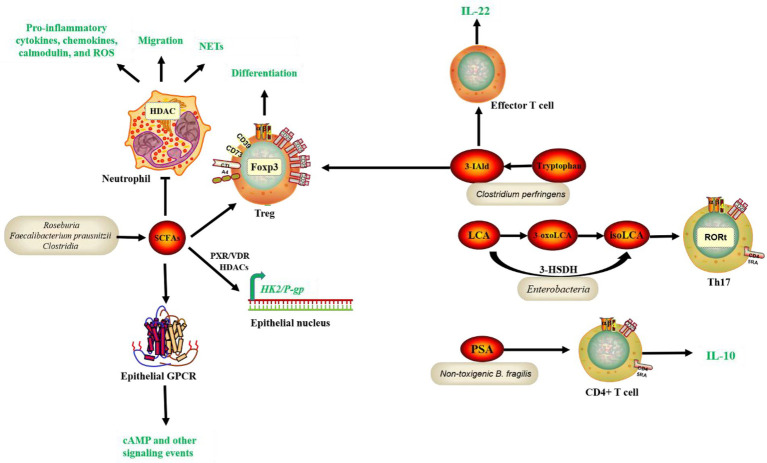
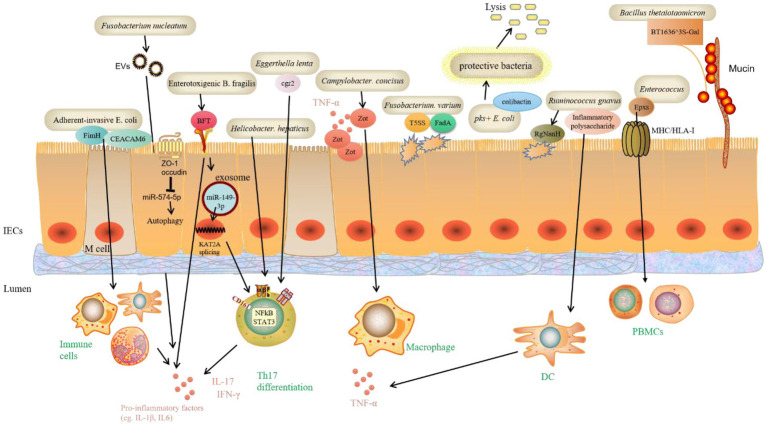
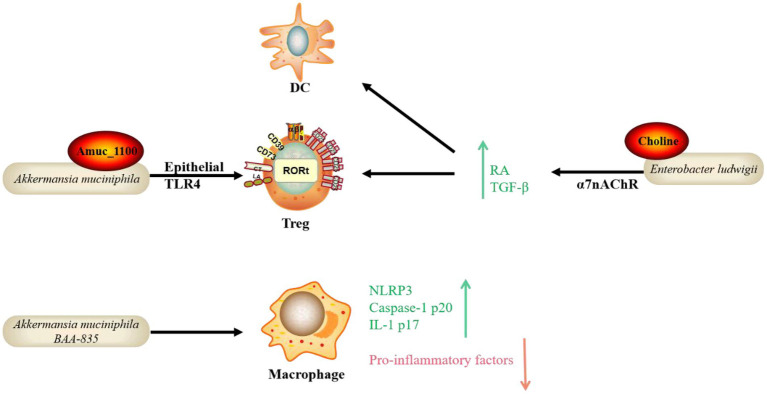
The global incidence of inflammatory bowel disease (IBD) has increased rapidly in recent years, but its exact etiology remains unclear. In the past decade, IBD has been reported to be associated with dysbiosis of gut microbiota. Although not yet proven to be a cause or consequence of IBD, the common hypothesis is that at least some alterations in the microbiome are protective or pathogenic. Furthermore, intestinal epithelial cells (IECs) serve as a protective physical barrier for gut microbiota, essential for maintaining intestinal homeostasis and actively contributes to the mucosal immune system. Thus, dysregulation within the intestinal epithelium increases intestinal permeability, promotes the entry of bacteria, toxins, and macromolecules, and disrupts intestinal immune homeostasis, all of which are associated with the clinical course of IBD. This article presents a selective overview of recent studies on bacterial mechanisms that may be protective or promotive of IBD in biological models. Moreover, we summarize and discuss the recent discovery of key modulators and signaling pathways in the IECs that could serve as potential IBD therapeutic targets. Understanding the role of the IECs in the pathogenesis of IBD may help improve the understanding of the inflammatory process and the identification of potential therapeutic targets to help ameliorate this increasingly common disease.
近年来,炎症性肠病(IBD)的全球发病率迅速上升,但其确切病因仍不清楚。在过去十年中,有报道称IBD与肠道微生物群失调有关。尽管尚未被证明是IBD的原因或结果,但常见的假设是,微生物组的至少一些改变具有保护作用或致病性。此外,肠道上皮细胞(IEC)作为肠道微生物群的保护性物理屏障,对于维持肠道稳态至关重要,并积极促进黏膜免疫系统。因此,肠道上皮内的失调会增加肠道通透性,促进细菌、毒素和大分子的进入,并破坏肠道免疫稳态,所有这些都与IBD的临床病程相关。本文选择性地概述了近期在生物学模型中关于可能对IBD具有保护或促进作用的细菌机制的研究。此外,我们总结并讨论了IEC中关键调节因子和信号通路的最新发现,这些可能成为IBD潜在的治疗靶点。了解IEC在IBD发病机制中的作用可能有助于加深对炎症过程的理解,并有助于识别潜在的治疗靶点,以帮助改善这种日益常见的疾病。