Translational Immunology, Osteoimmunology & Immunoporosis Lab (TIOIL), Department of Biotechnology, All India Institute of Medical Sciences (AIIMS), New Delhi 110029, India.
Department of Zoology, Dr. Harisingh Gour Vishwavidyalaya (Central University), Sagar 470003, India.
Cells. 2023 Jan 4;12(2):216. doi: 10.3390/cells12020216.
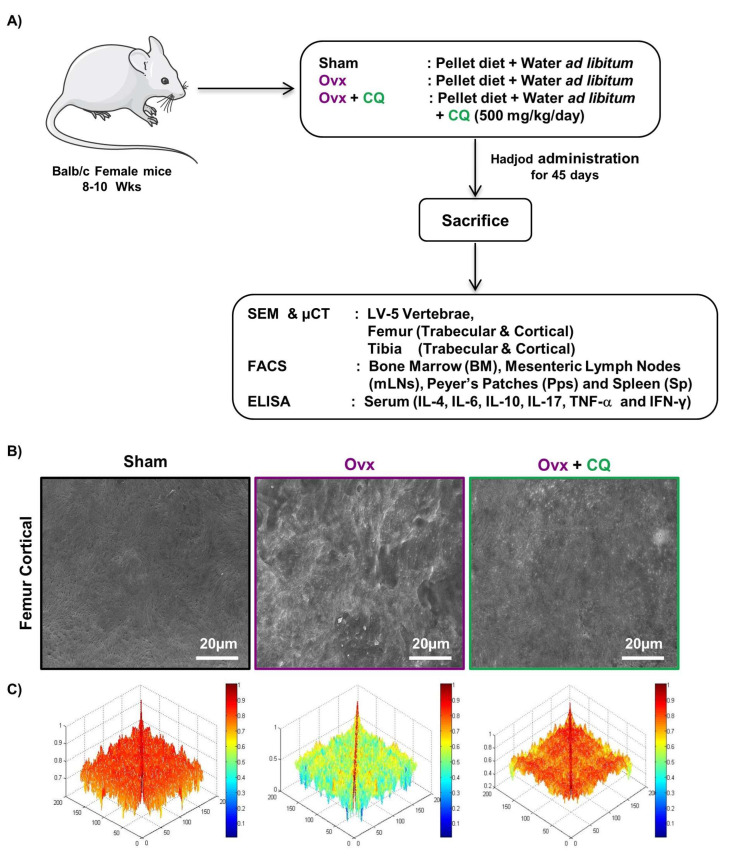
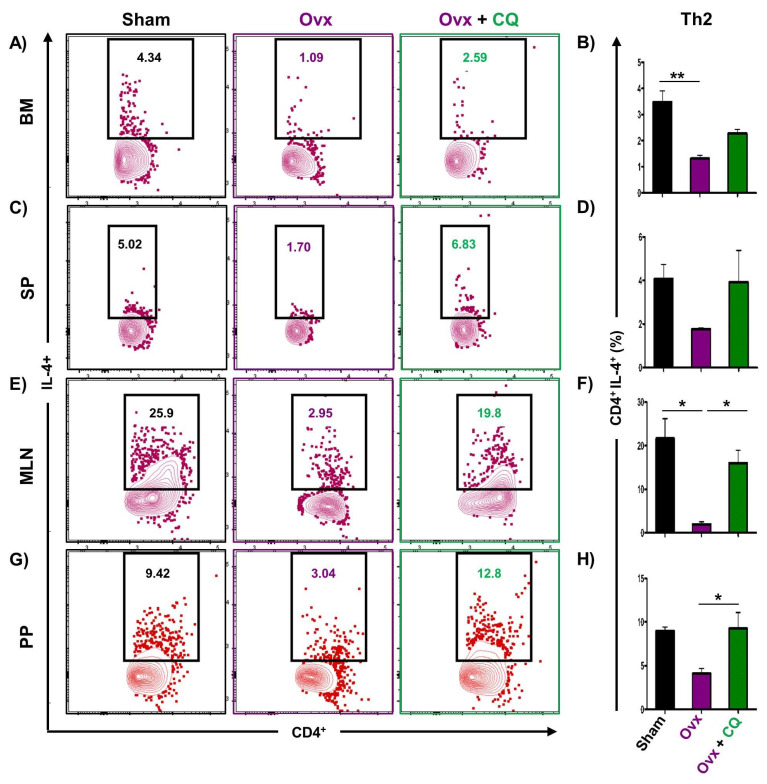
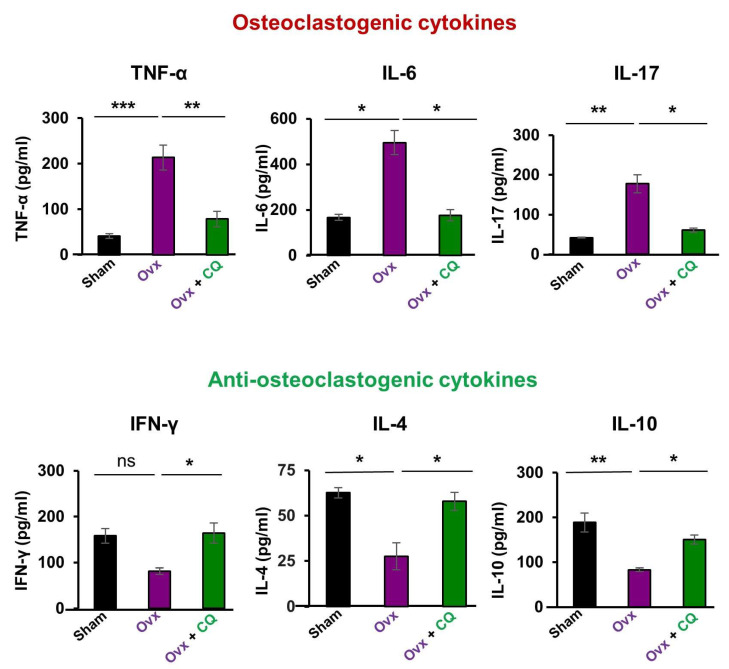
Osteoporosis is a systemic skeletal disease characterised by low bone mineral density (BMD), degeneration of bone micro-architecture, and impaired bone strength. (CQ), popularly known as Hadjod (bone setter) in Hindi, is a traditional medicinal herb exhibiting osteoprotective potential in various bone diseases, especially osteoporosis and fractures. However, the cellular mechanisms underpinning its direct effect on bone health through altering the host immune system have never been elucidated. In the present study, we interrogated the osteoprotective and immunoporotic (the osteoprotective potential of CQ via modulating the host immune system) potential of CQ in preventing inflammatory bone loss under oestrogen-deficient conditions. The current study outlines the CQ's osteoprotective potential under both ex vivo and in vivo (ovariectomized) conditions. Our ex vivo data demonstrated that, in a dose-dependent manner CQ, suppresses the RANKL-induced osteoclastogenesis ( < 0.001) as well as inhibiting the osteoclast functional activity ( < 0.001) in mouse bone marrow cells (BMCs). Our in vivo µ-CT and flow cytometry data further showed that CQ administration improves bone health and preserves bone micro-architecture by markedly raising the proportion of anti-osteoclastogenic immune cells, such as Th1 ( < 0.05), Th2 ( < 0.05), Tregs ( < 0.05), and Bregs ( < 0.01), while concurrently lowering the osteoclastogenic Th17 cells in bone marrow, mesenteric lymph nodes, Peyer's patches, and spleen in comparison to the control group. Serum cytokine analysis further supported the osteoprotective and immunoporotic potential of CQ, showing a significant increase in the levels of anti-osteoclastogenic cytokines ( < 0.05) (IFN-γ, IL-4, and IL-10) and a concurrent decrease in the levels of osteoclastogenic cytokines ( < 0.05) (TNF-α, IL-6, and IL-17). In conclusion, our data for the first time delineates the novel cellular and immunological mechanism of the osteoprotective potential of CQ under postmenopausal osteoporotic conditions.
骨质疏松症是一种全身性骨骼疾病,其特征是骨矿物质密度(BMD)低、骨微观结构退化以及骨强度受损。(CQ),在印地语中俗称 Hadjod(骨科医生),是一种传统的药用草本植物,在各种骨骼疾病中具有骨保护潜力,特别是骨质疏松症和骨折。然而,其通过改变宿主免疫系统对骨骼健康产生直接影响的细胞机制尚未得到阐明。在本研究中,我们探讨了 CQ 在预防雌激素缺乏条件下炎症性骨丢失中的骨保护和免疫性(CQ 通过调节宿主免疫系统的骨保护潜力)潜力。本研究概述了 CQ 在体外和体内(卵巢切除)条件下的骨保护潜力。我们的体外数据表明,CQ 以剂量依赖性方式抑制 RANKL 诱导的破骨细胞生成(<0.001)以及抑制破骨细胞功能活性(<0.001)在小鼠骨髓细胞(BMCs)中。我们的体内 µ-CT 和流式细胞术数据进一步表明,CQ 给药通过显著提高抗破骨细胞免疫细胞的比例来改善骨骼健康并保留骨微观结构,例如 Th1(<0.05)、Th2(<0.05)、Tregs(<0.05)和 Bregs(<0.01),同时降低骨髓、肠系膜淋巴结、派尔氏斑和脾脏中的破骨细胞生成 Th17 细胞与对照组相比。血清细胞因子分析进一步支持 CQ 的骨保护和免疫性潜力,显示抗破骨细胞细胞因子(<0.05)(IFN-γ、IL-4 和 IL-10)水平显著增加,破骨细胞生成细胞因子(<0.05)(TNF-α、IL-6 和 IL-17)水平同时降低。总之,我们的数据首次描绘了 CQ 在绝经后骨质疏松症条件下的骨保护潜力的新的细胞和免疫学机制。