Bae Haelee, Nam Hojung
AI Graduate School, Gwangju Institute of Science and Technology, 123 Cheomdangwagi-ro, Buk-gu, Gwangju 61005, Republic of Korea.
School of Electrical Engineering and Computer Science, Gwangju Institute of Science and Technology, 123 Cheomdangwagi-ro, Buk-gu, Gwangju 61005, Republic of Korea.
Biomedicines. 2022 Dec 27;11(1):67. doi: 10.3390/biomedicines11010067.
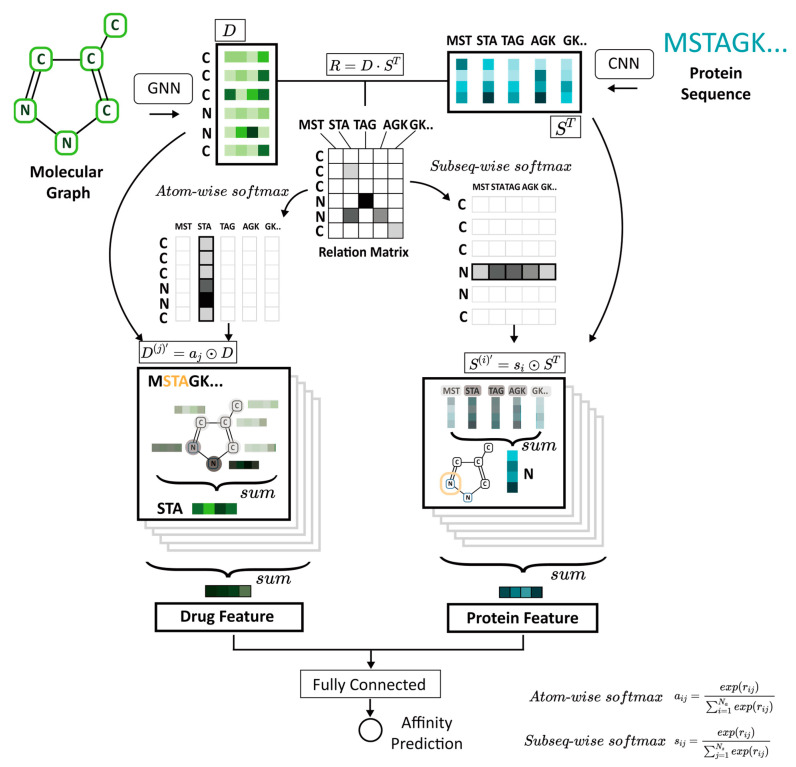
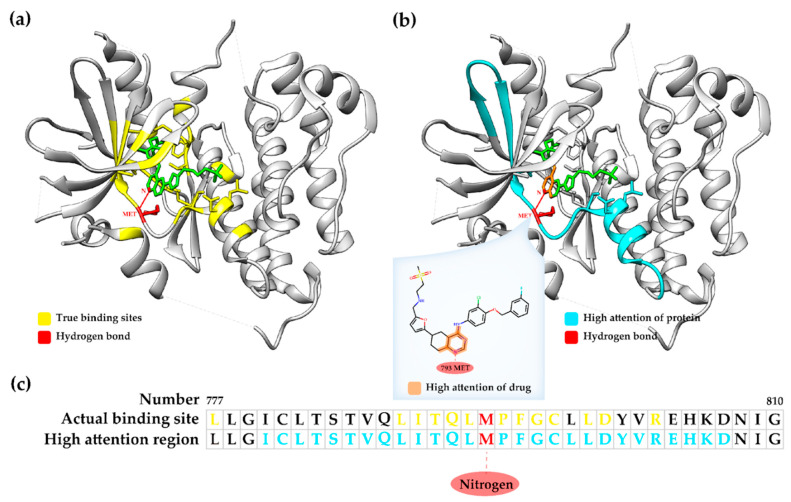
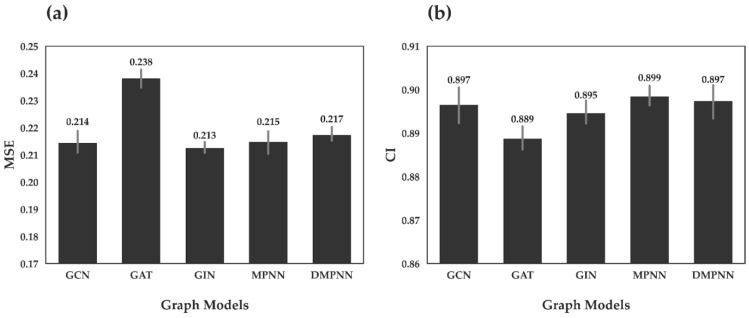
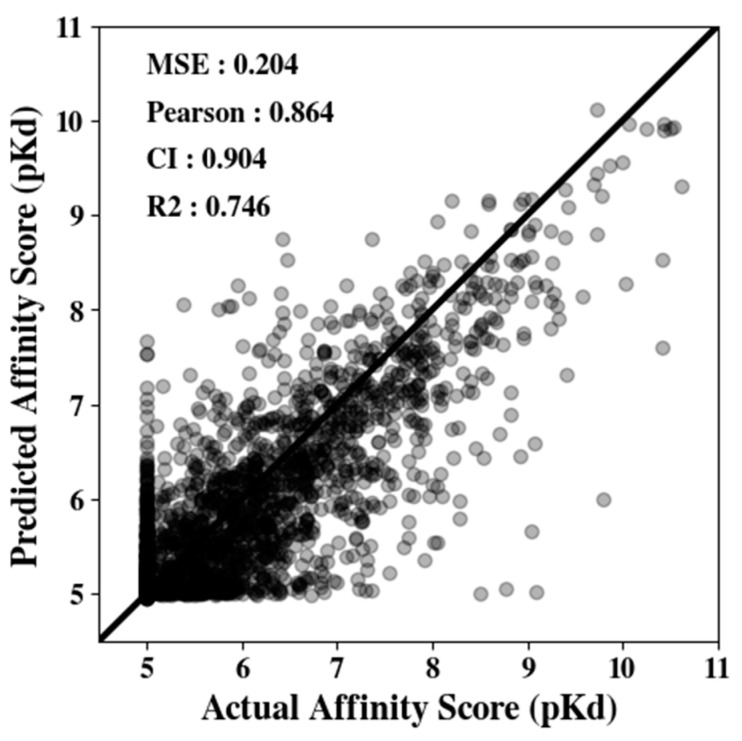
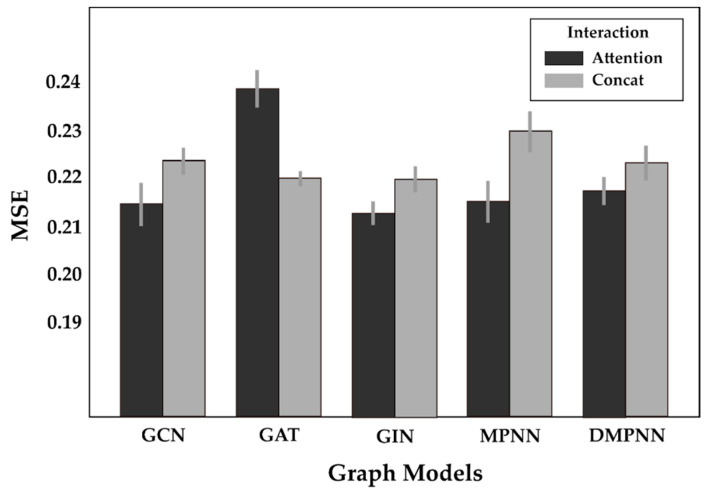
Drug-target binding affinity (DTA) prediction is an essential step in drug discovery. Drug-target protein binding occurs at specific regions between the protein and drug, rather than the entire protein and drug. However, existing deep-learning DTA prediction methods do not consider the interactions between drug substructures and protein sub-sequences. This work proposes GraphATT-DTA, a DTA prediction model that constructs the essential regions for determining interaction affinity between compounds and proteins, modeled with an attention mechanism for interpretability. We make the model consider the local-to-global interactions with the attention mechanism between compound and protein. As a result, GraphATT-DTA shows an improved prediction of DTA performance and interpretability compared with state-of-the-art models. The model is trained and evaluated with the Davis dataset, the human kinase dataset; an external evaluation is achieved with the independently proposed human kinase dataset from the BindingDB dataset.
药物 - 靶点结合亲和力(DTA)预测是药物发现过程中的关键步骤。药物与靶点蛋白的结合发生在蛋白质和药物之间的特定区域,而非整个蛋白质与药物之间。然而,现有的深度学习DTA预测方法并未考虑药物子结构与蛋白质子序列之间的相互作用。这项工作提出了GraphATT - DTA,一种DTA预测模型,该模型构建了用于确定化合物与蛋白质之间相互作用亲和力的关键区域,并采用注意力机制进行建模以实现可解释性。我们通过化合物与蛋白质之间的注意力机制使模型考虑局部到全局的相互作用。结果表明,与现有最先进的模型相比,GraphATT - DTA在DTA性能预测和可解释性方面均有所提升。该模型使用戴维斯数据集、人类激酶数据集进行训练和评估;并通过独立提出的来自BindingDB数据集的人类激酶数据集进行外部评估。