Kong Dasom, Park Ki Hoon, Kim Da-Hyun, Kim Nam Gyo, Lee Seung-Eun, Shin Nari, Kook Myung Geun, Kim Young Bong, Kang Kyung-Sun
Adult Stem Cell Research Center and Research Institute for Veterinary Science, College of Veterinary Medicine, Seoul National University, Seoul, 08826, Republic of Korea.
Department of Research and Development, KR BIOTECH CO., Ltd., Seoul, 05029, Republic of Korea.
Cell Death Discov. 2023 Jan 25;9(1):32. doi: 10.1038/s41420-022-01288-8.
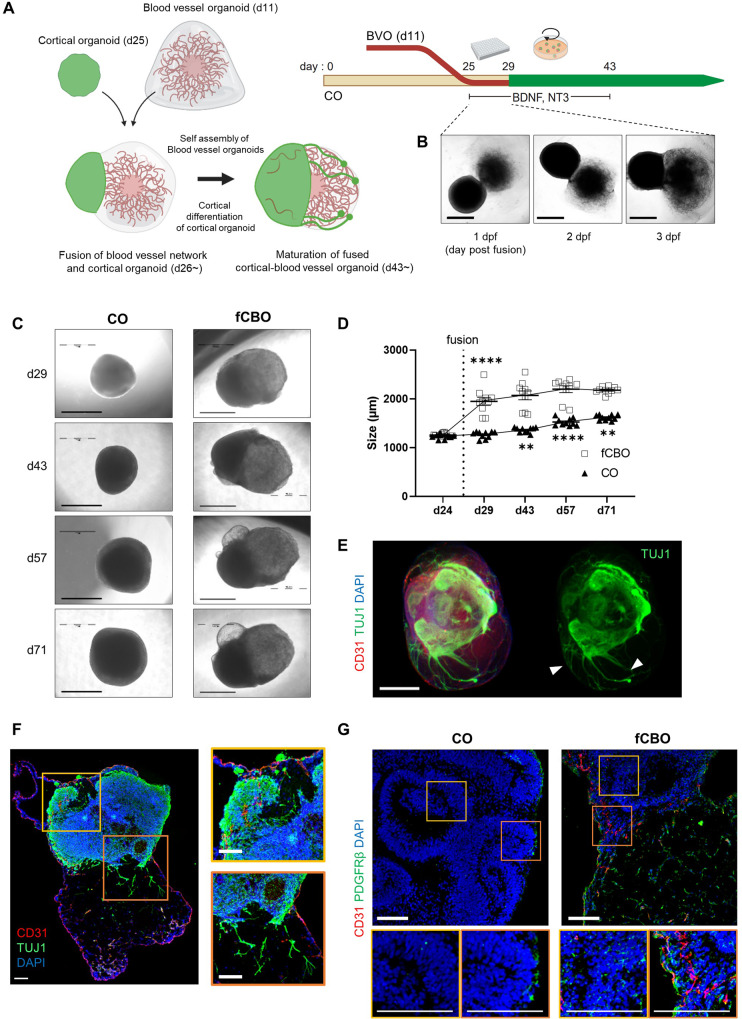
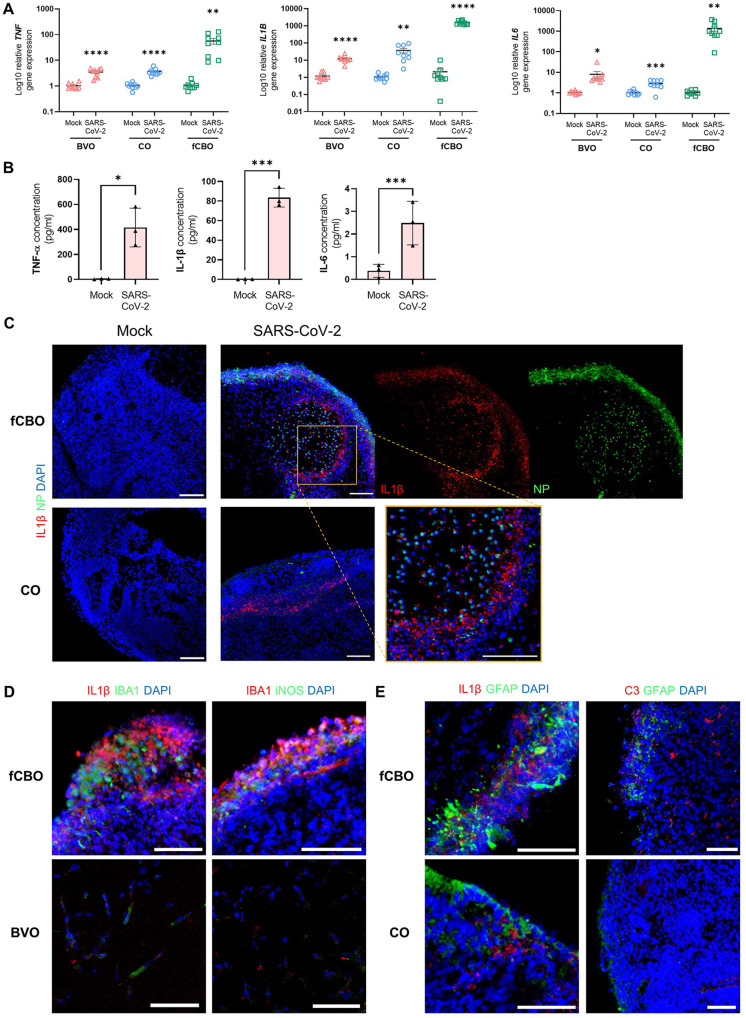
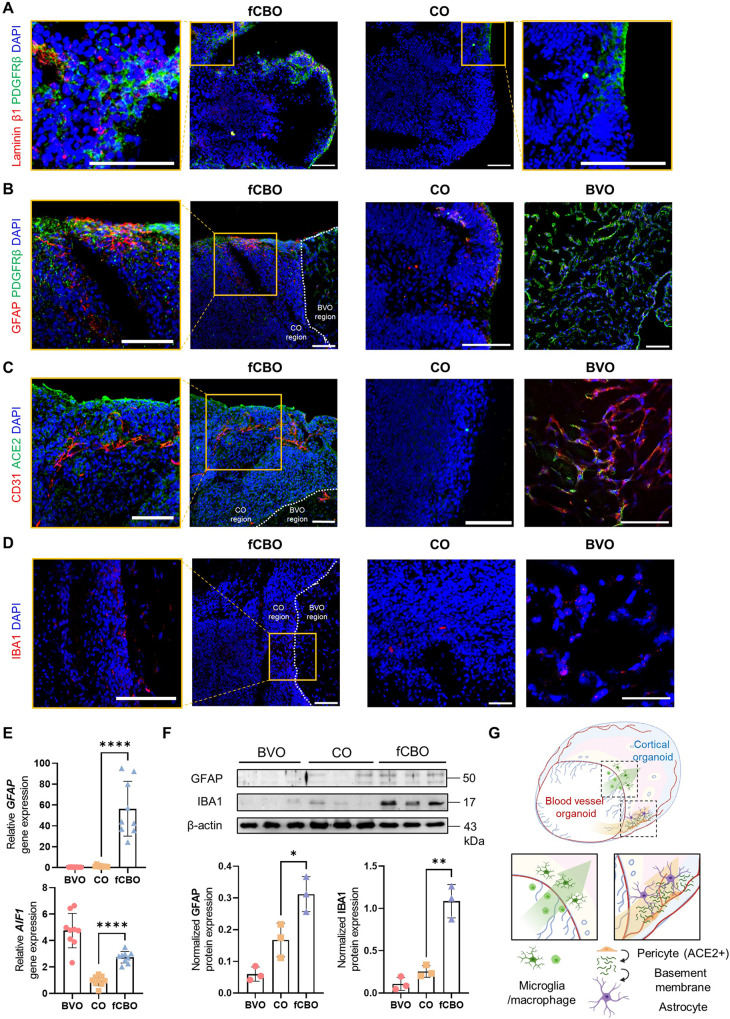
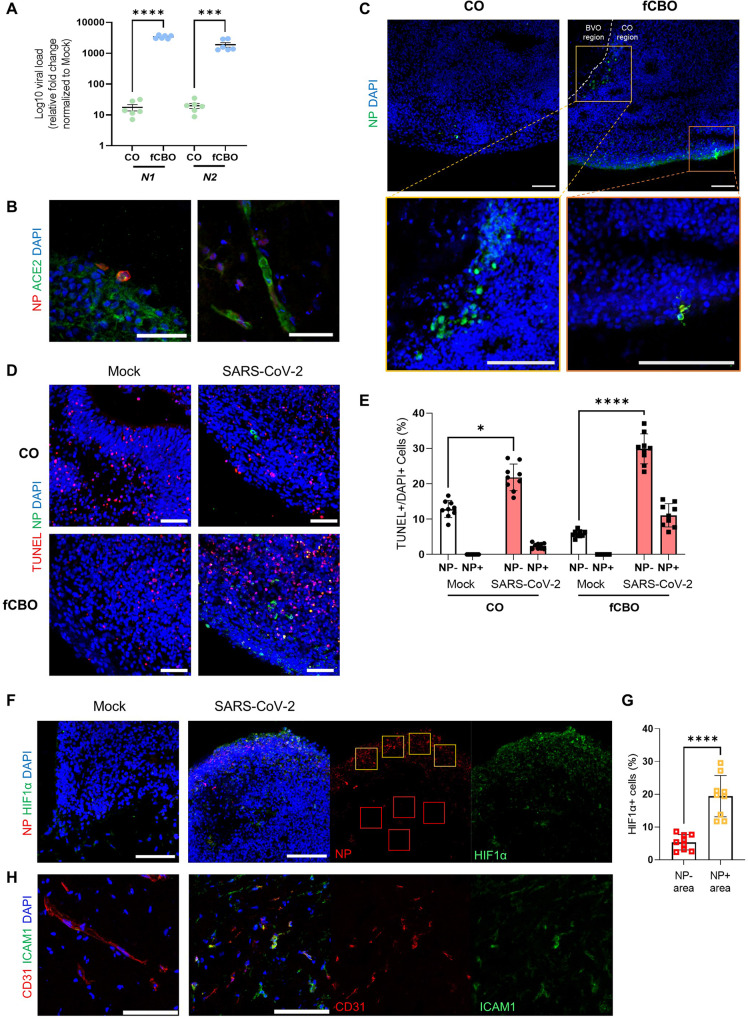
A correlation between COVID-19 and Alzheimer's disease (AD) has been proposed recently. Although the number of case reports on neuroinflammation in COVID-19 patients has increased, studies of SARS-CoV-2 neurotrophic pathology using brain organoids have restricted recapitulation of those phenotypes due to insufficiency of immune cells and absence of vasculature. Cerebral pericytes and endothelial cells, the major components of blood-brain barrier, express viral entry receptors for SARS-CoV-2 and response to systemic inflammation including direct cell death. To overcome the limitations, we developed cortical-blood vessel assembloids by fusing cortical organoid with blood vessel organoid to provide vasculature to brain organoids a nd obtained the characteristics of increased expression of microglia and astrocytes in brain organoids. Furthermore, we observed AD pathologies, including β-amyloid plaques, which were affected by the inflammatory response from SARS-CoV-2 infection. These findings provide an advanced platform to investigate human neurotrophic diseases, including COVID-19, and suggest that neuroinflammation caused by viral infection facilitates AD pathology.
最近有人提出新型冠状病毒肺炎(COVID-19)与阿尔茨海默病(AD)之间存在关联。尽管关于COVID-19患者神经炎症的病例报告数量有所增加,但由于免疫细胞不足和缺乏脉管系统,利用脑类器官对严重急性呼吸综合征冠状病毒2(SARS-CoV-2)神经营养病理学的研究对这些表型的重现受到限制。脑周细胞和内皮细胞是血脑屏障的主要组成部分,表达SARS-CoV-2的病毒进入受体,并对包括直接细胞死亡在内的全身炎症作出反应。为了克服这些限制,我们通过将皮质类器官与血管类器官融合,开发了皮质-血管组装体,为脑类器官提供脉管系统,并获得了脑类器官中小胶质细胞和星形胶质细胞表达增加的特征。此外,我们观察到了AD病理学特征,包括β-淀粉样斑块,它们受到SARS-CoV-2感染引发的炎症反应的影响。这些发现为研究包括COVID-19在内的人类神经营养疾病提供了一个先进的平台,并表明病毒感染引起的神经炎症促进了AD病理学发展。