• 文献检索
  • 文档翻译
  • 深度研究
  • 学术资讯
  • Suppr Zotero 插件Zotero 插件
  • 邀请有礼
  • 套餐&价格
  • 历史记录
应用&插件
Suppr Zotero 插件Zotero 插件浏览器插件Mac 客户端Windows 客户端微信小程序
定价
高级版会员购买积分包购买API积分包
服务
文献检索文档翻译深度研究API 文档MCP 服务
关于我们
关于 Suppr公司介绍联系我们用户协议隐私条款
关注我们

Suppr 超能文献

核心技术专利:CN118964589B侵权必究
粤ICP备2023148730 号-1Suppr @ 2026

文献检索

告别复杂PubMed语法,用中文像聊天一样搜索,搜遍4000万医学文献。AI智能推荐,让科研检索更轻松。

立即免费搜索

文件翻译

保留排版,准确专业,支持PDF/Word/PPT等文件格式,支持 12+语言互译。

免费翻译文档

深度研究

AI帮你快速写综述,25分钟生成高质量综述,智能提取关键信息,辅助科研写作。

立即免费体验

基于特征集成的深度学习神经网络用于减少植入式心脏监测器中不适当的心房颤动检测。

An ensemble of features based deep learning neural network for reduction of inappropriate atrial fibrillation detection in implantable cardiac monitors.

作者信息

Sarkar Shantanu, Majumder Shubha, Koehler Jodi L, Landman Sean R

机构信息

Medtronic Inc, Minneapolis, Minnesota.

出版信息

Heart Rhythm O2. 2022 Nov 1;4(1):51-58. doi: 10.1016/j.hroo.2022.10.014. eCollection 2023 Jan.

DOI:10.1016/j.hroo.2022.10.014
PMID:36713039
原文链接:https://pmc.ncbi.nlm.nih.gov/articles/PMC9877397/
Abstract

BACKGROUND

Multiple studies have reported on classification of raw electrocardiograms (ECGs) using convolutional neural networks (CNNs).

OBJECTIVE

We investigated an application-specific CNN using a custom ensemble of features designed based on characteristics of the ECG during atrial fibrillation (AF) to reduce inappropriate AF detections in implantable cardiac monitors (ICMs).

METHODS

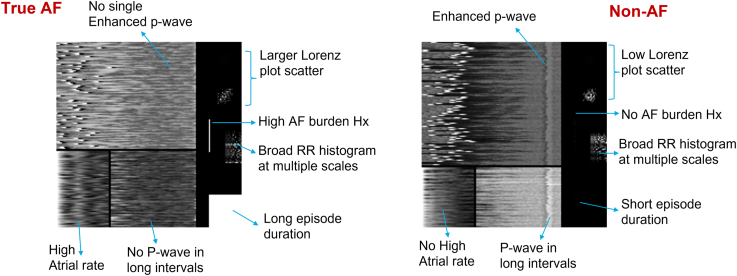
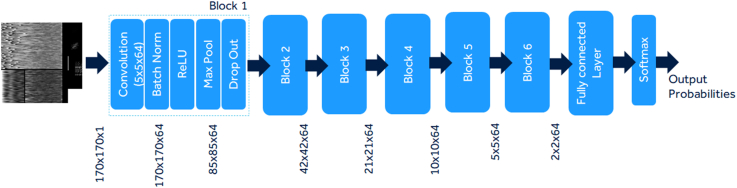
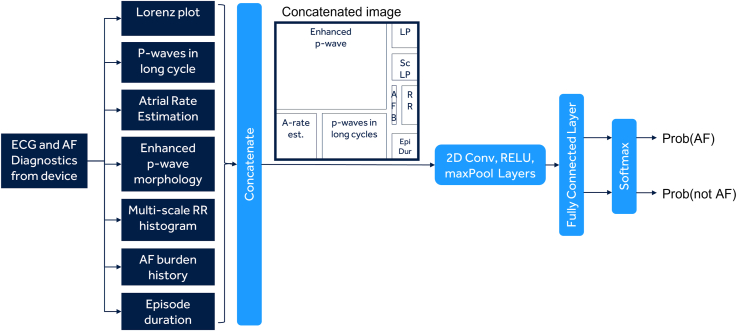
An ensemble of features was developed and combined to form an input signal for the CNN. The features were based on the morphological characteristics of AF, incoherence of RR intervals, and the fact that AF begets more AF. A custom CNN model and the RESNET18 model were trained using ICM-detected AF episodes that were adjudicated to be true AF or false detections. The trained models were evaluated using a test dataset from independent patients.

RESULTS

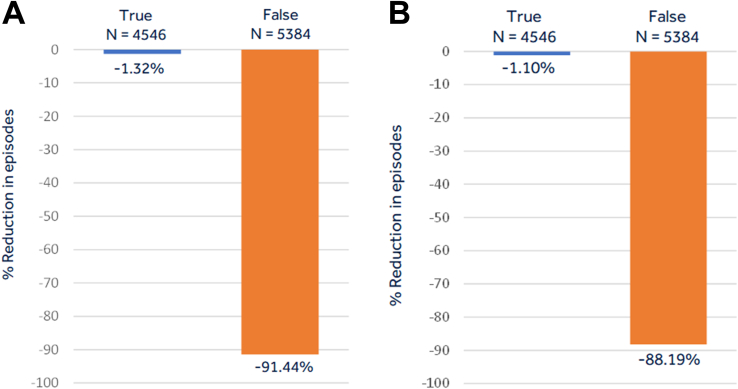
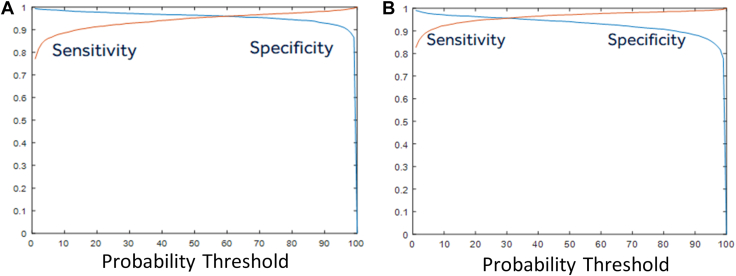
The training and validation datasets consisted of 31,757 AF episodes (2516 patients) and 28,506 false episodes (2126 patients). The validation set (20% randomly chosen episodes of each type) had an area under the curve of 0.996 for custom CNN (0.993 for RESNET18). Thresholds were chosen to obtain a relative sensitivity and specificity of 99.2% and 92.8%, respectively (99.2% and 87.9% for RESNET18, respectively). The performance in the independent test set (4546 AF episodes from 418 patients; 5384 false episodes from 605 patients) showed an area under the curve of 0.993 (0.991 for RESNET18) and relative sensitivity and specificity of 98.7% and 91.4%, respectively, at chosen thresholds (98.9% and 88.2% for RESNET18, respectively).

CONCLUSION

An ensemble of features-based CNNs was developed that reduced inappropriate AF detection in ICMs by over 90% while preserving sensitivity.

摘要

背景

多项研究报道了使用卷积神经网络(CNN)对原始心电图(ECG)进行分类。

目的

我们研究了一种特定应用的CNN,它使用基于心房颤动(AF)期间心电图特征设计的定制特征集合,以减少植入式心脏监测器(ICM)中不适当的AF检测。

方法

开发并组合了一组特征,以形成CNN的输入信号。这些特征基于AF的形态特征、RR间期的不连贯性以及AF会引发更多AF这一事实。使用经判定为真正AF或错误检测的ICM检测到的AF发作,训练了一个定制的CNN模型和RESNET18模型。使用来自独立患者的测试数据集对训练好的模型进行评估。

结果

训练和验证数据集分别包括31757次AF发作(2516例患者)和28506次错误发作(2126例患者)。验证集(每种类型随机选择20%的发作)对于定制CNN的曲线下面积为0.996(RESNET18为0.993)。选择阈值以分别获得99.2%和92.8%的相对敏感性和特异性(RESNET18分别为99.2%和87.9%)。独立测试集(来自418例患者的4546次AF发作;来自605例患者的5384次错误发作)中的性能显示,在选定阈值下,曲线下面积为0.993(RESNET18为0.991),相对敏感性和特异性分别为98.7%和91.4%(RESNET18分别为98.9%和88.2%)。

结论

开发了一种基于特征集合的CNN,它在保持敏感性的同时,将ICM中不适当的AF检测减少了90%以上。
https://cdn.ncbi.nlm.nih.gov/pmc/blobs/2ca4/9877397/6b84ab5b3dcb/gr6.jpg
https://cdn.ncbi.nlm.nih.gov/pmc/blobs/2ca4/9877397/acc6291cec63/gr1.jpg
https://cdn.ncbi.nlm.nih.gov/pmc/blobs/2ca4/9877397/2fc6e04190a5/gr2.jpg
https://cdn.ncbi.nlm.nih.gov/pmc/blobs/2ca4/9877397/66d4890fa4a8/gr3.jpg
https://cdn.ncbi.nlm.nih.gov/pmc/blobs/2ca4/9877397/c50a22388951/gr4.jpg
https://cdn.ncbi.nlm.nih.gov/pmc/blobs/2ca4/9877397/786e036c8408/gr5.jpg
https://cdn.ncbi.nlm.nih.gov/pmc/blobs/2ca4/9877397/6b84ab5b3dcb/gr6.jpg
https://cdn.ncbi.nlm.nih.gov/pmc/blobs/2ca4/9877397/acc6291cec63/gr1.jpg
https://cdn.ncbi.nlm.nih.gov/pmc/blobs/2ca4/9877397/2fc6e04190a5/gr2.jpg
https://cdn.ncbi.nlm.nih.gov/pmc/blobs/2ca4/9877397/66d4890fa4a8/gr3.jpg
https://cdn.ncbi.nlm.nih.gov/pmc/blobs/2ca4/9877397/c50a22388951/gr4.jpg
https://cdn.ncbi.nlm.nih.gov/pmc/blobs/2ca4/9877397/786e036c8408/gr5.jpg
https://cdn.ncbi.nlm.nih.gov/pmc/blobs/2ca4/9877397/6b84ab5b3dcb/gr6.jpg

相似文献

1
An ensemble of features based deep learning neural network for reduction of inappropriate atrial fibrillation detection in implantable cardiac monitors.基于特征集成的深度学习神经网络用于减少植入式心脏监测器中不适当的心房颤动检测。
Heart Rhythm O2. 2022 Nov 1;4(1):51-58. doi: 10.1016/j.hroo.2022.10.014. eCollection 2023 Jan.
2
Detection of Brief Episodes of Atrial Fibrillation Based on Electrocardiomatrix and Convolutional Neural Network.基于心电图矩阵和卷积神经网络的房颤短暂发作检测
Front Physiol. 2021 Aug 25;12:673819. doi: 10.3389/fphys.2021.673819. eCollection 2021.
3
Deep Learning Approaches to Detect Atrial Fibrillation Using Photoplethysmographic Signals: Algorithms Development Study.深度学习方法在光电容积脉搏波信号检测心房颤动中的应用:算法开发研究。
JMIR Mhealth Uhealth. 2019 Jun 6;7(6):e12770. doi: 10.2196/12770.
4
Adapting detection sensitivity based on evidence of irregular sinus arrhythmia to improve atrial fibrillation detection in insertable cardiac monitors.基于不规则窦性心律失常证据调整检测灵敏度,以提高植入式心脏监测器中的房颤检测效果。
Europace. 2018 Nov 1;20(FI_3):f321-f328. doi: 10.1093/europace/eux272.
5
P-wave evidence as a method for improving algorithm to detect atrial fibrillation in insertable cardiac monitors.作为一种改进可植入式心脏监测器中房颤检测算法的方法的P波证据。
Heart Rhythm. 2014 Sep;11(9):1575-83. doi: 10.1016/j.hrthm.2014.06.006. Epub 2014 Jun 6.
6
Comparative analysis between convolutional neural network learned and engineered features: A case study on cardiac arrhythmia detection.卷积神经网络学习特征与工程特征的对比分析:以心律失常检测为例
Cardiovasc Digit Health J. 2020 Aug 26;1(1):37-44. doi: 10.1016/j.cvdhj.2020.04.001. eCollection 2020 Jul-Aug.
7
Are implantable cardiac monitors the 'gold standard' for atrial fibrillation detection? A prospective randomized trial comparing atrial fibrillation monitoring using implantable cardiac monitors and DDDRP permanent pacemakers in post atrial fibrillation ablation patients.植入式心脏监测器是房颤检测的“金标准”吗?一项前瞻性随机试验,比较房颤消融术后患者使用植入式心脏监测器和DDDRP永久起搏器进行房颤监测的情况。
Europace. 2016 Jul;18(7):1000-5. doi: 10.1093/europace/euv367. Epub 2015 Nov 18.
8
A two-staged classifier to reduce false positives: On device detection of atrial fibrillation using phase-based distribution of poincaré plots and deep learning.一种用于减少误报的两阶段分类器:基于庞加莱图的相位分布和深度学习在设备上检测心房颤动。
J Electrocardiol. 2023 Jan-Feb;76:17-21. doi: 10.1016/j.jelectrocard.2022.10.015. Epub 2022 Nov 4.
9
Identification of Transient Noise to Reduce False Detections in Screening for Atrial Fibrillation.识别短暂性噪声以减少心房颤动筛查中的假阳性检测
Front Physiol. 2021 Jun 4;12:672875. doi: 10.3389/fphys.2021.672875. eCollection 2021.
10
Novel algorithms improve arrhythmia detection accuracy in insertable cardiac monitors.新型算法提高可植入式心脏监测器的心律失常检测准确性。
J Cardiovasc Electrophysiol. 2023 Sep;34(9):1961-1968. doi: 10.1111/jce.16007. Epub 2023 Jul 14.

引用本文的文献

1
Adaptive deep SVM for detecting early heart disease among cardiac patients.用于检测心脏病患者早期心脏病的自适应深度支持向量机
Sci Rep. 2025 Aug 18;15(1):30222. doi: 10.1038/s41598-025-15938-1.
2
State of the Art of Artificial Intelligence in Clinical Electrophysiology in 2025: A Scientific Statement of the European Heart Rhythm Association (EHRA) of the ESC, the Heart Rhythm Society (HRS), and the ESC Working Group on E-Cardiology.2025年临床心脏电生理学人工智能发展现状:欧洲心脏病学会(ESC)旗下欧洲心律协会(EHRA)、心律学会(HRS)及ESC电子心脏病学工作组的科学声明
Europace. 2025 May 7;27(5). doi: 10.1093/europace/euaf071.
3

本文引用的文献

1
Application of artificial intelligence to the electrocardiogram.人工智能在心电图中的应用。
Eur Heart J. 2021 Dec 7;42(46):4717-4730. doi: 10.1093/eurheartj/ehab649.
2
Performance of a Convolutional Neural Network and Explainability Technique for 12-Lead Electrocardiogram Interpretation.卷积神经网络性能及 12 导联心电图解释的可解释性技术。
JAMA Cardiol. 2021 Nov 1;6(11):1285-1295. doi: 10.1001/jamacardio.2021.2746.
3
The Role of Artificial Intelligence in Arrhythmia Monitoring.人工智能在心律失常监测中的作用。
Incidence of atrial fibrillation in patients with an insertable cardiac monitor and symptomatic heart failure.
植入式心脏监测器与症状性心力衰竭患者的心房颤动发生率
ESC Heart Fail. 2025 Jun;12(3):1693-1702. doi: 10.1002/ehf2.15180. Epub 2024 Dec 9.
4
Feasibility of using chest strap and dry electrode system for longer term cardiac arrhythmia monitoring: Results from a pilot observational study.使用胸带和干电极系统进行长期心律失常监测的可行性:一项初步观察性研究的结果。
Indian Pacing Electrophysiol J. 2024 Sep-Oct;24(5):282-290. doi: 10.1016/j.ipej.2024.08.003. Epub 2024 Aug 22.
Card Electrophysiol Clin. 2021 Sep;13(3):543-554. doi: 10.1016/j.ccep.2021.04.011. Epub 2021 Jul 8.
4
ECG Heartbeat Classification Based on an Improved ResNet-18 Model.基于改进型 ResNet-18 模型的心电图心拍分类。
Comput Math Methods Med. 2021 Apr 30;2021:6649970. doi: 10.1155/2021/6649970. eCollection 2021.
5
AI Filter Improves Positive Predictive Value of Atrial Fibrillation Detection by an Implantable Loop Recorder.人工智能滤波器提高植入式环路记录器检测心房颤动的阳性预测值。
JACC Clin Electrophysiol. 2021 Aug;7(8):965-975. doi: 10.1016/j.jacep.2020.12.006. Epub 2021 Feb 10.
6
Artificial intelligence-enhanced electrocardiography in cardiovascular disease management.人工智能增强心电图在心血管疾病管理中的应用
Nat Rev Cardiol. 2021 Jul;18(7):465-478. doi: 10.1038/s41569-020-00503-2. Epub 2021 Feb 1.
7
Artificial Neural Network for Atrial Fibrillation Identification in Portable Devices.用于便携式设备中房颤识别的人工神经网络
Sensors (Basel). 2020 Jun 24;20(12):3570. doi: 10.3390/s20123570.
8
Stroke Risk as a Function of Atrial Fibrillation Duration and CHADS-VASc Score.房颤持续时间和 CHADS-VASc 评分与卒中风险的关系。
Circulation. 2019 Nov 12;140(20):1639-1646. doi: 10.1161/CIRCULATIONAHA.119.041303. Epub 2019 Sep 30.
9
An artificial intelligence-enabled ECG algorithm for the identification of patients with atrial fibrillation during sinus rhythm: a retrospective analysis of outcome prediction.一种基于人工智能的心电图算法,用于在窦性心律期间识别房颤患者:对结局预测的回顾性分析。
Lancet. 2019 Sep 7;394(10201):861-867. doi: 10.1016/S0140-6736(19)31721-0. Epub 2019 Aug 1.
10
Cardiologist-level arrhythmia detection and classification in ambulatory electrocardiograms using a deep neural network.使用深度神经网络在动态心电图中进行心脏病学家级别的心律失常检测和分类。
Nat Med. 2019 Jan;25(1):65-69. doi: 10.1038/s41591-018-0268-3. Epub 2019 Jan 7.