• 文献检索
  • 文档翻译
  • 深度研究
  • 学术资讯
  • Suppr Zotero 插件Zotero 插件
  • 邀请有礼
  • 套餐&价格
  • 历史记录
应用&插件
Suppr Zotero 插件Zotero 插件浏览器插件Mac 客户端Windows 客户端微信小程序
定价
高级版会员购买积分包购买API积分包
服务
文献检索文档翻译深度研究API 文档MCP 服务
关于我们
关于 Suppr公司介绍联系我们用户协议隐私条款
关注我们

Suppr 超能文献

核心技术专利:CN118964589B侵权必究
粤ICP备2023148730 号-1Suppr @ 2026

文献检索

告别复杂PubMed语法,用中文像聊天一样搜索,搜遍4000万医学文献。AI智能推荐,让科研检索更轻松。

立即免费搜索

文件翻译

保留排版,准确专业,支持PDF/Word/PPT等文件格式,支持 12+语言互译。

免费翻译文档

深度研究

AI帮你快速写综述,25分钟生成高质量综述,智能提取关键信息,辅助科研写作。

立即免费体验

通过综合生物信息学分析,长链非编码RNA LINC01833是肺腺癌患者的预后生物标志物并与免疫浸润相关。

LncRNA LINC01833 is a Prognostic Biomarker and Correlates with Immune Infiltrates in Patients with Lung Adenocarcinoma by Integrated Bioinformatics Analysis.

作者信息

Liu Wei, Wan Qiu, Zhou Enzhu, He Ping, Tang Lixin

机构信息

Department of Emergency Eedicine, Chongqing Public Health Medical Center, Shapingba 400000, Chongqing, China.

Department of Respiratory Geriatrics, Chongqing Public Health Medical Center, Shapingba 400000, Chongqing, China.

出版信息

J Oncol. 2023 Jan 27;2023:3965198. doi: 10.1155/2023/3965198. eCollection 2023.

DOI:10.1155/2023/3965198
PMID:36742153
原文链接:https://pmc.ncbi.nlm.nih.gov/articles/PMC9897928/
Abstract

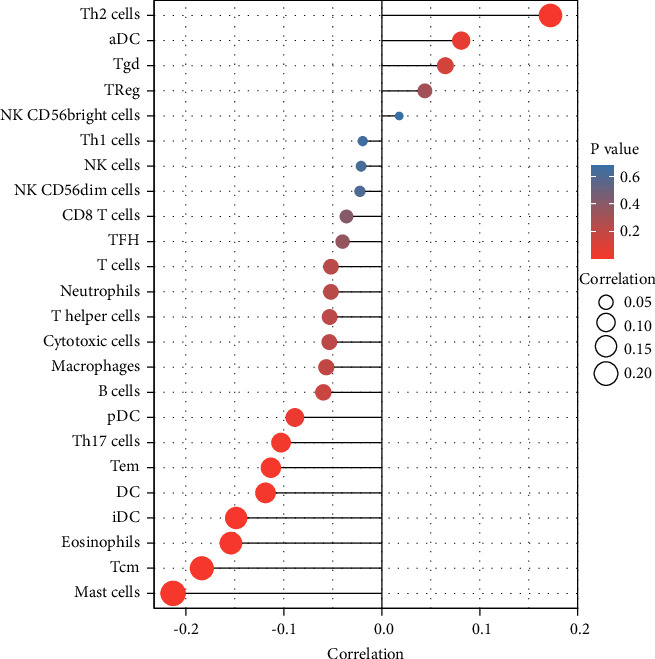
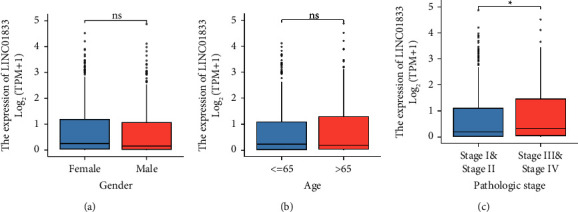
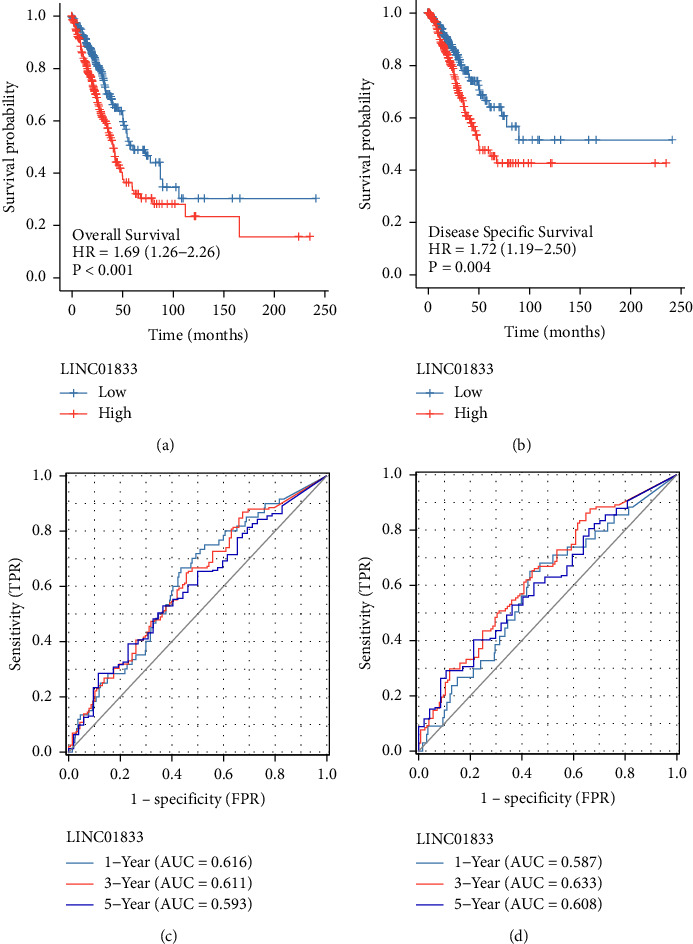
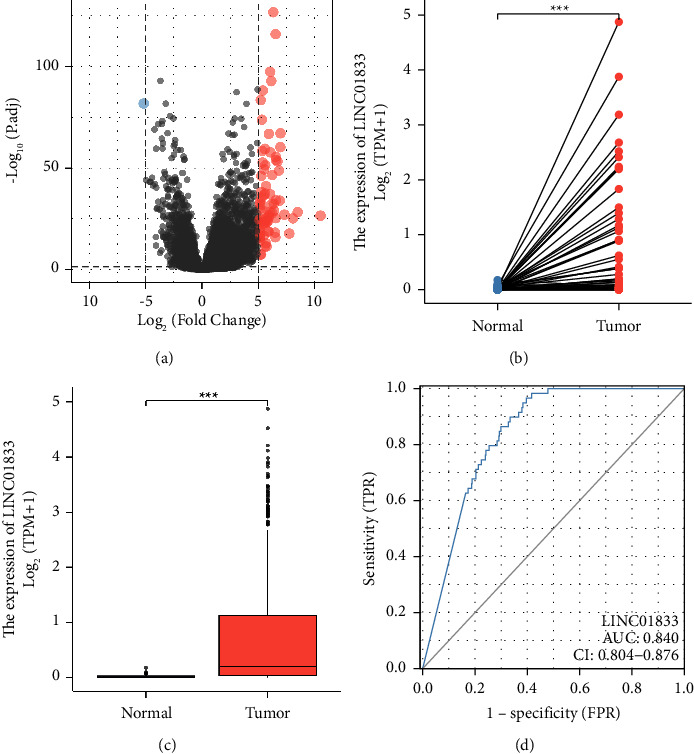
Due to the absence of accurate tools for early detection and successful treatment, lung adenocarcinoma (LUAD) is one of the most aggressive tumors with high morbidity and mortality globally. It is absolutely necessary to investigate the process behind its development and search for new biomarkers that could aid in the early detection of LUAD. There is a correlation between the immune microenvironment of the tumor and the prognosis of lung cancer as well as the efficacy of immunotherapy. Long noncoding RNAs (lncRNAs) have been identified as potential prognostic biomarkers linked to immunological activities. In this study, we identified 1 downregulated lncRNA and 76 upregulated lncRNAs in LUAD samples from TCGA datasets. Among the 77 dysregulated lncRNAs, our attention focused on lncRNA LINC01833 (LINC01833). When compared with nontumor specimens, the level of expression of LINC01833 was shown to be significantly elevated in LUAD samples. In addition, the data of the ROC study revealed that LUAD patients with high LINC01833 expression had an AUC value of 0.840 (95% confidence interval: 0.804 to 0.876). There was a correlation between high LINC01833 expression and an advanced clinical stage. Patients who had a high expression of LINC01833 were shown to have a lower overall survival rate ( < 0.001) and a lower disease-specific survival rate ( = 0.004) in comparison to patients who were in the low LINC01833 group, according to the data on survival. In addition, the results of the multivariate analysis revealed that high LINC01833 expression was an independent predictor of poor survival in LUAD. Moreover, the immune analysis revealed that we found that the expression of LINC01833 was positively associated with Th2 cells, aDC, and Tgd, while negatively associated with Mast cells, Tcm, Eosinophils, iDC, DC, Tem, Th17 cells, and pDC. Overall, our data point to the possibility that the unique lncRNA LINC01833 might be employed as a diagnostic and prognostic marker, and as a result, it has a significant impact on clinical practice.

摘要

由于缺乏早期检测和成功治疗的准确工具,肺腺癌(LUAD)是全球发病率和死亡率最高的侵袭性肿瘤之一。研究其发展背后的过程并寻找有助于LUAD早期检测的新生物标志物是绝对必要的。肿瘤免疫微环境与肺癌预后以及免疫治疗疗效之间存在关联。长链非编码RNA(lncRNAs)已被确定为与免疫活动相关的潜在预后生物标志物。在本研究中,我们从TCGA数据集中鉴定出LUAD样本中有1个lncRNA下调,76个lncRNA上调。在这77个失调的lncRNA中,我们将注意力集中在lncRNA LINC01833(LINC01833)上。与非肿瘤标本相比,LINC01833在LUAD样本中的表达水平显著升高。此外,ROC研究数据显示,LINC01833高表达的LUAD患者的AUC值为0.840(95%置信区间:0.804至0.876)。LINC01833高表达与临床晚期相关。根据生存数据,与LINC01833低表达组的患者相比,LINC01833高表达的患者总生存率较低(<0.001),疾病特异性生存率较低(=0.004)。此外,多变量分析结果显示,LINC01833高表达是LUAD患者生存不良的独立预测因子。此外,免疫分析表明,我们发现LINC01833的表达与Th2细胞、aDC和Tgd呈正相关,而与肥大细胞、Tcm、嗜酸性粒细胞、iDC、DC、Tem、Th17细胞和pDC呈负相关。总体而言,我们的数据表明,独特的lncRNA LINC01833可能用作诊断和预后标志物,因此,它对临床实践具有重大影响。
https://cdn.ncbi.nlm.nih.gov/pmc/blobs/0b26/9897928/85bb96fc9772/JO2023-3965198.004.jpg
https://cdn.ncbi.nlm.nih.gov/pmc/blobs/0b26/9897928/8b5d25113017/JO2023-3965198.001.jpg
https://cdn.ncbi.nlm.nih.gov/pmc/blobs/0b26/9897928/76b41852c531/JO2023-3965198.002.jpg
https://cdn.ncbi.nlm.nih.gov/pmc/blobs/0b26/9897928/a8cc7fd2300f/JO2023-3965198.003.jpg
https://cdn.ncbi.nlm.nih.gov/pmc/blobs/0b26/9897928/85bb96fc9772/JO2023-3965198.004.jpg
https://cdn.ncbi.nlm.nih.gov/pmc/blobs/0b26/9897928/8b5d25113017/JO2023-3965198.001.jpg
https://cdn.ncbi.nlm.nih.gov/pmc/blobs/0b26/9897928/76b41852c531/JO2023-3965198.002.jpg
https://cdn.ncbi.nlm.nih.gov/pmc/blobs/0b26/9897928/a8cc7fd2300f/JO2023-3965198.003.jpg
https://cdn.ncbi.nlm.nih.gov/pmc/blobs/0b26/9897928/85bb96fc9772/JO2023-3965198.004.jpg

相似文献

1
LncRNA LINC01833 is a Prognostic Biomarker and Correlates with Immune Infiltrates in Patients with Lung Adenocarcinoma by Integrated Bioinformatics Analysis.通过综合生物信息学分析,长链非编码RNA LINC01833是肺腺癌患者的预后生物标志物并与免疫浸润相关。
J Oncol. 2023 Jan 27;2023:3965198. doi: 10.1155/2023/3965198. eCollection 2023.
2
Comprehensive Analysis of NPSR1-AS1 as a Novel Diagnostic and Prognostic Biomarker Involved in Immune Infiltrates in Lung Adenocarcinoma.NPSR1-AS1作为参与肺腺癌免疫浸润的新型诊断和预后生物标志物的综合分析
J Oncol. 2022 Oct 15;2022:2099327. doi: 10.1155/2022/2099327. eCollection 2022.
3
Identification of GPD1L as a Potential Prognosis Biomarker and Associated with Immune Infiltrates in Lung Adenocarcinoma.鉴定 GPD1L 为肺腺癌的一个潜在预后生物标志物,并与免疫浸润有关。
Mediators Inflamm. 2023 Mar 30;2023:9162249. doi: 10.1155/2023/9162249. eCollection 2023.
4
The Long Noncoding RNA Linc01833 Enhances Lung Adenocarcinoma Progression via MiR-519e-3p/S100A4 Axis.长链非编码RNA Linc01833通过MiR-519e-3p/S100A4轴促进肺腺癌进展。
Cancer Manag Res. 2020 Nov 3;12:11157-11167. doi: 10.2147/CMAR.S279623. eCollection 2020.
5
Prognostic value of lncRNAs related to fatty acid metabolism in lung adenocarcinoma and their correlation with tumor microenvironment based on bioinformatics analysis.基于生物信息学分析的脂肪酸代谢相关lncRNAs在肺腺癌中的预后价值及其与肿瘤微环境的相关性
Front Oncol. 2022 Oct 10;12:1022097. doi: 10.3389/fonc.2022.1022097. eCollection 2022.
6
Construction of a Prognostic Immune-Related LncRNA Risk Model for Lung Adenocarcinoma.构建肺腺癌的预后免疫相关长链非编码RNA风险模型
Front Cell Dev Biol. 2021 Mar 18;9:648806. doi: 10.3389/fcell.2021.648806. eCollection 2021.
7
Identification of an immune-related six-long noncoding RNA signature as a novel prognosis biomarker for adenocarcinoma of lung.鉴定一个免疫相关的六个长非编码 RNA 特征作为肺腺癌的新型预后生物标志物。
Biosci Rep. 2021 Jan 29;41(1). doi: 10.1042/BSR20202444.
8
Development and Validation of Lactate Metabolism-Related lncRNA Signature as a Prognostic Model for Lung Adenocarcinoma.乳酸代谢相关 lncRNA 标志物的构建及其在肺腺癌预后评估中的价值
Front Endocrinol (Lausanne). 2022 Mar 29;13:829175. doi: 10.3389/fendo.2022.829175. eCollection 2022.
9
Prognostic Value of Genomic Instability of mA-Related lncRNAs in Lung Adenocarcinoma.与微卫星高度不稳定相关的长链非编码RNA的基因组不稳定性在肺腺癌中的预后价值
Front Cell Dev Biol. 2022 Mar 3;10:707405. doi: 10.3389/fcell.2022.707405. eCollection 2022.
10
Relationships of N6-Methyladenosine-Related Long Non-Coding RNAs With Tumor Immune Microenvironment and Clinical Prognosis in Lung Adenocarcinoma.N6-甲基腺苷相关长链非编码RNA与肺腺癌肿瘤免疫微环境及临床预后的关系
Front Genet. 2021 Oct 20;12:714697. doi: 10.3389/fgene.2021.714697. eCollection 2021.

引用本文的文献

1
Non-Coding RNA as a Biomarker in Lung Cancer.非编码RNA作为肺癌的生物标志物
Noncoding RNA. 2024 Sep 30;10(5):50. doi: 10.3390/ncrna10050050.
2
Non-coding RNAs and exosomal non-coding RNAs in lung cancer: insights into their functions.肺癌中的非编码RNA和外泌体非编码RNA:对其功能的见解
Front Cell Dev Biol. 2024 May 27;12:1397788. doi: 10.3389/fcell.2024.1397788. eCollection 2024.
3
Crosstalk between copper homeostasis and cuproptosis reveals a lncRNA signature to prognosis prediction, immunotherapy personalization, and agent selection for patients with lung adenocarcinoma.

本文引用的文献

1
Tumor-associated exosomes promote lung cancer metastasis through multiple mechanisms.肿瘤相关外泌体通过多种机制促进肺癌转移。
Mol Cancer. 2021 Sep 13;20(1):117. doi: 10.1186/s12943-021-01411-w.
2
Current and Future Development in Lung Cancer Diagnosis.肺癌诊断的现状与未来发展。
Int J Mol Sci. 2021 Aug 12;22(16):8661. doi: 10.3390/ijms22168661.
3
Lung cancer.肺癌。
铜稳态与铜死亡的串扰揭示了长链非编码 RNA 特征,可用于预测肺腺癌患者的预后、免疫治疗个体化和药物选择。
Aging (Albany NY). 2023 Nov 26;15(22):13504-13541. doi: 10.18632/aging.205281.
4
Construction of an EMT-related lncRNA prognostic signature for lung adenocarcinoma and functional verification of its hub gene LINC01615.构建 EMT 相关 lncRNA 预后signature 用于肺腺癌,并对其关键基因 LINC01615 进行功能验证。
J Cancer Res Clin Oncol. 2023 Dec;149(20):17781-17793. doi: 10.1007/s00432-023-05476-6. Epub 2023 Nov 7.
Lancet. 2021 Aug 7;398(10299):535-554. doi: 10.1016/S0140-6736(21)00312-3. Epub 2021 Jul 21.
4
LncRNA MCM3AP-AS1 sponges miR-148a to enhance cell invasion and migration in small cell lung cancer.长链非编码 RNA MCM3AP-AS1 通过海绵吸附 miR-148a 促进小细胞肺癌细胞侵袭和迁移。
BMC Cancer. 2021 Jul 16;21(1):820. doi: 10.1186/s12885-021-08365-8.
5
LncRNA LINC00525 suppresses p21 expression via mRNA decay and triplex-mediated changes in chromatin structure in lung adenocarcinoma.长链非编码 RNA LINC00525 通过 mRNA 衰变和三链体介导的染色质结构改变抑制肺腺癌中 p21 的表达。
Cancer Commun (Lond). 2021 Jul;41(7):596-614. doi: 10.1002/cac2.12181. Epub 2021 Jun 9.
6
Prediction of bladder cancer outcome by identifying and validating a mutation-derived genomic instability-associated long noncoding RNA (lncRNA) signature.通过鉴定和验证与基因突变相关的基因组不稳定性的长链非编码 RNA(lncRNA)特征来预测膀胱癌的预后。
Bioengineered. 2021 Dec;12(1):1725-1738. doi: 10.1080/21655979.2021.1924555.
7
Five long non-coding RNAs establish a prognostic nomogram and construct a competing endogenous RNA network in the progression of non-small cell lung cancer.五种长非编码 RNA 建立了一个预后列线图,并构建了非小细胞肺癌进展中的竞争内源性 RNA 网络。
BMC Cancer. 2021 Apr 23;21(1):457. doi: 10.1186/s12885-021-08207-7.
8
Non-coding RNA in cancer.癌症中的非编码 RNA
Essays Biochem. 2021 Oct 27;65(4):625-639. doi: 10.1042/EBC20200032.
9
ITGB1-DT Facilitates Lung Adenocarcinoma Progression via Forming a Positive Feedback Loop With ITGB1/Wnt/β-Catenin/MYC.整合素β1反义转录本(ITGB1-DT)通过与整合素β1/ Wnt/β-连环蛋白/ MYC形成正反馈环促进肺腺癌进展。
Front Cell Dev Biol. 2021 Mar 4;9:631259. doi: 10.3389/fcell.2021.631259. eCollection 2021.
10
Construction of a Glycolysis-related long noncoding RNA signature for predicting survival in endometrial cancer.构建用于预测子宫内膜癌生存的糖酵解相关长链非编码RNA特征
J Cancer. 2021 Jan 1;12(5):1431-1444. doi: 10.7150/jca.50413. eCollection 2021.