Department of Medical Education, California University of Science and Medicine, Colton, CA, USA.
J Immigr Minor Health. 2023 Dec;25(6):1261-1269. doi: 10.1007/s10903-023-01463-8. Epub 2023 Feb 25.
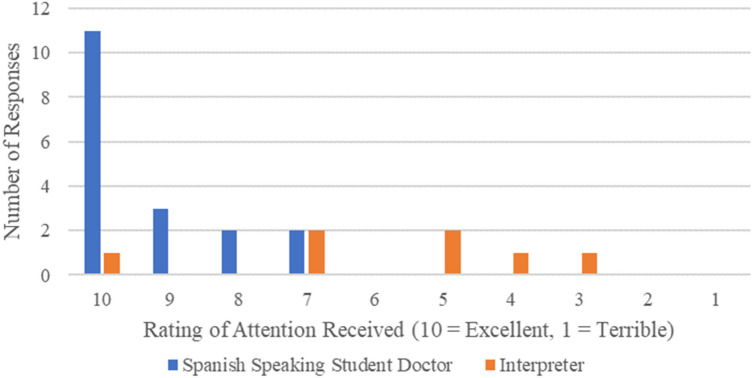
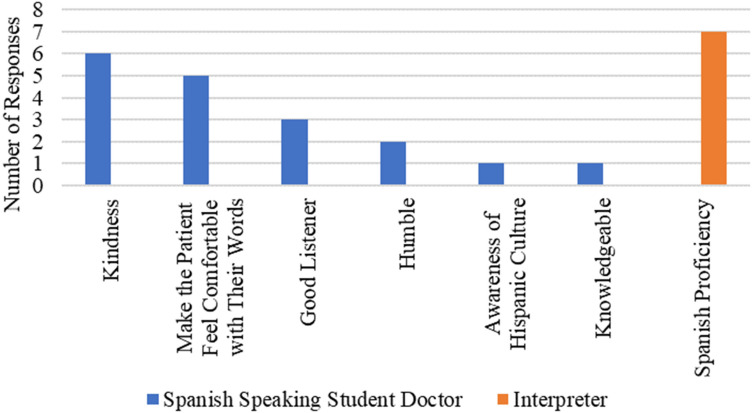
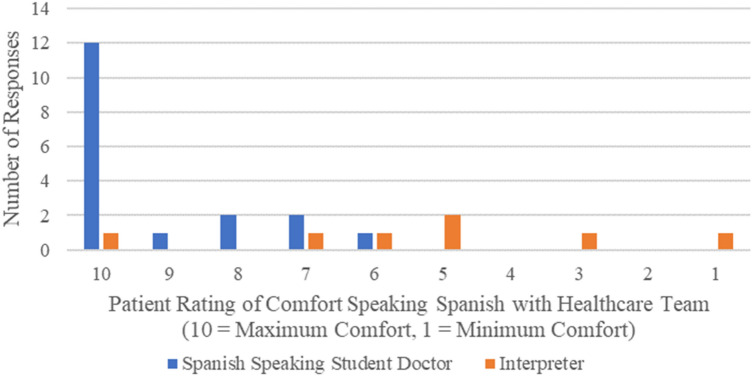
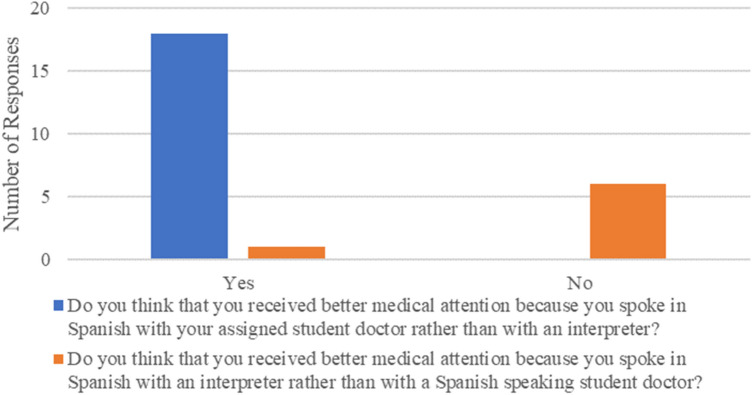
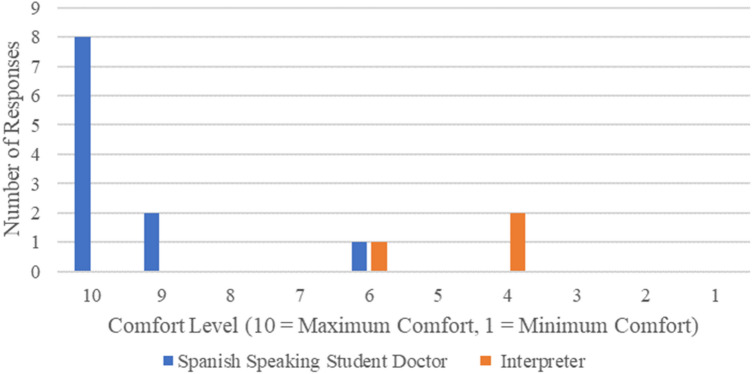
Linguistic barriers continue to be a source of difficulty and inappropriate treatment in our healthcare system. Several studies have shown the importance of language concordance, which leads to increased trust and higher patient satisfaction. The aim of this is study is to determine patients' satisfaction and comfort levels with sharing sensitive information in Spanish with either the health care provider or an interpreter, respectively, and to compare the results to find out if there is an option that patients prefer. There were two different groups of participants in the study. The experimental group was directly seen by Spanish-speaking student doctors while the control group was seen by English-speaking student doctors that had the aid of an interpreter. Several questions were asked to participants via survey in order to measure their comfort levels during the encounter. The results of this study demonstrate that having Spanish-speaking healthcare providers providing health care to Hispanic patients can raise patients' comfort levels and satisfaction in contrast to having the aid of an interpreter. Providing second language training to student doctors can potentially improve patient care and reduce health inequities facing LEP patients. Given the small sample size of our study, future projects should expand the study to include more participants.
语言障碍仍然是我们医疗体系中困难和不当治疗的一个来源。多项研究表明,语言一致的重要性,这会导致更高的信任和更高的患者满意度。本研究的目的是确定患者在与医疗服务提供者或口译员分别用西班牙语分享敏感信息时的满意度和舒适度,并比较结果以找出患者更喜欢哪种选择。研究中有两组不同的参与者。实验组由讲西班牙语的医学生直接就诊,而对照组由讲英语的医学生就诊,由口译员协助。通过调查向参与者提出了几个问题,以衡量他们在就诊过程中的舒适度。这项研究的结果表明,与使用口译员相比,让讲西班牙语的医疗服务提供者为讲西班牙语的患者提供医疗服务可以提高患者的舒适度和满意度。为医学生提供第二语言培训可以提高患者护理质量,并减少讲英语能力有限的患者面临的健康不平等问题。鉴于我们研究的样本量较小,未来的项目应该扩大研究范围,纳入更多的参与者。