Lin Zhun, Zou Zhengyu, Pu Zhe, Wu Minhao, Zhang Yuanqing
School of Pharmaceutical Sciences, Sun Yat-sen University, Guangzhou 510006, China.
Zhongshan School of Medicine, Sun Yat-sen University, Guangzhou 510080, China.
Acta Pharm Sin B. 2023 Feb 24;13(7):2877-96. doi: 10.1016/j.apsb.2023.02.014.
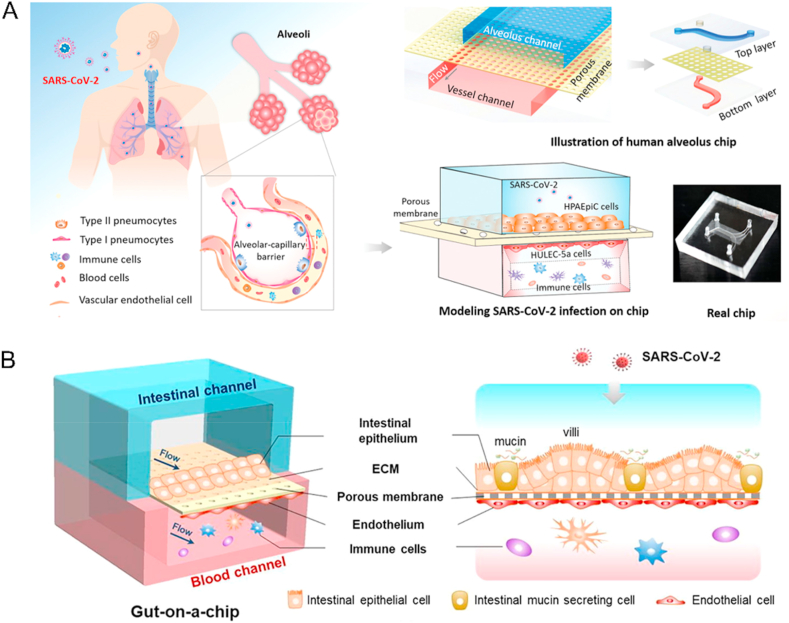
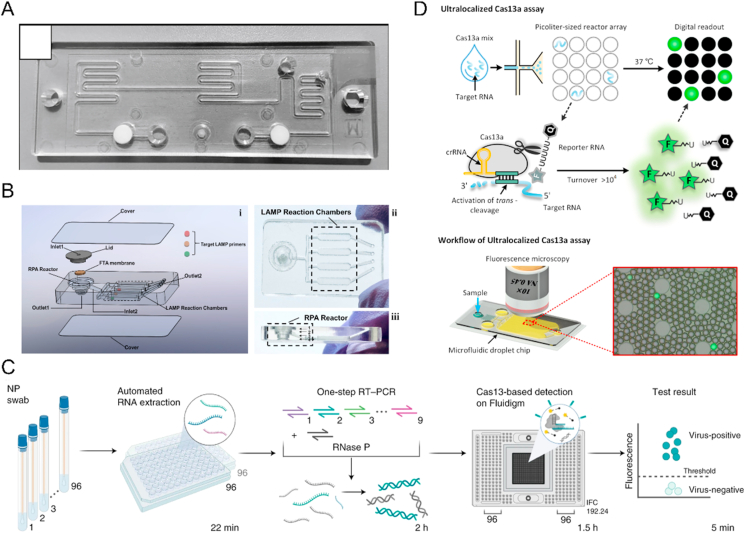
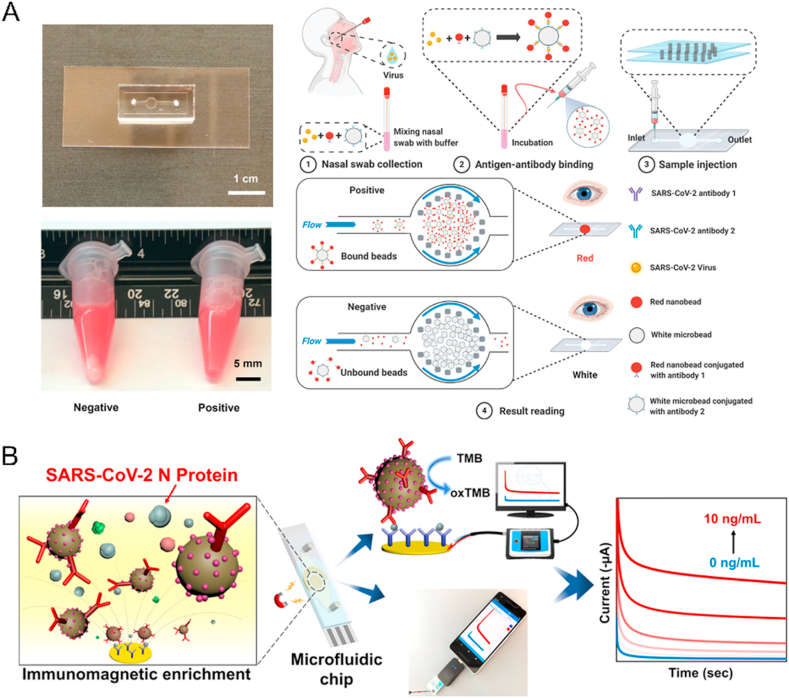
The ongoing coronavirus disease 2019 (COVID-19) pandemic has boosted the development of antiviral research. Microfluidic technologies offer powerful platforms for diagnosis and drug discovery for severe acute respiratory syndrome coronavirus 2 (SARS-CoV-2) diagnosis and drug discovery. In this review, we introduce the structure of SARS-CoV-2 and the basic knowledge of microfluidic design. We discuss the application of microfluidic devices in SARS-CoV-2 diagnosis based on detecting viral nucleic acid, antibodies, and antigens. We highlight the contribution of lab-on-a-chip to manufacturing point-of-care equipment of accurate, sensitive, low-cost, and user-friendly virus-detection devices. We then investigate the efforts in organ-on-a-chip and lipid nanoparticles (LNPs) synthesizing chips in antiviral drug screening and mRNA vaccine preparation. Microfluidic technologies contribute to the ongoing SARS-CoV-2 research efforts and provide tools for future viral outbreaks.
持续的2019冠状病毒病(COVID-19)大流行推动了抗病毒研究的发展。微流控技术为严重急性呼吸综合征冠状病毒2(SARS-CoV-2)的诊断和药物发现提供了强大的平台。在这篇综述中,我们介绍了SARS-CoV-2的结构和微流控设计的基础知识。我们讨论了微流控设备在基于检测病毒核酸、抗体和抗原的SARS-CoV-2诊断中的应用。我们强调了芯片实验室在制造准确、灵敏、低成本且用户友好的病毒检测即时护理设备方面的贡献。然后,我们研究了芯片器官和脂质纳米颗粒(LNP)合成芯片在抗病毒药物筛选和mRNA疫苗制备方面所做的努力。微流控技术为正在进行的SARS-CoV-2研究工作做出了贡献,并为未来的病毒爆发提供了工具。