Zhang Zhenchao, Li Dongxian, Li Yuhua, Zhang Rui, Xie Xianghuan, Yao Yi, Zhao Linfei, Tian Xiaowei, Yang Zhenke, Wang Shuai, Yue Xuejing, Mei Xuefang
Department of Pathogenic Biology, School of Basic Medical Sciences, Xinxiang Medical University, Xinxiang, Henan, 453003, People's Republic of China.
Xinxiang Key Laboratory of Pathogenic Biology, School of Basic Medical Sciences, Xinxiang Medical University, Xinxiang, Henan, 453003, People's Republic of China.
Infect Agent Cancer. 2023 Mar 2;18(1):15. doi: 10.1186/s13027-023-00490-2.
Trichomonas vaginalis (T. vaginalis) is a microaerophilic protozoan parasite which is responsible for trichomoniasis, the most common non-viral sexually transmitted infection in the world. The infection greatly damages the reproductive system. However, whether T. vaginalis infection can cause reproductive system cancer remains controversial.
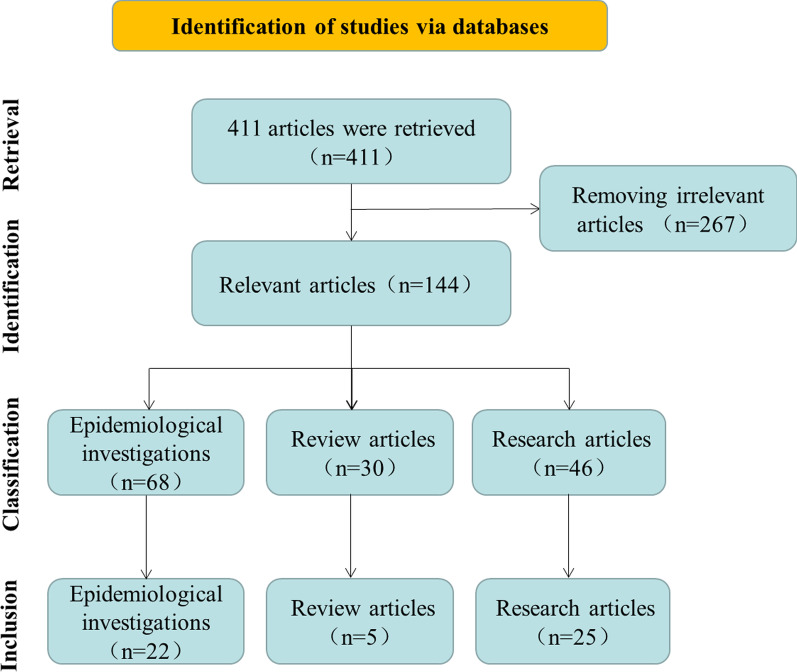
This study systematically searched PubMed, EMBASE, Ovid and Google scholar, and 144 relevant articles were retrieved and classified into three categories: epidemiological investigations (68), reviews (30) and research articles (46). These three types of articles were verified according to their respective inclusion and exclusion criteria. Stata 16 was used to conduct a meta-analysis on the articles of epidemiological investigations for analysing the correlation between T. vaginalis infection and reproductive system cancer.
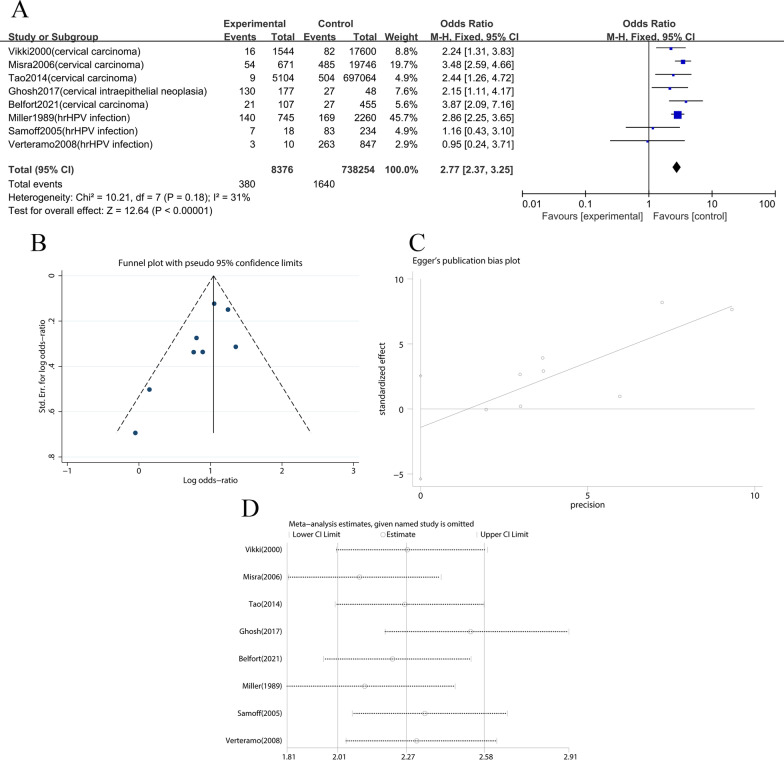
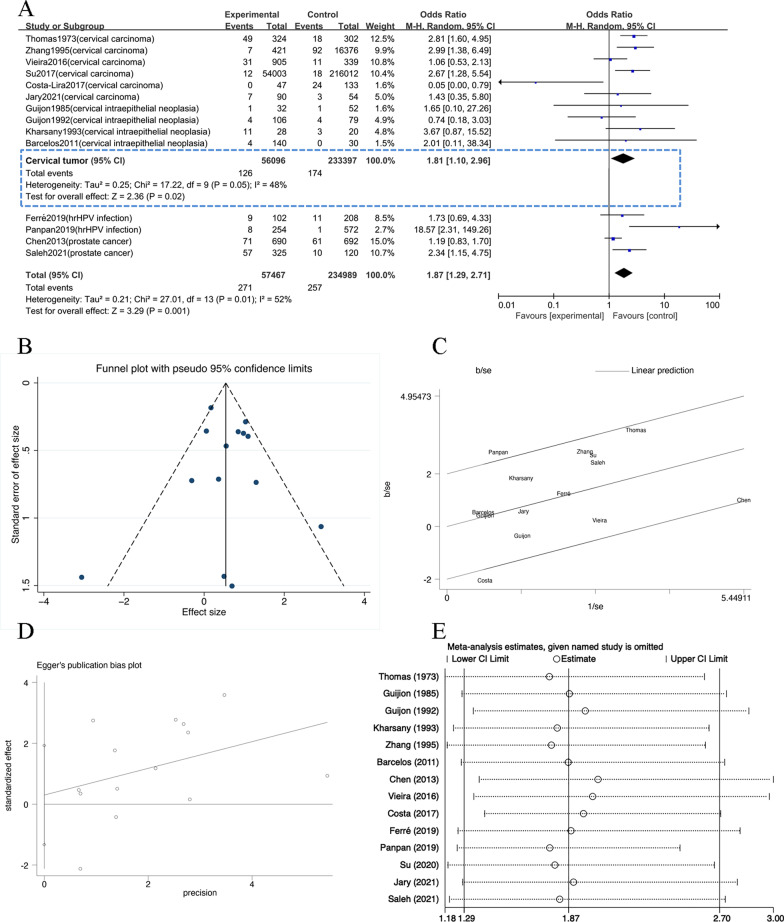
The result of meta-analysis indicated that the rate of T. vaginalis infection in the cancer group was significantly higher than that in the non-cancer group (OR = 1.87, 95% CI 1.29-2.71, I = 52%). Moreover, the cancer rate of the population infected with T. vaginalis was significantly higher than that of the population without T. vaginalis infection (OR = 2.77, 95% CI 2.37-3.25, I = 31%). The review articles and most research articles stated that the infection of T. vaginalis could lead to cancer and the pathogenic mechanisms were as follows: T. vaginalis promoting inflammatory response, T. vaginalis infection changing the internal environment around parasitic sites and signal transduction pathway, the metabolites secreted by T. vaginalis inducing carcinogenesis and T. vaginalis increasing other pathogenic microbial infection to promote the occurrence of cancer.
Our study confirmed that there was a correlation between the infection of T. vaginalis and reproductive system cancer, and provided some possible research directions for clarifying the carcinogenic mechanisms caused by T. vaginalis infection.
阴道毛滴虫是一种微需氧原生动物寄生虫,可引起滴虫病,这是世界上最常见的非病毒性性传播感染。该感染会严重损害生殖系统。然而,阴道毛滴虫感染是否会导致生殖系统癌症仍存在争议。
本研究系统检索了PubMed、EMBASE、Ovid和谷歌学术,共检索到144篇相关文章,并分为三类:流行病学调查(68篇)、综述(30篇)和研究文章(46篇)。根据各自的纳入和排除标准对这三种类型的文章进行验证。使用Stata 16对流行病学调查文章进行荟萃分析,以分析阴道毛滴虫感染与生殖系统癌症之间的相关性。
荟萃分析结果表明,癌症组的阴道毛滴虫感染率显著高于非癌症组(OR = 1.87,95% CI 1.29 - 2.71,I = 52%)。此外,感染阴道毛滴虫人群的癌症发生率显著高于未感染阴道毛滴虫的人群(OR = 2.77,95% CI 2.37 - 3.25,I = 31%)。综述文章和大多数研究文章指出,阴道毛滴虫感染可导致癌症,其致病机制如下:阴道毛滴虫促进炎症反应、阴道毛滴虫感染改变寄生部位周围的内环境和信号转导通路、阴道毛滴虫分泌的代谢产物诱导致癌以及阴道毛滴虫增加其他致病微生物感染以促进癌症发生。
我们的研究证实阴道毛滴虫感染与生殖系统癌症之间存在相关性,并为阐明阴道毛滴虫感染所致致癌机制提供了一些可能的研究方向。