Department of Chemistry, Westfälische Hochschule, 45665, Recklinghausen, Germany.
Nantes Université, ONIRIS, CNRS, GEPEA, UMR 6144, 85000, La Roche sur Yon, France.
Appl Microbiol Biotechnol. 2023 Apr;107(7-8):2073-2095. doi: 10.1007/s00253-023-12406-6. Epub 2023 Mar 3.
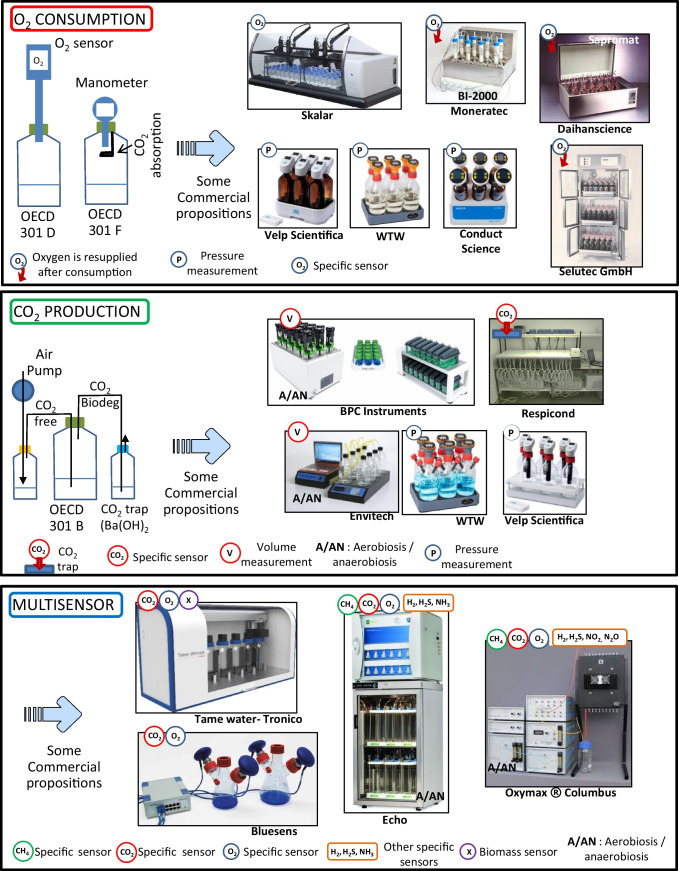
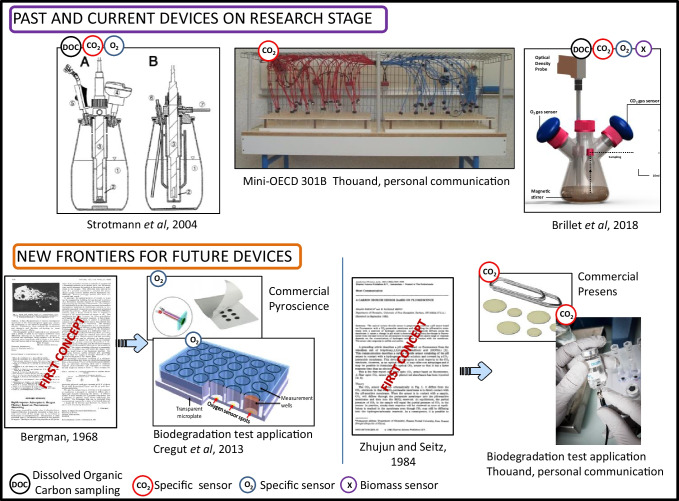
In the past decades, industrial and scientific communities have developed a complex standardized system (e.g., OECD, ISO, CEN) to evaluate the biodegradability of chemical substances. This system includes for OECD three levels of testing (ready and inherent biodegradability tests, simulation tests). It was adopted by many countries and is completely integrated into European legislation (registration, evaluation, authorization, and restriction of chemicals, REACH). Nevertheless, the different tests have certain deficiencies, and the question arises of how accurately these tests display the situation in the real environment and how the results can be used for predictions. This review will focus on the technical advantages and weaknesses of current tests concerning the technical setup, the inoculum characterization, and its biodegradation potential as well as the use of adequate reference compounds. A special focus of the article will be on combined test systems offering enhanced possibilities to predict biodegradation. The properties of microbial inocula are critically discussed, and a new concept concerning the biodegradation adaptation potential (BAP) of inocula is proposed. Furthermore, a probability model and different in silico QSAR (quantitative structure-activity relationships) models to predict biodegradation from chemical structures are reviewed. Another focus lies on the biodegradation of difficult single compounds and mixtures of chemicals like UVCBs (unknown or variable composition, complex reaction products, or biological materials) which will be an important challenge for the forthcoming decades. KEY POINTS: • There are many technical points to be improved in OECD/ISO biodegradation tests • The proper characterization of inocula is a crucial point in biodegradation tests • Combined biodegradation test systems offer extended possibilities for biodegradation tests.
在过去几十年中,工业界和科学界已经开发出一种复杂的标准化系统(例如 OECD、ISO、CEN),用于评估化学物质的生物降解性。该系统包括 OECD 的三个测试级别(即易生物降解性和固有生物降解性测试、模拟测试)。该系统已被许多国家采用,并完全纳入欧洲法规(化学品注册、评估、授权和限制,REACH)。然而,不同的测试具有一定的局限性,因此出现了一个问题,即这些测试在多大程度上准确地反映了真实环境中的情况,以及如何利用测试结果进行预测。本文将重点讨论当前测试在技术设置、接种物特性及其生物降解潜力以及适当参考化合物的使用方面的技术优势和劣势。文章的一个特别重点将是提供增强的生物降解预测可能性的组合测试系统。本文还将批判性地讨论微生物接种物的特性,并提出了一个关于接种物生物降解适应潜力(BAP)的新概念。此外,还回顾了用于从化学结构预测生物降解的概率模型和不同的计算定量构效关系(QSAR)模型。另一个重点是研究难生物降解的单一化合物和化学混合物(如 UVCBs,即未知或可变成分、复杂反应产物或生物材料)的生物降解,这将是未来几十年的一个重要挑战。要点:• OECD/ISO 生物降解测试有许多需要改进的技术要点。• 接种物的正确特性是生物降解测试中的一个关键要点。• 组合生物降解测试系统为生物降解测试提供了扩展的可能性。