Pitou Maria, Papi Rigini M, Tzavellas Anastasios-Nektarios, Choli-Papadopoulou Theodora
Laboratory of Biochemistry, School of Chemistry, Faculty of Natural Sciences, Aristotle University of Thessaloniki (AUTh), GR-54124 Thessaloniki, Greece.
2nd Orthopedic and Trauma Department, 424 General Military Hospital, 56429 Thessaloniki, Greece.
ACS Omega. 2023 Feb 13;8(8):7529-7535. doi: 10.1021/acsomega.2c04806. eCollection 2023 Feb 28.
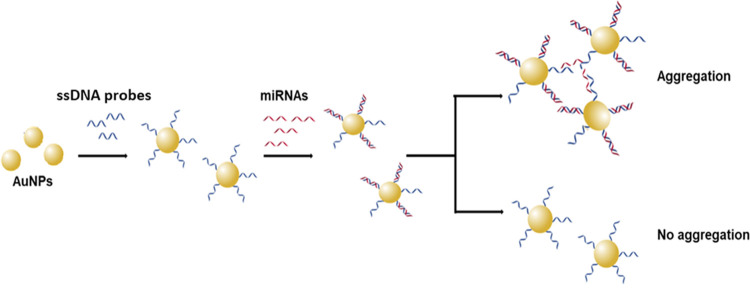
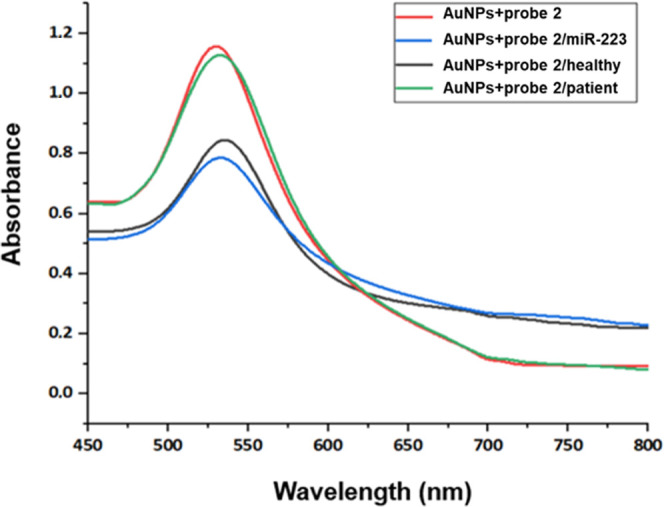
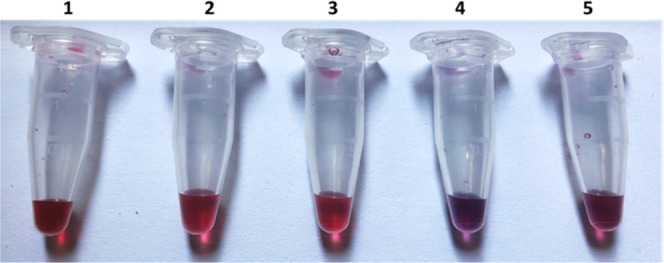
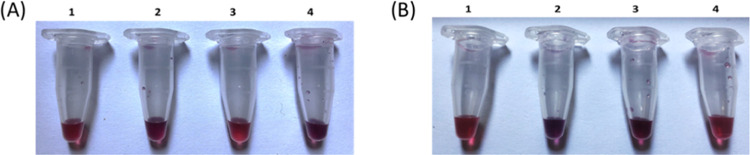
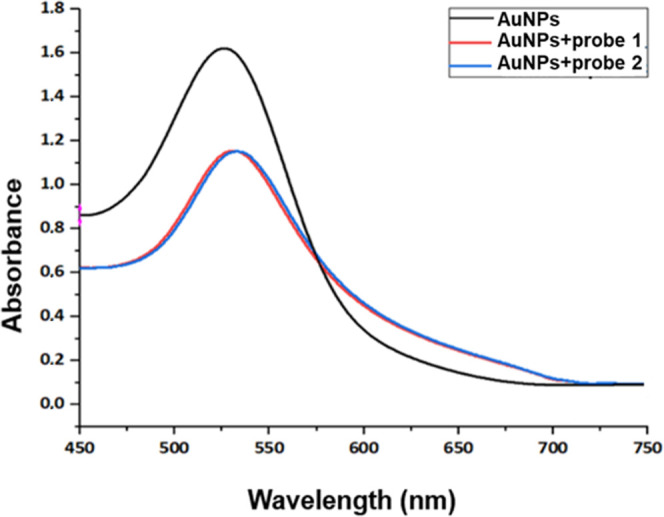
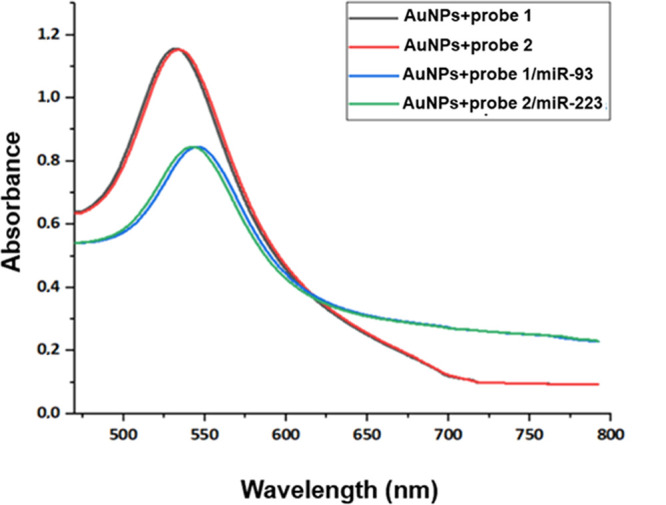
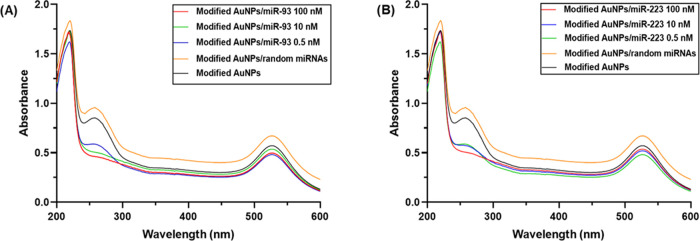
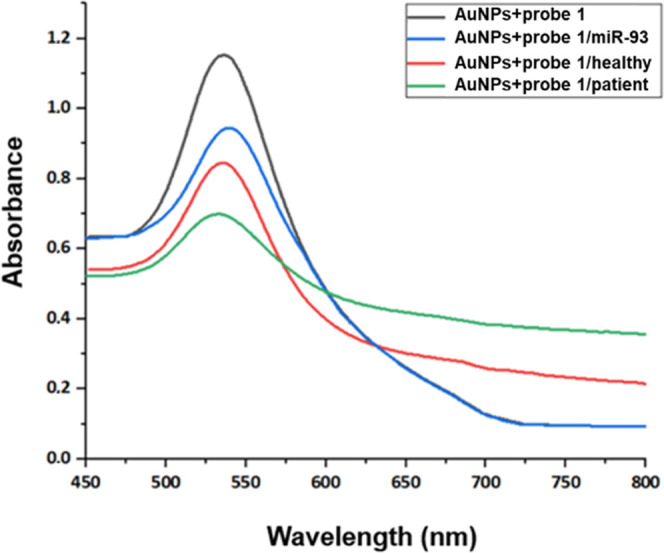
Recently, miRNAs have been established as promising, specific biomarkers for the diagnosis of many diseases, including osteoarthritis. Herein, we report a ssDNA-based detection method for miRNAs implicated in osteoarthritis, specifically, miR-93 and miR-223. In this study, gold nanoparticles (AuNPs) were modified with oligonucleotide ssDNA to detect miRNAs circulating in the blood in healthy subjects and patients suffering from osteoarthritis. The detection method was based on the colorimetric and spectrophotometric assessment of biofunctionalized AuNPs upon interaction with the target and their subsequent aggregation. Results showed that these methods could be used to detect easily and rapidly miR-93 but not miR-223 in osteoarthritic patients, and they could potentially be used as a diagnostic tool for blood biomarkers. Visual-based detection as well as spectroscopic methods are simple, rapid, and label-free, due to which they can be used as a diagnostic tool.
最近,微小RNA(miRNAs)已被确立为诊断包括骨关节炎在内的多种疾病的有前景的特异性生物标志物。在此,我们报告一种基于单链DNA(ssDNA)的检测方法,用于检测与骨关节炎相关的miRNAs,具体为miR-93和miR-223。在本研究中,用寡核苷酸单链DNA修饰金纳米颗粒(AuNPs),以检测健康受试者和骨关节炎患者血液中循环的miRNAs。该检测方法基于生物功能化的AuNPs与靶标相互作用及其随后聚集时的比色和分光光度评估。结果表明,这些方法可用于轻松快速地检测骨关节炎患者中的miR-93,但不能检测miR-223,并且它们有可能用作血液生物标志物的诊断工具。基于视觉的检测以及光谱方法简单、快速且无需标记,因此可作为诊断工具使用。