University of Queensland, School of Psychology, Brisbane, Australia.
University of Exeter Business School, Devon, UK.
Psychon Bull Rev. 2023 Aug;30(4):1294-1322. doi: 10.3758/s13423-022-02241-7. Epub 2023 Mar 6.
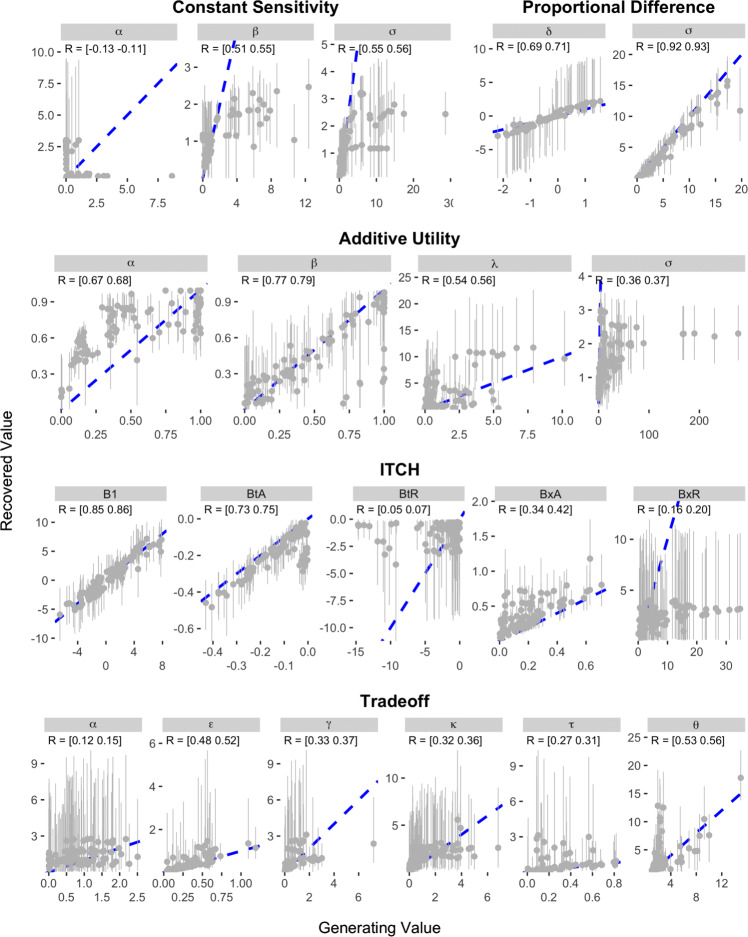
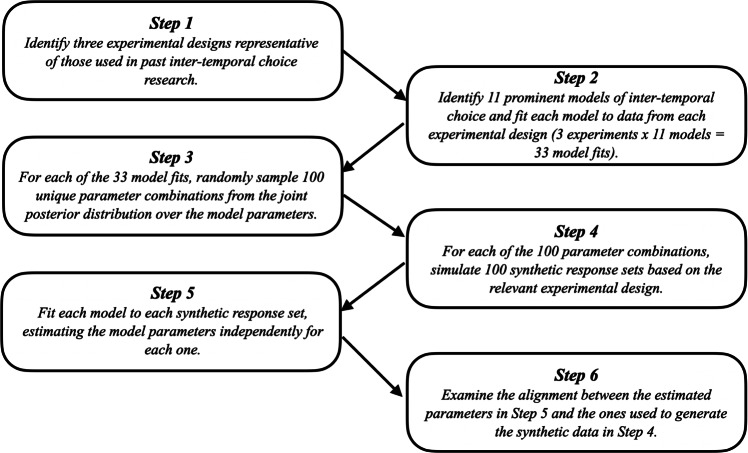
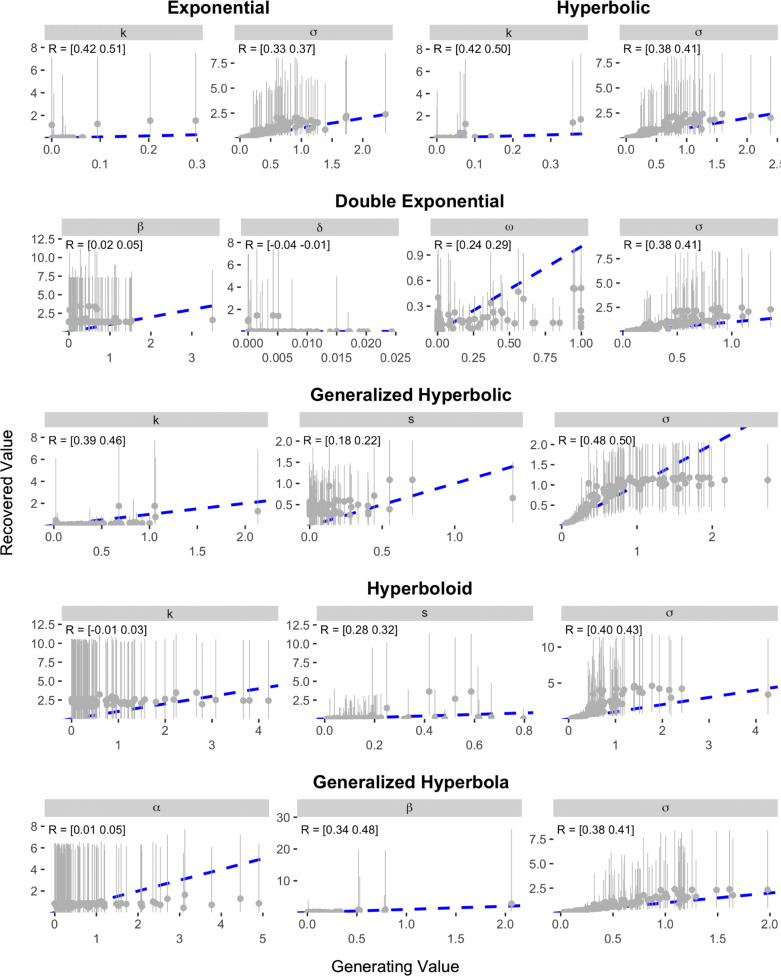
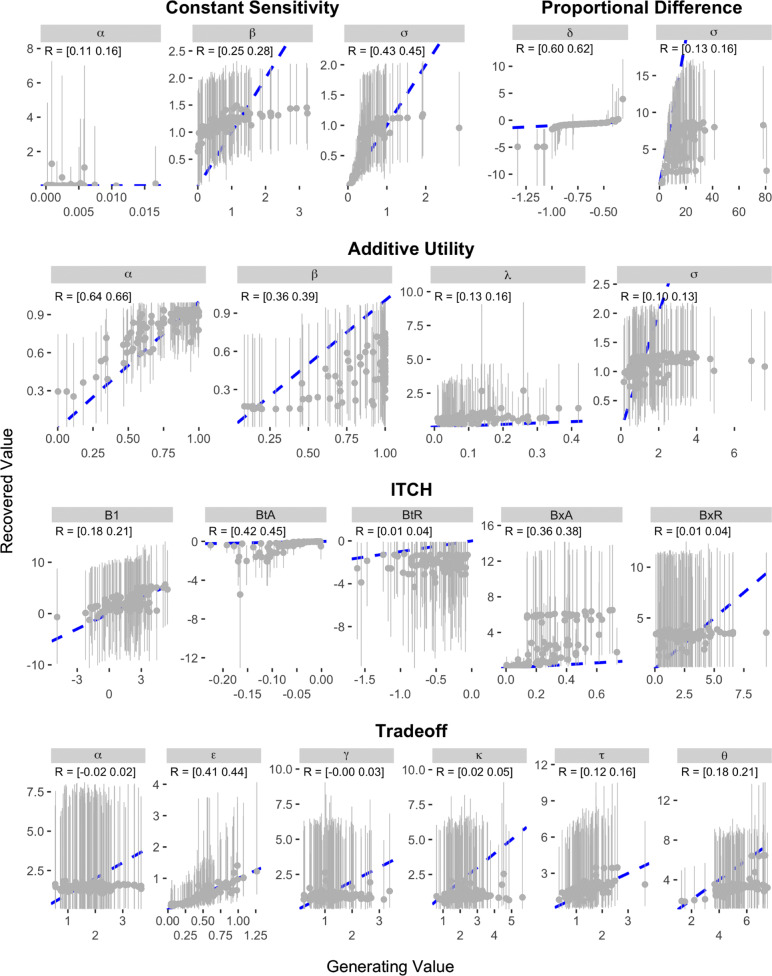
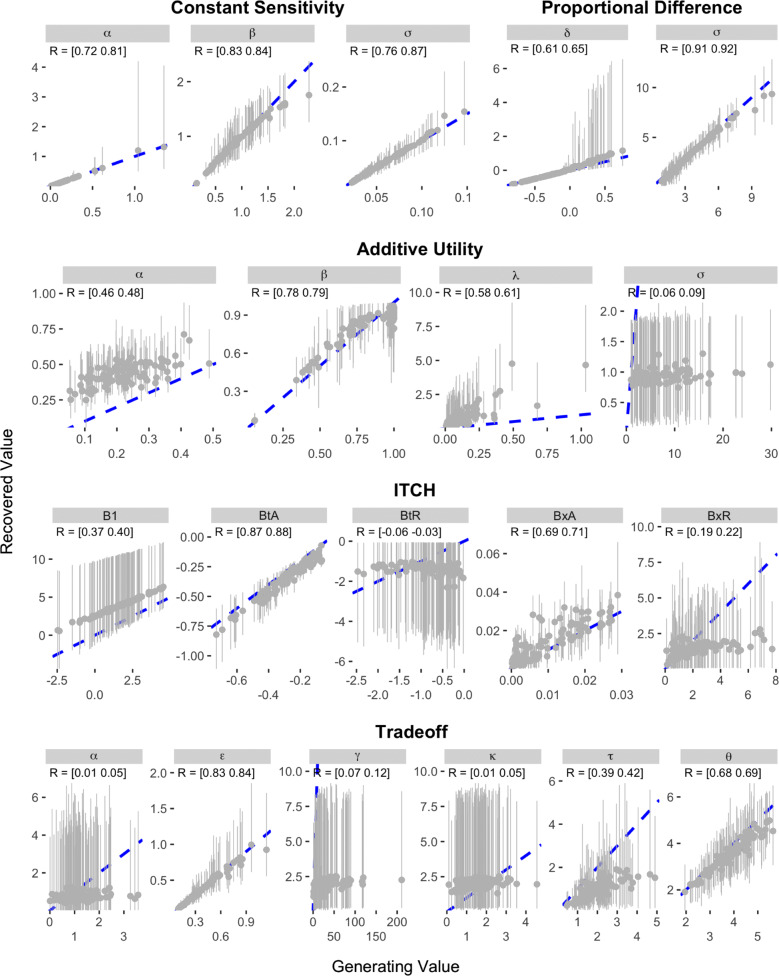
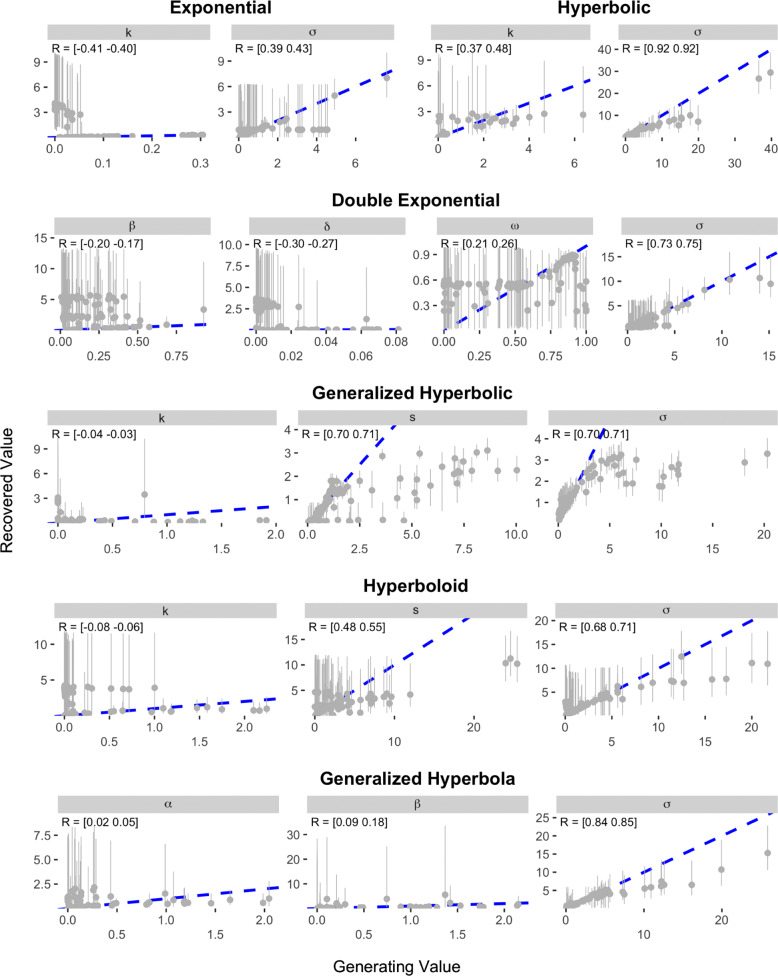
Decades of work have been dedicated to developing and testing models that characterize how people make inter-temporal choices. Although parameter estimates from these models are often interpreted as indices of latent components of the choice process, little work has been done to examine their reliability. This is problematic because estimation error can bias conclusions that are drawn from these parameter estimates. We examine the reliability of parameter estimates from 11 prominent models of inter-temporal choice by (a) fitting each model to data from three previous experiments with designs representative of those typically used to study inter-temporal choice, (b) examining the consistency of parameters estimated for the same person based on different choice sets, and (c) conducting a parameter recovery analysis. We find generally low correlations between parameters estimated for the same person from the different choice sets. Moreover, parameter recovery varies considerably between models and the experimental designs upon which parameter estimates are based. We conclude that many parameter estimates reported in previous research are likely unreliable and provide recommendations on how to enhance the reliability of inter-temporal choice models for measurement purposes.
几十年来,人们致力于开发和测试能够描述人们进行跨期选择的模型。尽管这些模型的参数估计值通常被解释为选择过程潜在成分的指标,但很少有人研究它们的可靠性。这是有问题的,因为估计误差可能会导致从这些参数估计中得出的结论产生偏差。我们通过以下三种方法来检验 11 种有影响力的跨期选择模型的参数估计的可靠性:(a) 将每种模型拟合到三个先前的实验数据中,这些实验的设计代表了通常用于研究跨期选择的设计;(b) 检查基于不同选择集为同一人估计的参数的一致性;(c) 进行参数恢复分析。我们发现,来自不同选择集的同一人的参数估计值之间通常相关性较低。此外,参数恢复在模型之间以及基于参数估计的实验设计之间存在很大差异。我们的结论是,以前研究报告的许多参数估计值可能是不可靠的,并提供了如何提高跨期选择模型在测量目的方面的可靠性的建议。