Alkahest, Inc., San Carlos, CA, USA.
Commun Biol. 2023 Mar 18;6(1):292. doi: 10.1038/s42003-023-04665-w.
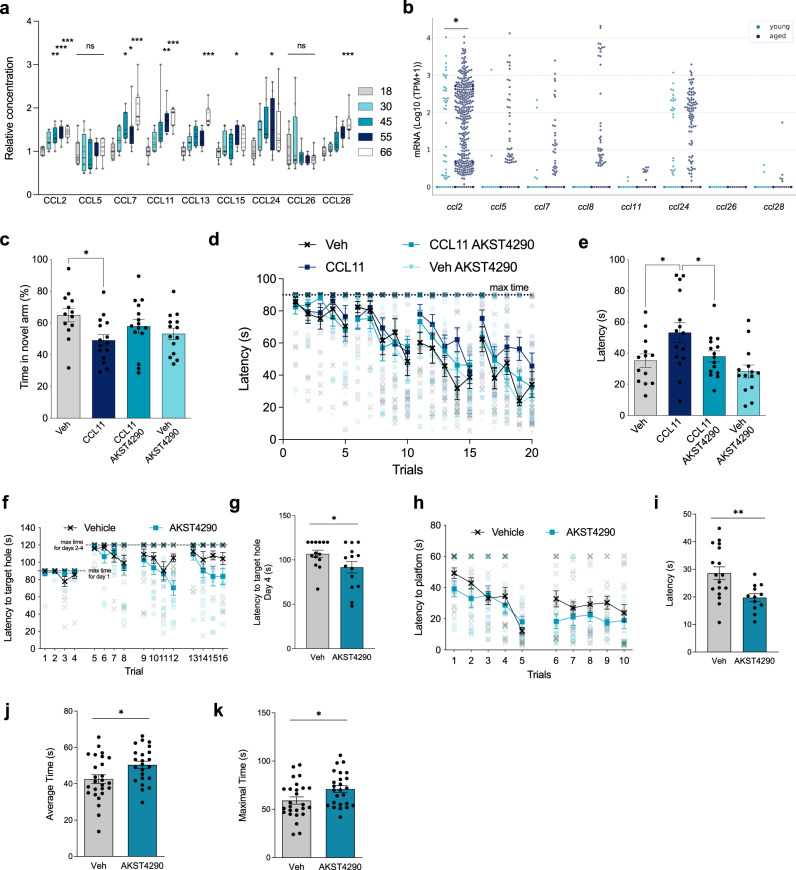
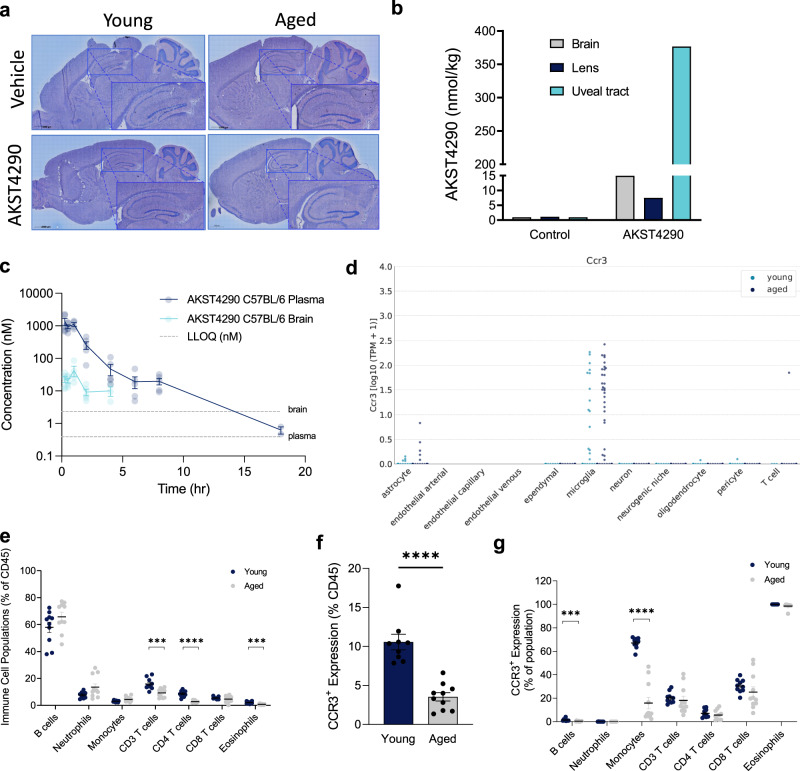
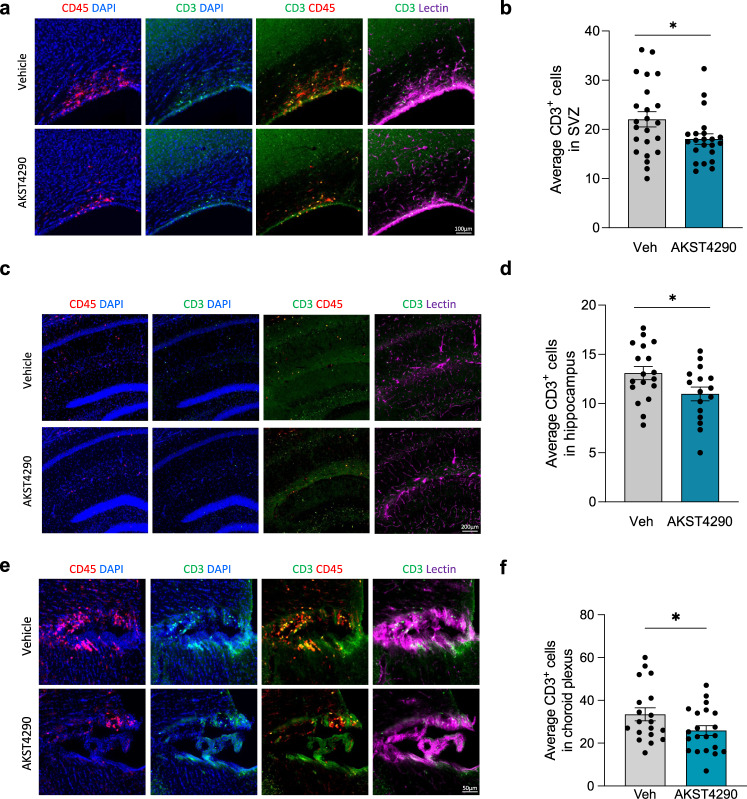
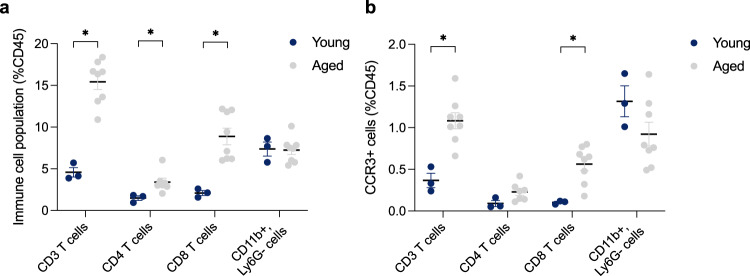
Targeting immune-mediated, age-related, biology has the potential to be a transformative therapeutic strategy. However, the redundant nature of the multiple cytokines that change with aging requires identification of a master downstream regulator to successfully exert therapeutic efficacy. Here, we discovered CCR3 as a prime candidate, and inhibition of CCR3 has pro-cognitive benefits in mice, but these benefits are not driven by an obvious direct action on central nervous system (CNS)-resident cells. Instead, CCR3-expressing T cells in the periphery that are modulated in aging inhibit infiltration of these T cells across the blood-brain barrier and reduce neuroinflammation. The axis of CCR3-expressing T cells influencing crosstalk from periphery to brain provides a therapeutically tractable link. These findings indicate the broad therapeutic potential of CCR3 inhibition in a spectrum of neuroinflammatory diseases of aging.
针对免疫介导的、与年龄相关的生物学变化具有成为变革性治疗策略的潜力。然而,随着年龄的增长而变化的多种细胞因子的冗余性质要求确定一个主要的下游调节剂,以成功发挥治疗效果。在这里,我们发现 CCR3 是一个主要的候选者,抑制 CCR3 在小鼠中具有认知益处,但这些益处不是由对中枢神经系统 (CNS) 固有细胞的明显直接作用驱动的。相反,外周组织中表达 CCR3 的 T 细胞在衰老过程中被调节,从而抑制这些 T 细胞穿过血脑屏障的浸润,并减少神经炎症。表达 CCR3 的 T 细胞影响从外周到大脑的串扰的轴提供了一个治疗上可行的联系。这些发现表明 CCR3 抑制在一系列与年龄相关的神经炎症性疾病中具有广泛的治疗潜力。