• 文献检索
  • 文档翻译
  • 深度研究
  • 学术资讯
  • Suppr Zotero 插件Zotero 插件
  • 邀请有礼
  • 套餐&价格
  • 历史记录
应用&插件
Suppr Zotero 插件Zotero 插件浏览器插件Mac 客户端Windows 客户端微信小程序
定价
高级版会员购买积分包购买API积分包
服务
文献检索文档翻译深度研究API 文档MCP 服务
关于我们
关于 Suppr公司介绍联系我们用户协议隐私条款
关注我们

Suppr 超能文献

核心技术专利:CN118964589B侵权必究
粤ICP备2023148730 号-1Suppr @ 2026

文献检索

告别复杂PubMed语法,用中文像聊天一样搜索,搜遍4000万医学文献。AI智能推荐,让科研检索更轻松。

立即免费搜索

文件翻译

保留排版,准确专业,支持PDF/Word/PPT等文件格式,支持 12+语言互译。

免费翻译文档

深度研究

AI帮你快速写综述,25分钟生成高质量综述,智能提取关键信息,辅助科研写作。

立即免费体验

基于机器学习的放射组学模型从多参数磁共振图像预测宫颈癌致癌型人乳头瘤病毒。

Prediction of carcinogenic human papillomavirus types in cervical cancer from multiparametric magnetic resonance images with machine learning-based radiomics models.

机构信息

Clinic of Radiology, University of Health Sciences Turkey, Prof. Dr. Cemil Taşcığlu City Hospital, İstanbul, Turkey.

Clinic of Radiation Oncology, University of Health Sciences Turkey, Prof. Dr. Cemil Taşcığlu City Hospital, İstanbul, Turkey.

出版信息

Diagn Interv Radiol. 2023 May 31;29(3):460-468. doi: 10.4274/dir.2022.221335. Epub 2022 Dec 21.

DOI:10.4274/dir.2022.221335
PMID:36994859
原文链接:https://pmc.ncbi.nlm.nih.gov/articles/PMC10679607/
Abstract

PURPOSE

This study aimed to evaluate the potential of machine learning-based models for predicting carcinogenic human papillomavirus (HPV) oncogene types using radiomics features from magnetic resonance imaging (MRI).

METHODS

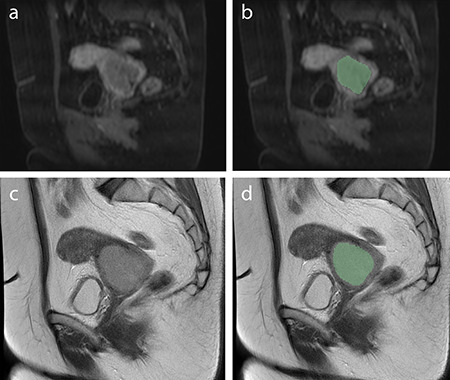
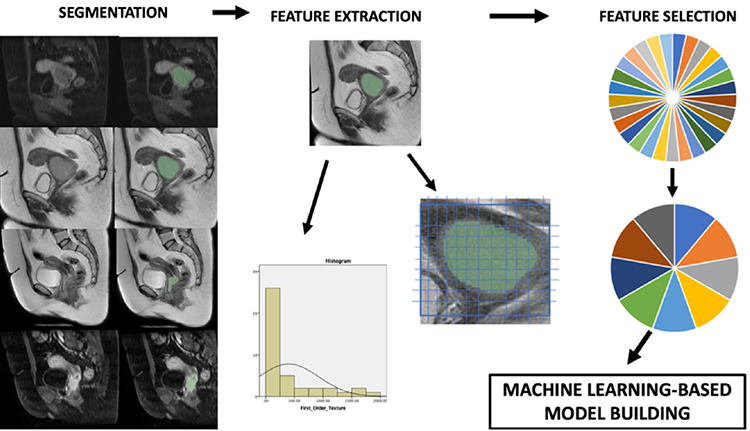
Pre-treatment MRI images of patients with cervical cancer were collected retrospectively. An HPV DNA oncogene analysis was performed based on cervical biopsy specimens. Radiomics features were extracted from contrast-enhanced T1-weighted images (CE-T1) and T2-weighted images (T2WI). A third feature subset was created as a combined group by concatenating the CE-T1 and T2WI subsets. Feature selection was performed using Pearson's correlation coefficient and wrapper- based sequential-feature selection. Two models were built with each feature subset, using support vector machine (SVM) and logistic regression (LR) classifiers. The models were validated using a five-fold cross-validation technique and compared using Wilcoxon's signed rank and Friedman's tests.

RESULTS

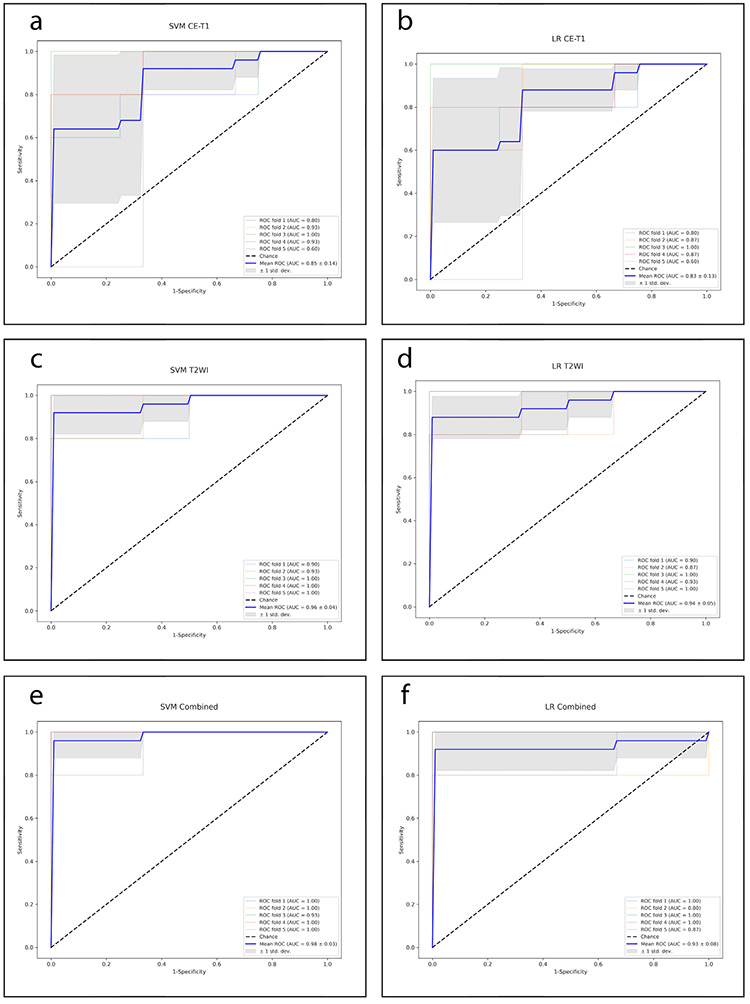
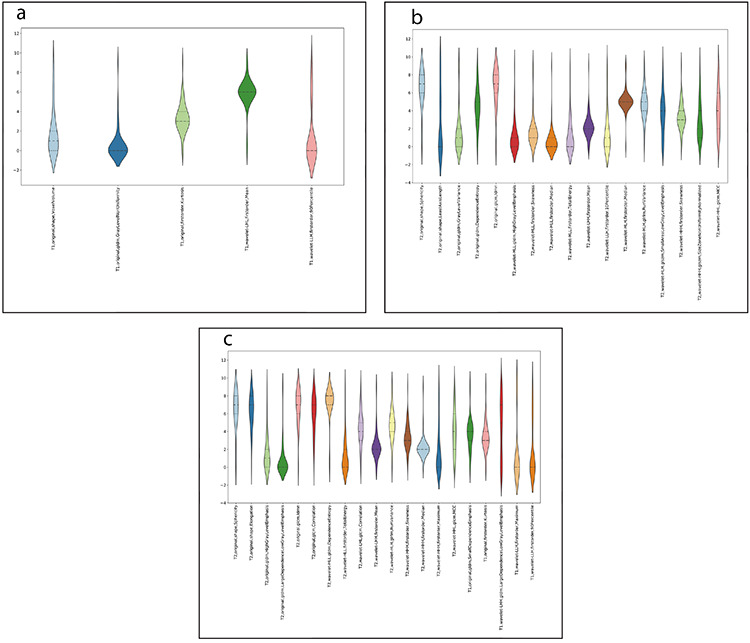
Forty-one patients were enrolled in the study (26 were positive for carcinogenic HPV oncogenes, and 15 were negative). A total of 851 features were extracted from each imaging sequence. After feature selection, 5, 17, and 20 features remained in the CE-T1, T2WI, and combined groups, respectively. The SVM models showed 83%, 95%, and 95% accuracy scores, and the LR models revealed 83%, 81%, and 92.5% accuracy scores in the CE-T1, T2WI, and combined groups, respectively. The SVM algorithm performed better than the LR algorithm in the T2WI feature subset ( = 0.005), and the feature sets in the T2WI and the combined group performed better than CE-T1 in the SVM model ( = 0.033 and 0.006, respectively). The combined group feature subset performed better than T2WI in the LR model ( = 0.023).

CONCLUSION

Machine learning-based radiomics models based on pre-treatment MRI can detect carcinogenic HPV status with discriminative accuracy.

摘要

目的

本研究旨在评估基于机器学习的模型利用磁共振成像(MRI)的放射组学特征预测致癌性人乳头瘤病毒(HPV)致癌基因类型的潜力。

方法

回顾性收集宫颈癌患者的预处理 MRI 图像。根据宫颈活检标本进行 HPV DNA 致癌基因分析。从对比增强 T1 加权图像(CE-T1)和 T2 加权图像(T2WI)中提取放射组学特征。第三组特征子集是通过串联 CE-T1 和 T2WI 子集创建的。使用 Pearson 相关系数和基于包装的顺序特征选择进行特征选择。使用支持向量机(SVM)和逻辑回归(LR)分类器为每个特征子集构建两个模型。使用五折交叉验证技术验证模型,并使用 Wilcoxon 符号秩和 Friedman 检验进行比较。

结果

本研究纳入 41 例患者(26 例致癌 HPV 致癌基因阳性,15 例阴性)。每个成像序列共提取 851 个特征。经过特征选择,CE-T1、T2WI 和联合组中分别保留了 5、17 和 20 个特征。SVM 模型在 CE-T1、T2WI 和联合组中的准确率分别为 83%、95%和 95%,LR 模型的准确率分别为 83%、81%和 92.5%。SVM 算法在 T2WI 特征子集中的性能优于 LR 算法(=0.005),T2WI 和联合组中的特征集在 SVM 模型中的性能优于 CE-T1(分别为=0.033 和 0.006)。LR 模型中联合组特征子集的性能优于 T2WI(=0.023)。

结论

基于预处理 MRI 的基于机器学习的放射组学模型可以以有区别的准确性检测致癌性 HPV 状态。
https://cdn.ncbi.nlm.nih.gov/pmc/blobs/f0aa/10679607/4745d87240a1/DIR-29-460-g4.jpg
https://cdn.ncbi.nlm.nih.gov/pmc/blobs/f0aa/10679607/02bd213ef947/DIR-29-460-g1.jpg
https://cdn.ncbi.nlm.nih.gov/pmc/blobs/f0aa/10679607/8cadb67f164d/DIR-29-460-g2.jpg
https://cdn.ncbi.nlm.nih.gov/pmc/blobs/f0aa/10679607/3c9c6e03dd36/DIR-29-460-g3.jpg
https://cdn.ncbi.nlm.nih.gov/pmc/blobs/f0aa/10679607/4745d87240a1/DIR-29-460-g4.jpg
https://cdn.ncbi.nlm.nih.gov/pmc/blobs/f0aa/10679607/02bd213ef947/DIR-29-460-g1.jpg
https://cdn.ncbi.nlm.nih.gov/pmc/blobs/f0aa/10679607/8cadb67f164d/DIR-29-460-g2.jpg
https://cdn.ncbi.nlm.nih.gov/pmc/blobs/f0aa/10679607/3c9c6e03dd36/DIR-29-460-g3.jpg
https://cdn.ncbi.nlm.nih.gov/pmc/blobs/f0aa/10679607/4745d87240a1/DIR-29-460-g4.jpg

相似文献

1
Prediction of carcinogenic human papillomavirus types in cervical cancer from multiparametric magnetic resonance images with machine learning-based radiomics models.基于机器学习的放射组学模型从多参数磁共振图像预测宫颈癌致癌型人乳头瘤病毒。
Diagn Interv Radiol. 2023 May 31;29(3):460-468. doi: 10.4274/dir.2022.221335. Epub 2022 Dec 21.
2
Multiparametric MRI-based radiomics model for predicting human papillomavirus status in oropharyngeal squamous cell carcinoma: optimization using oversampling and machine learning techniques.基于多参数 MRI 的放射组学模型预测口咽鳞状细胞癌人乳头瘤病毒状态:使用过采样和机器学习技术进行优化。
Eur Radiol. 2024 May;34(5):3102-3112. doi: 10.1007/s00330-023-10338-3. Epub 2023 Oct 18.
3
Multiparametric MRI-Based Interpretable Radiomics Machine Learning Model Differentiates Medulloblastoma and Ependymoma in Children: A Two-Center Study.基于多参数 MRI 的可解释放射组学机器学习模型鉴别儿童髓母细胞瘤和室管膜瘤:一项双中心研究。
Acad Radiol. 2024 Aug;31(8):3384-3396. doi: 10.1016/j.acra.2024.02.040. Epub 2024 Mar 20.
4
The application of radiomics machine learning models based on multimodal MRI with different sequence combinations in predicting cervical lymph node metastasis in oral tongue squamous cell carcinoma patients.基于多模态MRI不同序列组合的影像组学机器学习模型在预测口腔舌鳞状细胞癌患者颈部淋巴结转移中的应用
Head Neck. 2024 Mar;46(3):513-527. doi: 10.1002/hed.27605. Epub 2023 Dec 18.
5
Machine Learning-based Analysis of Rectal Cancer MRI Radiomics for Prediction of Metachronous Liver Metastasis.基于机器学习的直肠癌 MRI 放射组学分析预测肝转移的研究。
Acad Radiol. 2019 Nov;26(11):1495-1504. doi: 10.1016/j.acra.2018.12.019. Epub 2019 Jan 30.
6
Radiomics Analysis of Multiparametric MRI for Prediction of Synchronous Lung Metastases in Osteosarcoma.多参数MRI的影像组学分析用于预测骨肉瘤的同步肺转移
Front Oncol. 2022 Feb 22;12:802234. doi: 10.3389/fonc.2022.802234. eCollection 2022.
7
Multimodal MRI-based deep-radiomics model predicts response in cervical cancer treated with neoadjuvant chemoradiotherapy.基于多模态 MRI 的深度放射组学模型预测新辅助放化疗治疗宫颈癌的疗效。
Sci Rep. 2024 Aug 17;14(1):19090. doi: 10.1038/s41598-024-70055-9.
8
Machine learning models for discriminating clinically significant from clinically insignificant prostate cancer using bi-parametric magnetic resonance imaging.使用双参数磁共振成像鉴别临床显著型与临床非显著型前列腺癌的机器学习模型
Diagn Interv Radiol. 2024 Oct 1. doi: 10.4274/dir.2024.242856.
9
Classification of pulmonary lesion based on multiparametric MRI: utility of radiomics and comparison of machine learning methods.基于多参数 MRI 的肺部病变分类:放射组学的效用及机器学习方法的比较。
Eur Radiol. 2020 Aug;30(8):4595-4605. doi: 10.1007/s00330-020-06768-y. Epub 2020 Mar 28.
10
Multiparametric MRI-based machine learning models for preoperatively predicting rectal adenoma with canceration.基于多参数 MRI 的机器学习模型预测具有癌变的直肠腺瘤。
MAGMA. 2021 Oct;34(5):707-716. doi: 10.1007/s10334-021-00915-2. Epub 2021 Mar 1.

引用本文的文献

1
Machine and Deep Learning for the Diagnosis, Prognosis, and Treatment of Cervical Cancer: A Scoping Review.用于宫颈癌诊断、预后和治疗的机器学习与深度学习:一项范围综述
Diagnostics (Basel). 2025 Jun 17;15(12):1543. doi: 10.3390/diagnostics15121543.
2
Artificial intelligence radiomics in the diagnosis, treatment, and prognosis of gynecological cancer: a literature review.人工智能影像组学在妇科癌症诊断、治疗及预后中的应用:文献综述
Transl Cancer Res. 2025 Apr 30;14(4):2508-2532. doi: 10.21037/tcr-2025-618. Epub 2025 Apr 27.
3
A comprehensive review for machine learning based human papillomavirus detection in forensic identification with multiple medical samples.

本文引用的文献

1
Feasibility of MRI-based radiomics features for predicting lymph node metastases and VEGF expression in cervical cancer.基于 MRI 的放射组学特征预测宫颈癌淋巴结转移及 VEGF 表达的可行性研究。
Eur J Radiol. 2021 Jan;134:109429. doi: 10.1016/j.ejrad.2020.109429. Epub 2020 Nov 21.
2
Machine Learning Based Radiomic HPV Phenotyping of Oropharyngeal SCC: A Feasibility Study Using MRI.基于机器学习的口咽鳞癌 HPV 放射组学表型分析:MRI 可行性研究。
Laryngoscope. 2021 Mar;131(3):E851-E856. doi: 10.1002/lary.28889. Epub 2020 Jul 13.
3
Oropharyngeal squamous cell carcinoma: radiomic machine-learning classifiers from multiparametric MR images for determination of HPV infection status.
基于机器学习的多医学样本法医鉴定中人类乳头瘤病毒检测的综合综述。
Front Microbiol. 2023 Jul 17;14:1232295. doi: 10.3389/fmicb.2023.1232295. eCollection 2023.
口咽鳞状细胞癌:多参数磁共振图像的放射组学机器学习分类器用于确定 HPV 感染状态。
Sci Rep. 2020 Oct 16;10(1):17525. doi: 10.1038/s41598-020-74479-x.
4
MR Imaging Texture Analysis in the Abdomen and Pelvis.腹部和骨盆的磁共振成像纹理分析。
Magn Reson Imaging Clin N Am. 2020 Aug;28(3):447-456. doi: 10.1016/j.mric.2020.03.009. Epub 2020 Jun 6.
5
Multi-Habitat Based Radiomics for the Prediction of Treatment Response to Concurrent Chemotherapy and Radiation Therapy in Locally Advanced Cervical Cancer.基于多栖息地的放射组学预测局部晚期宫颈癌同步放化疗的治疗反应
Front Oncol. 2020 May 5;10:563. doi: 10.3389/fonc.2020.00563. eCollection 2020.
6
Is there any correlation between HPV and early radioresponse before brachytherapy in cervix uteri carcinoma?HPV 与宫颈癌近距离放射治疗前早期放射反应之间是否存在相关性?
Radiol Med. 2020 Oct;125(10):981-989. doi: 10.1007/s11547-020-01187-x. Epub 2020 Apr 10.
7
Optimizing high risk HPV-based primary screening for cervical cancer in low- and middle-income countries: opportunities and challenges.优化低收入和中等收入国家基于高危型人乳头瘤病毒的宫颈癌初筛:机遇与挑战
Minerva Ginecol. 2019 Oct;71(5):365-371. doi: 10.23736/S0026-4784.19.04468-X.
8
Double Dipping in Machine Learning: Problems and Solutions.机器学习中的双重利用:问题与解决方案。
Biol Psychiatry Cogn Neurosci Neuroimaging. 2020 Mar;5(3):261-263. doi: 10.1016/j.bpsc.2019.09.003. Epub 2019 Sep 16.
9
Radiomics with artificial intelligence: a practical guide for beginners.人工智能放射组学:初学者实用指南。
Diagn Interv Radiol. 2019 Nov;25(6):485-495. doi: 10.5152/dir.2019.19321.
10
Radiomics Analysis of Multiparametric MRI Evaluates the Pathological Features of Cervical Squamous Cell Carcinoma.多参数 MRI 放射组学分析评估宫颈鳞状细胞癌的病理特征。
J Magn Reson Imaging. 2019 Apr;49(4):1141-1148. doi: 10.1002/jmri.26301. Epub 2018 Sep 19.