Department of Physics, University of Buenos Aires, Buenos Aires, Argentina.
National Scientific and Technical Research Council (CONICET), CABA, Buenos Aires, Argentina.
Elife. 2023 Mar 30;12:e83970. doi: 10.7554/eLife.83970.
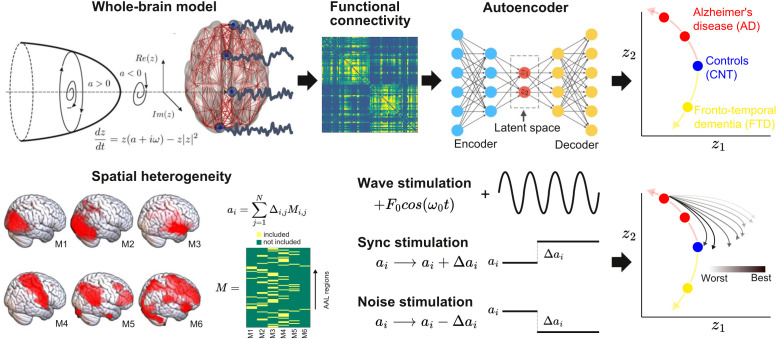
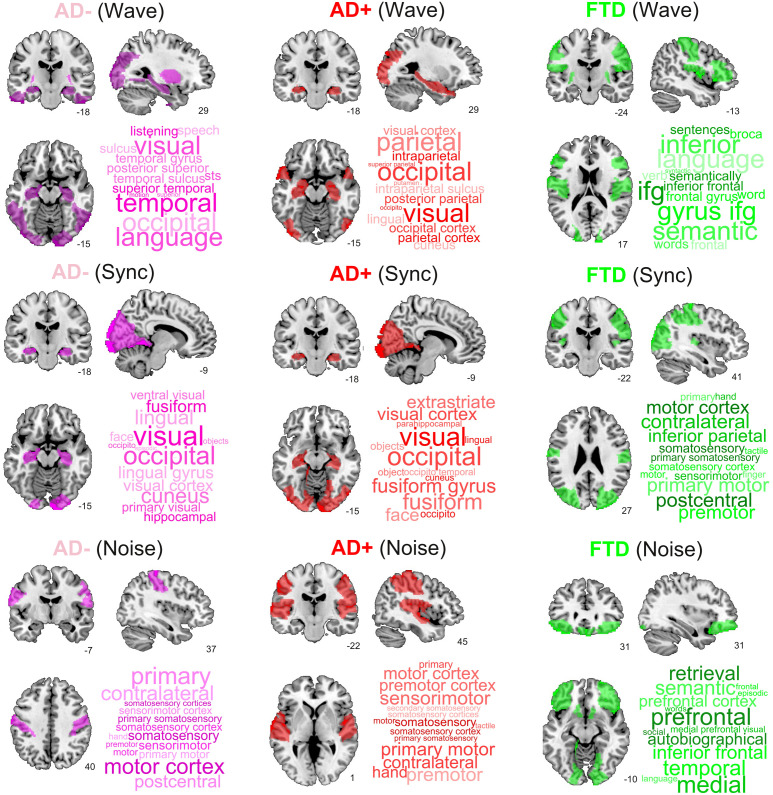
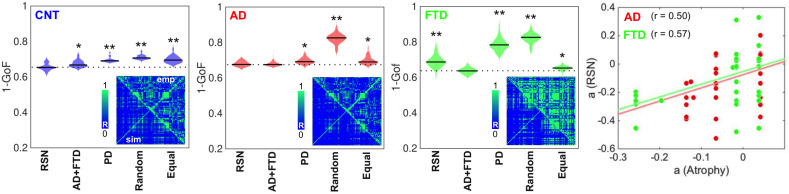
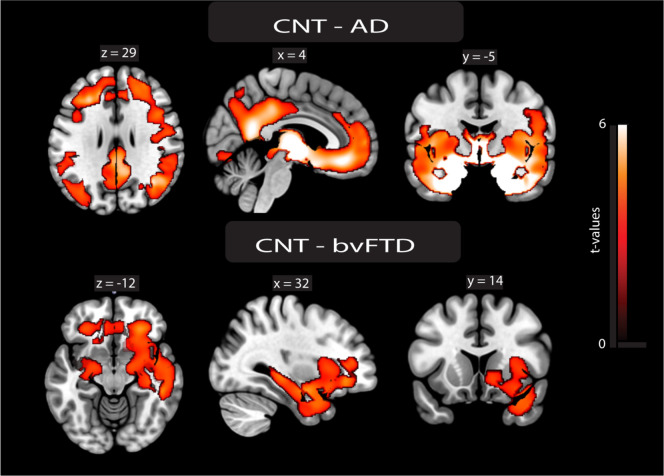
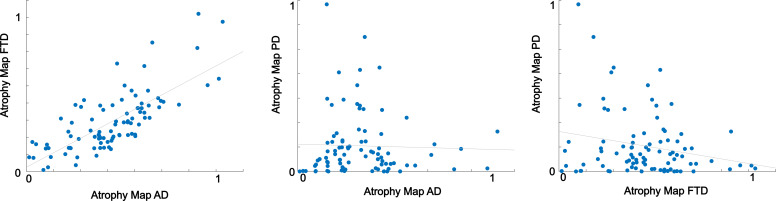
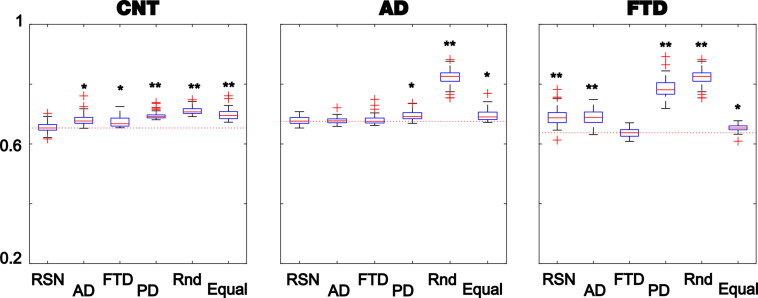
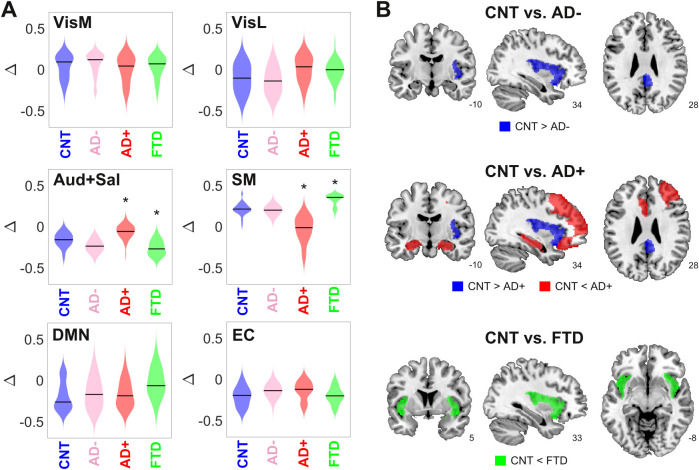
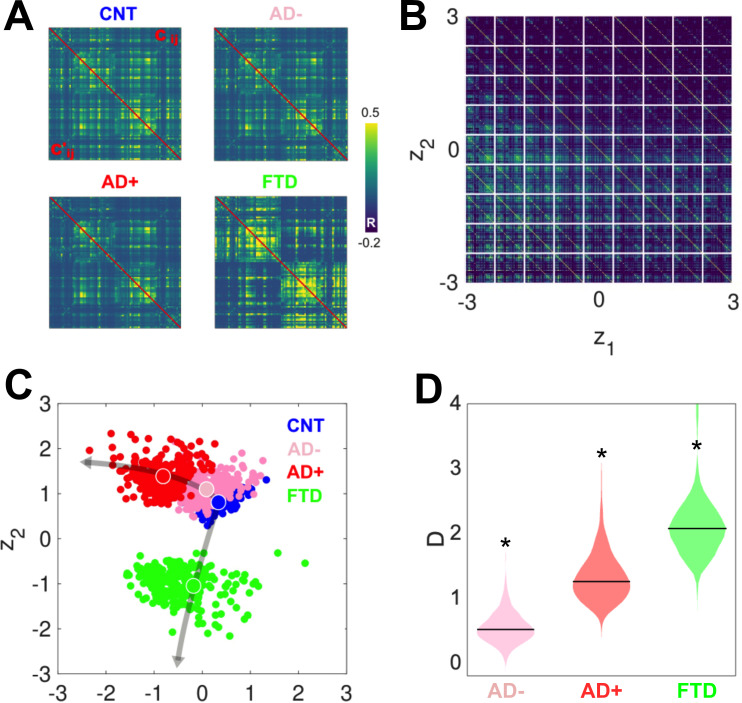
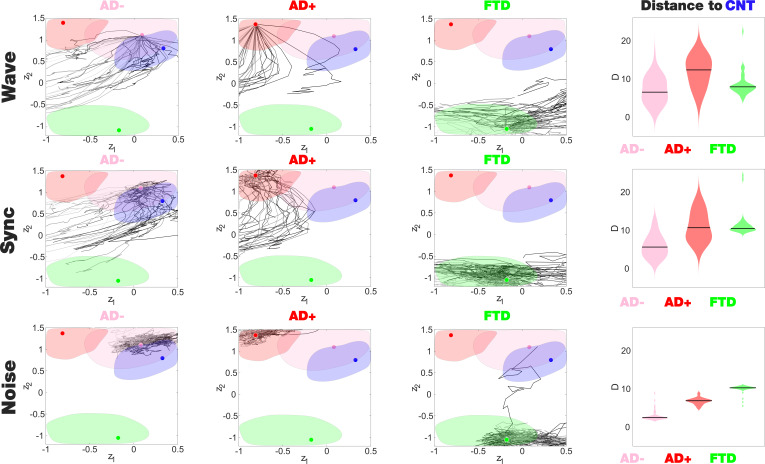
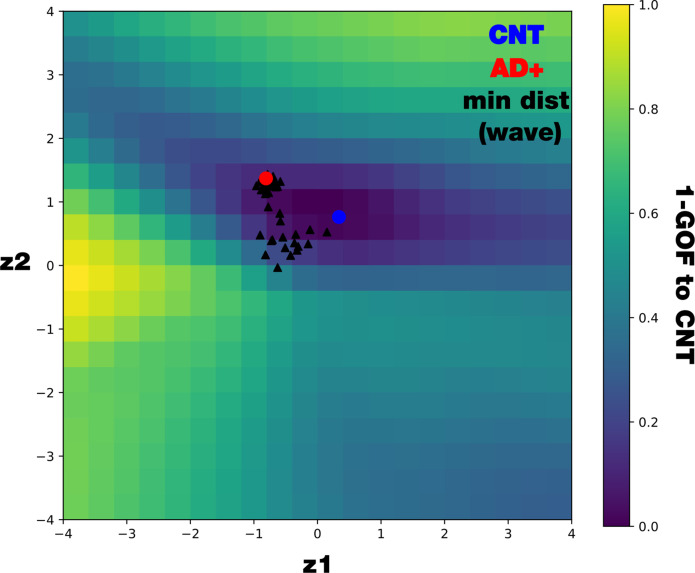
The treatment of neurodegenerative diseases is hindered by lack of interventions capable of steering multimodal whole-brain dynamics towards patterns indicative of preserved brain health. To address this problem, we combined deep learning with a model capable of reproducing whole-brain functional connectivity in patients diagnosed with Alzheimer's disease (AD) and behavioral variant frontotemporal dementia (bvFTD). These models included disease-specific atrophy maps as priors to modulate local parameters, revealing increased stability of hippocampal and insular dynamics as signatures of brain atrophy in AD and bvFTD, respectively. Using variational autoencoders, we visualized different pathologies and their severity as the evolution of trajectories in a low-dimensional latent space. Finally, we perturbed the model to reveal key AD- and bvFTD-specific regions to induce transitions from pathological to healthy brain states. Overall, we obtained novel insights on disease progression and control by means of external stimulation, while identifying dynamical mechanisms that underlie functional alterations in neurodegeneration.
神经退行性疾病的治疗受到缺乏能够将多模态全脑动力学引导至表明大脑健康的模式的干预措施的阻碍。为了解决这个问题,我们将深度学习与一种能够在诊断患有阿尔茨海默病 (AD) 和行为变异额颞叶痴呆 (bvFTD) 的患者中再现全脑功能连接的模型相结合。这些模型包括疾病特异性萎缩图作为先验知识来调节局部参数,分别揭示了海马体和脑岛动力学的稳定性增加,这是 AD 和 bvFTD 中脑萎缩的特征。使用变分自动编码器,我们将不同的病理学及其严重程度可视化作为轨迹在低维潜在空间中的演变。最后,我们对模型进行了扰动,以揭示关键的 AD 和 bvFTD 特定区域,以诱导从病理状态到健康脑状态的转变。总的来说,我们通过外部刺激获得了关于疾病进展和控制的新见解,同时确定了神经退行性变中功能改变的基础动力学机制。