Centre for Demographic Studies, Universitat Autònoma de Barcelona, Bellaterra, Spain.
ICREA- Institució Catalana de Recerca I Estudis Avançats, Barcelona, Spain.
BMC Public Health. 2023 Apr 5;23(1):650. doi: 10.1186/s12889-023-15502-4.
While much is known about the leading causes of death (CoD) and how they have evolved over time, much less is known about the diversity of such causes of death. CoD diversity is an important marker of population health heterogeneity that has been largely overlooked in the study of contemporary health dynamics.
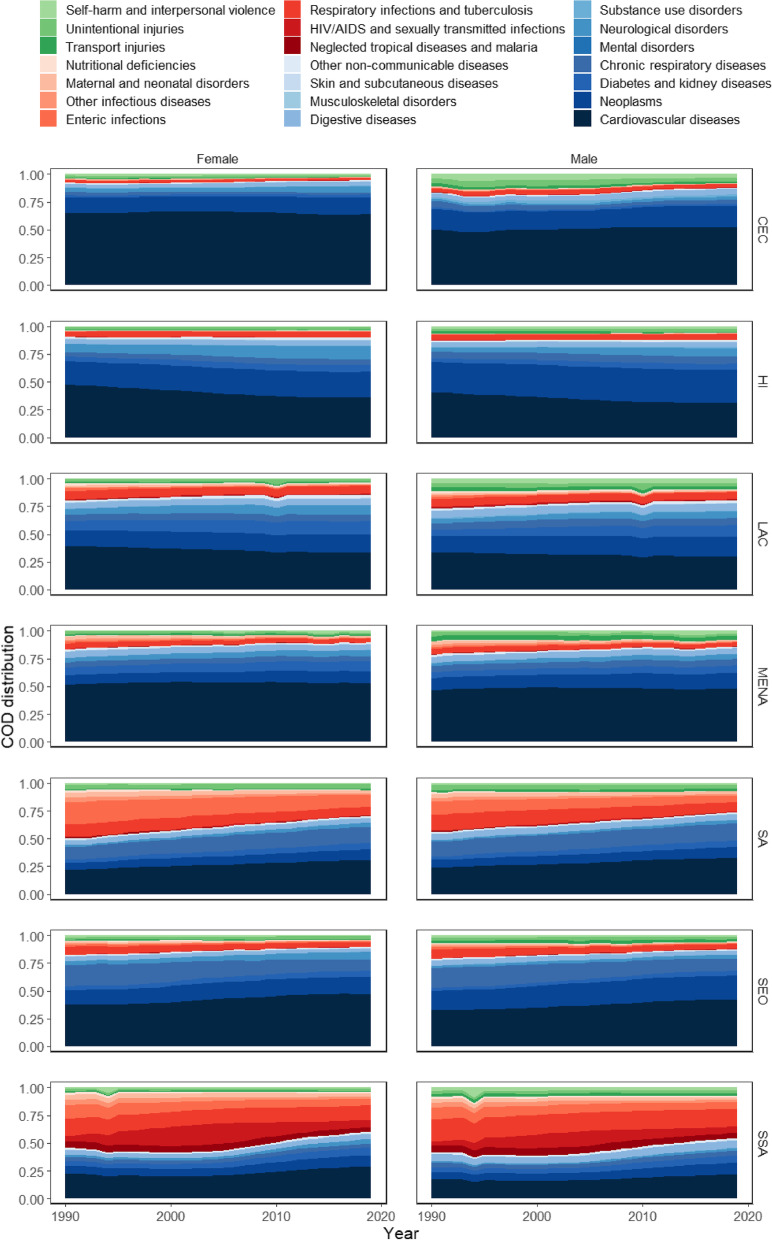
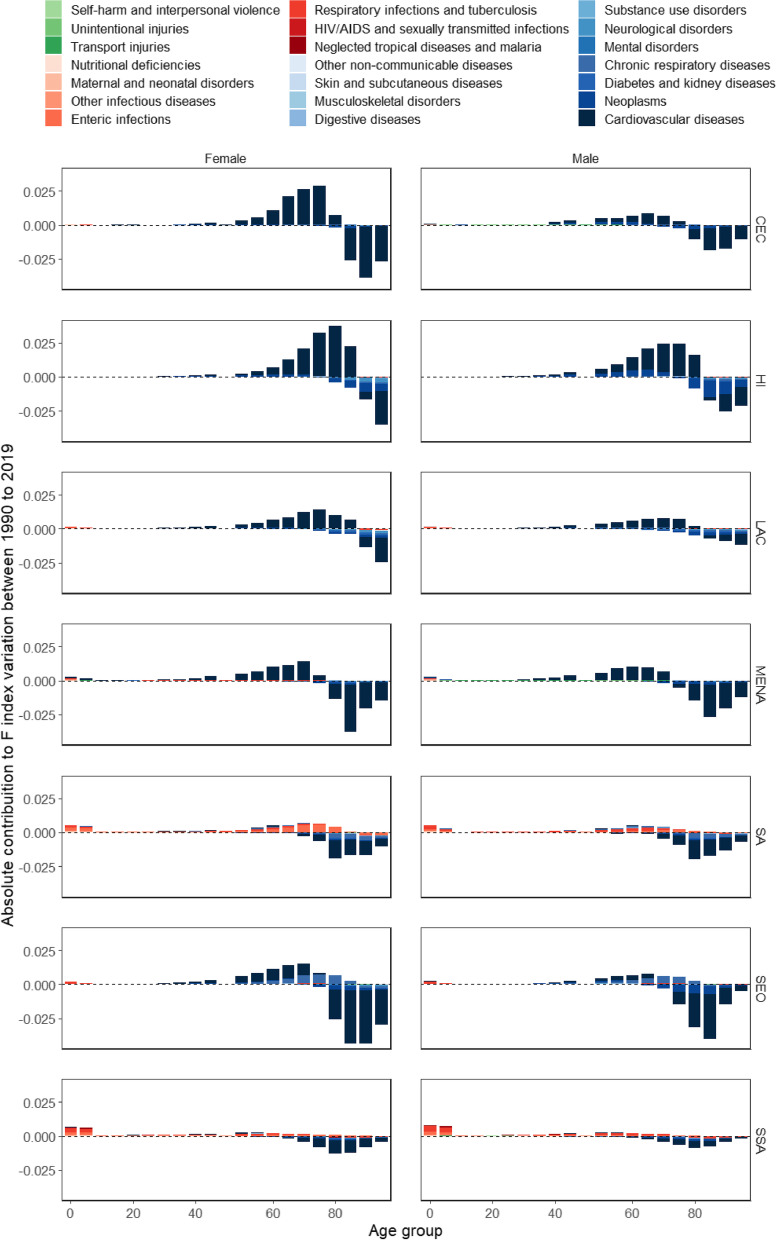
We provide regional and national estimates of CoD diversity from 1990 to 2019. We rely on data from the Global Burden of Disease project, using information on 21 CoD. Results are presented for 204 countries and territories, for women and men separately. CoD diversity is measured with the index of Fractionalization. Results are disaggregated by age and cause of death.
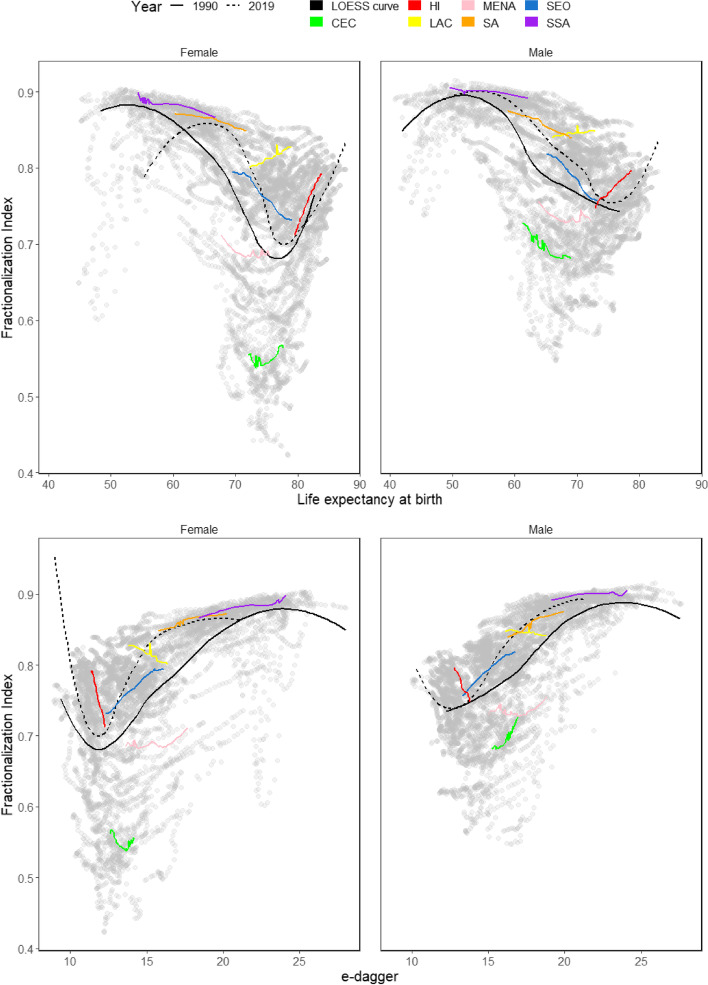
CoD diversity has declined across world regions, except for Latin America and the Caribbean, the region of High-income countries and women in Central Europe, Eastern Europe, and Central Asia. Changes in mortality at adult and older ages have been mostly responsible for CoD diversity dynamics, except for the regions of South Asia and Sub-Saharan Africa, where infant and child mortality still play a non-negligible role. The relationship between CoD diversity, life expectancy, and lifespan inequality is strongly non-monotonic, with turning points differing by sex and indicator. Among longevity vanguard countries, further increases in life expectancy are associated with decreasing lifespan inequality but increasing CoD diversity.
As mortality declines, there is no universal pathway toward low CoD diversity, thus casting doubts on the ability of Epidemiological Transition Theory to predict prospective CoD dynamics among high- and middle-mortality countries. Despite the postponement and increasing predictability of the ages at which individuals die, low-mortality populations are composed of an increasingly heterogenous mix of robust and frail individuals, thus increasing the diversity of health profiles among older persons - an issue that could potentially complicate further improvements in longevity.
虽然人们已经了解了很多主要死因(CoD)及其随时间演变的情况,但对于死因的多样性却知之甚少。CoD 多样性是人口健康异质性的一个重要标志,在当代健康动态研究中,这一标志很大程度上被忽视了。
我们提供了 1990 年至 2019 年 CoD 多样性的区域和国家估计值。我们依赖于全球疾病负担项目的数据,使用了 21 种 CoD 的信息。结果分别为 204 个国家和地区的女性和男性呈现。CoD 多样性通过分数离差指数来衡量。结果按年龄和死因进行细分。
除了拉丁美洲和加勒比地区、高收入国家地区以及中欧、东欧和中亚的女性外,世界各地区的 CoD 多样性都有所下降。除了南亚和撒哈拉以南非洲地区,成年人和老年人死亡率的变化是导致 CoD 多样性动态的主要原因,在这些地区,婴儿和儿童死亡率仍然起着不可忽视的作用。CoD 多样性、预期寿命和寿命不平等之间的关系是非单调的,转折点因性别和指标而异。在长寿前沿国家,预期寿命的进一步增加与寿命不平等的减少和 CoD 多样性的增加有关。
随着死亡率的下降,没有一条通往低 CoD 多样性的普遍途径,这使得流行病学转移理论预测高死亡率和中死亡率国家未来的 CoD 动态的能力受到质疑。尽管死亡年龄的推迟和可预测性增加,但低死亡率人群由越来越多的健壮和脆弱的个体组成,这增加了老年人健康状况的多样性——这一问题可能会使进一步提高长寿的努力复杂化。