Dasila Hemant, Sah V K, Jaggi Vandana, Kumar Arun, Tewari Lakshmi, Taj Gohar, Chaturvedi Sumit, Perveen Kahkashan, Bukhari Najat A, Siang Tan Ching, Sahgal Manvika
Department of Microbiology, Akal College of Basic Sciences, Eternal University, Rajgarh, Himachal Pradesh, India.
Department of Microbiology, College of Basic Sciences and Humanities, G.B. Pant University of Agriculture and Technology, Pantnagar, India.
Front Microbiol. 2023 Mar 13;14:1135693. doi: 10.3389/fmicb.2023.1135693. eCollection 2023.
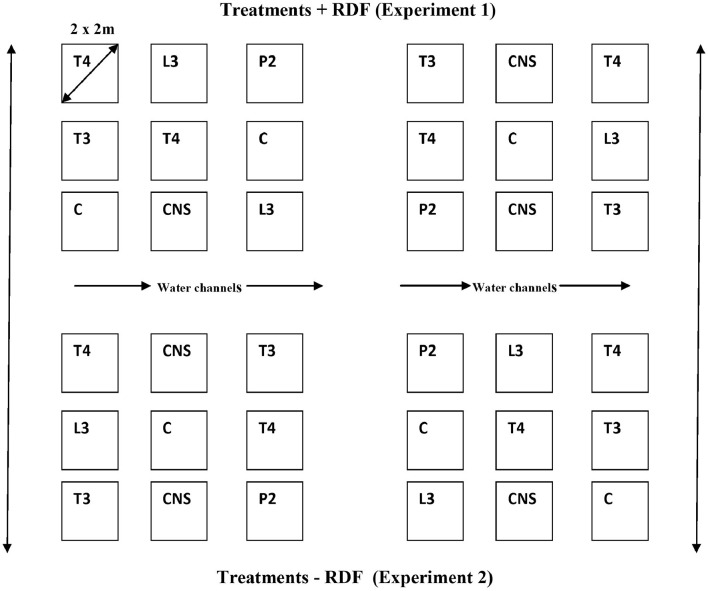
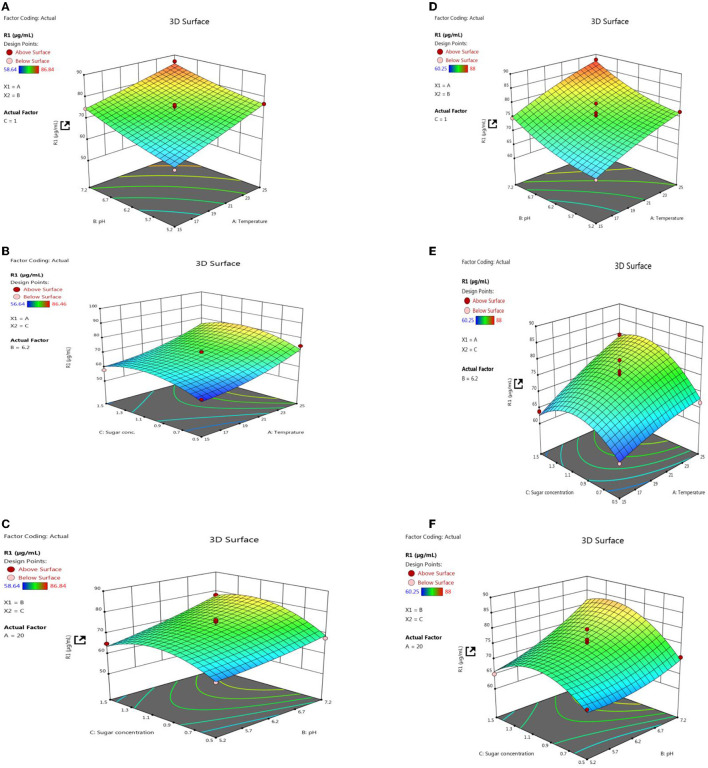
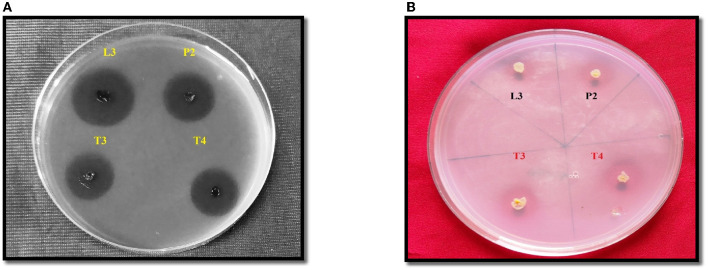
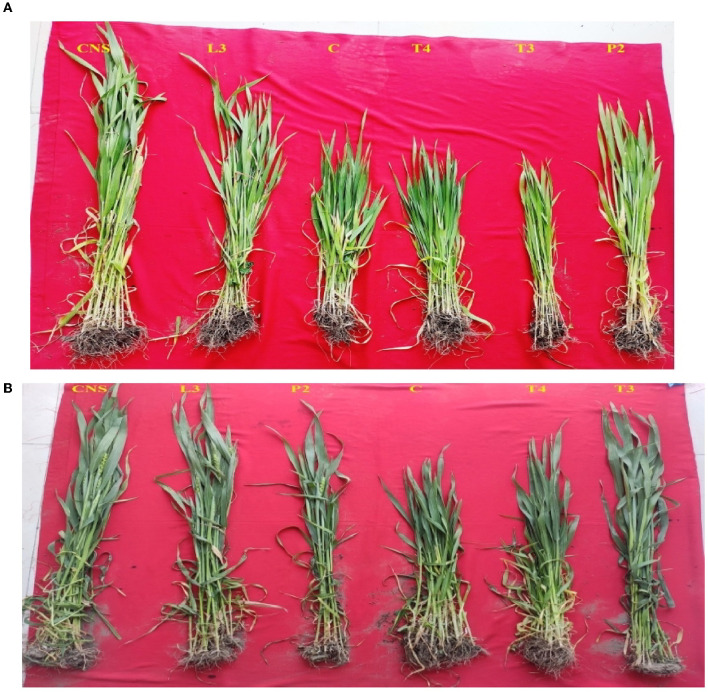
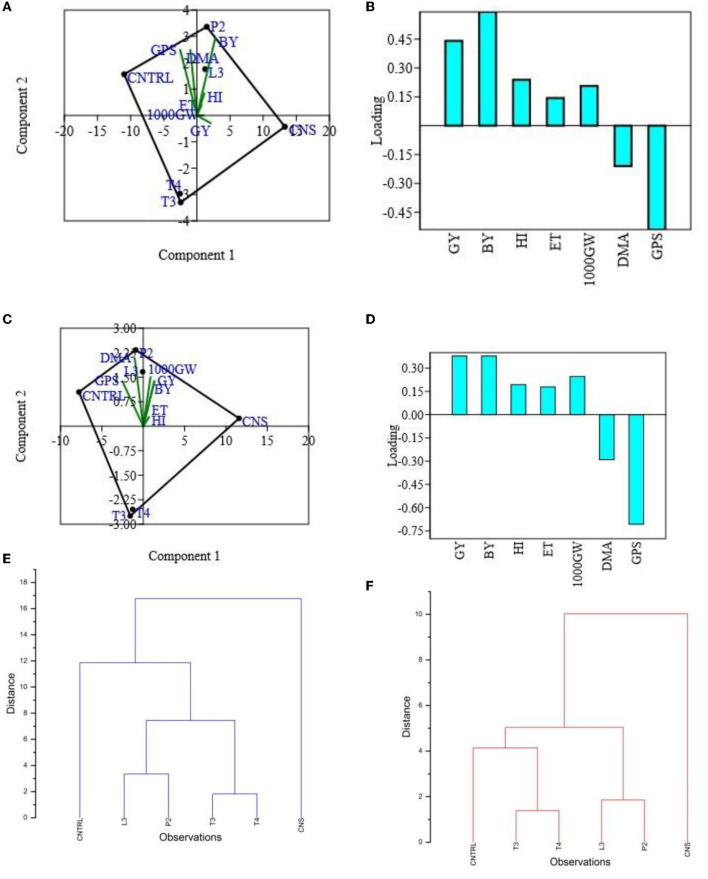
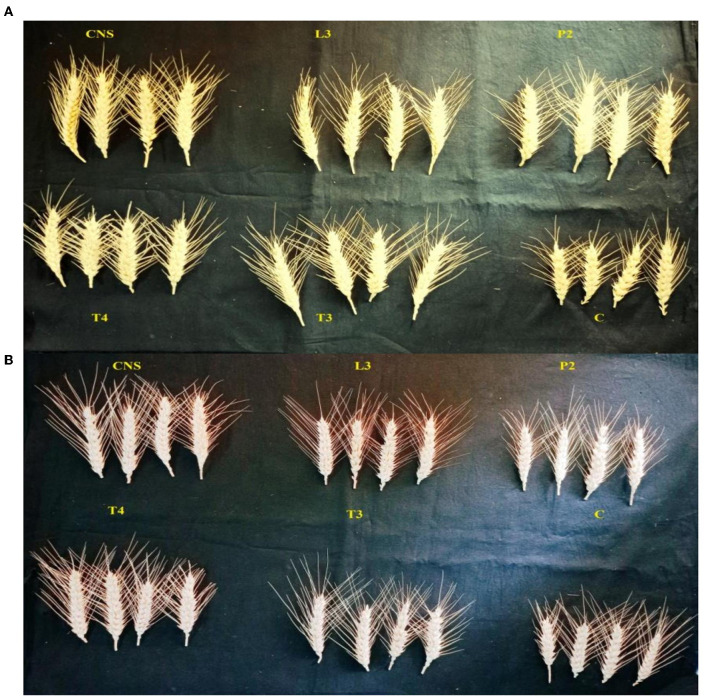
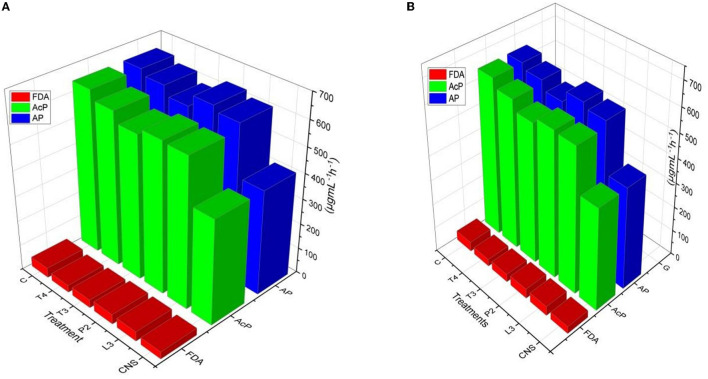
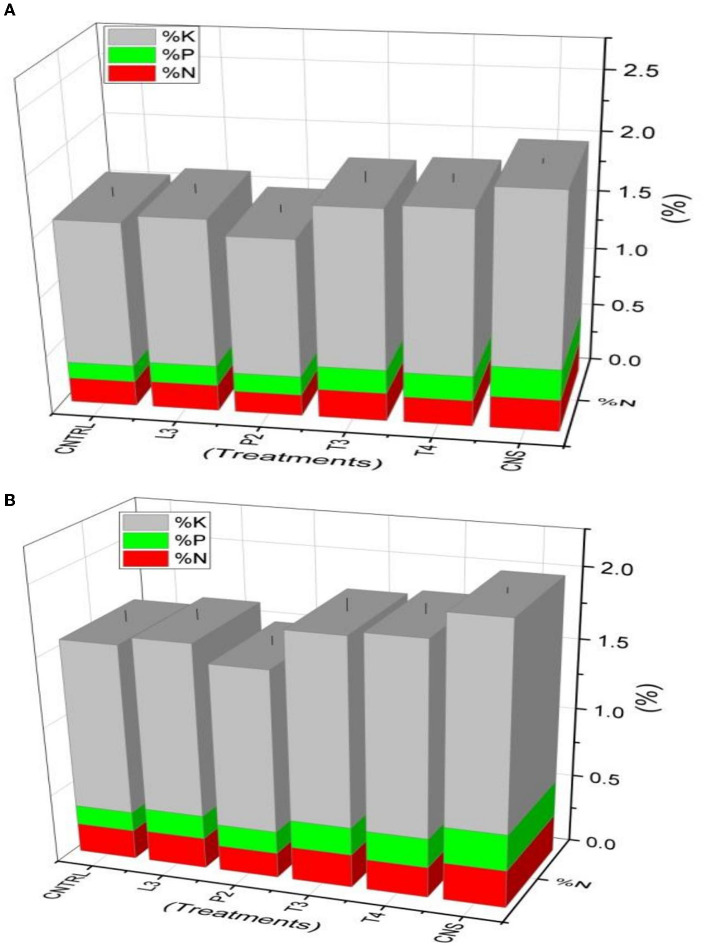
It is well-known that phosphate-solubilizing bacteria (PSB) promote crop growth and yield. The information regarding characterization of PSB isolated from agroforestry systems and their impact on wheat crops under field conditions is rarely known. In the present study, we aim to develop psychrotroph-based P biofertilizers, and for that, four PSB strains ( sp. L3, sp. P2, sp. T3, and sp. T4) previously isolated from three different agroforestry zones and already screened for wheat growth under pot trial conditions were evaluated on wheat crop under field conditions. Two field experiments were employed; set 1 includes PSB + recommended dose of fertilizers (RDF) and set 2 includes PSB - RDF. In both field experiments, the response of the PSB-treated wheat crop was significantly higher compared to the uninoculated control. In field set 1, an increase of 22% in grain yield (GY), 16% in biological yield (BY), and 10% in grain per spike (GPS) was observed in consortia (CNS, L3 + P2) treatment, followed by L3 and P2 treatments. Inoculation of PSB mitigates soil P deficiency as it positively influences soil alkaline phosphatase (AP) and soil acid phosphatase (AcP) activity which positively correlated with grain NPK %. The highest grain NPK % was reported in CNS-treated wheat with RDF (N-0.26%, P-0.18%, and K-1.66%) and without RDF (N-0.27, P-0.26, and K-1.46%), respectively. All parameters, including soil enzyme activities, plant agronomic data, and yield data were analyzed by principal component analysis (PCA), resulting in the selection of two PSB strains. The conditions for optimal P solubilization, in L3 (temperature-18.46, pH-5.2, and glucose concentration-0.8%) and P2 (temperature-17°C, pH-5.0, and glucose concentration-0.89%), were obtained through response surface methodology (RSM) modeling. The P solubilizing potential of selected strains at <20°C makes them a suitable candidate for the development of psychrotroph-based P biofertilizers. Low-temperature P solubilization of the PSB strains from agroforestry systems makes them potential biofertilizers for winter crops.
众所周知,解磷细菌(PSB)可促进作物生长并提高产量。关于从农林业系统中分离出的解磷细菌的特性及其在田间条件下对小麦作物影响的信息却鲜为人知。在本研究中,我们旨在开发基于嗜冷菌的磷生物肥料,为此,对先前从三个不同农林业区域分离出并已在盆栽试验条件下进行小麦生长筛选的四株解磷细菌菌株(L3菌、P2菌、T3菌和T4菌)在田间条件下的小麦作物上进行了评估。进行了两个田间试验;试验组1包括解磷细菌+推荐施肥量(RDF),试验组2包括解磷细菌-不施RDF。在两个田间试验中,与未接种对照相比,经解磷细菌处理的小麦作物的反应显著更高。在试验组1中,在菌群(CNS,L3 + P2)处理中观察到籽粒产量(GY)增加22%,生物产量(BY)增加16%,每穗粒数(GPS)增加10%,其次是L3和P2处理。接种解磷细菌可缓解土壤磷缺乏,因为它对土壤碱性磷酸酶(AP)和土壤酸性磷酸酶(AcP)活性有积极影响,而这与籽粒氮磷钾含量呈正相关。在分别施用RDF(氮-0.26%,磷-0.18%,钾-1.66%)和不施用RDF(氮-0.27,磷-0.26,钾-1.46%)的情况下,CNS处理的小麦中籽粒氮磷钾含量最高。通过主成分分析(PCA)对包括土壤酶活性、植物农艺数据和产量数据在内的所有参数进行了分析,从而筛选出两株解磷细菌菌株。通过响应面法(RSM)建模获得了L3菌(温度-18.46,pH-5.2,葡萄糖浓度-0.8%)和P2菌(温度-17°C,pH-5.0,葡萄糖浓度-0.89%)最佳解磷的条件。所选菌株在<20°C时的解磷潜力使其成为开发基于嗜冷菌的磷生物肥料的合适候选菌株。农林业系统中解磷细菌菌株的低温解磷能力使其成为冬季作物的潜在生物肥料。