Department of Laboratory Medicine, Pomeranian Medical University of Szczecin, PowstancowWielkopolskich 72, 70-111, Szczecin, Poland.
Department of Psychiatry, Pomeranian Medical University of Szczecin, Broniewskiego 26, 71-460, Szczecin, Poland.
Cell Mol Neurobiol. 2023 Aug;43(6):2643-2673. doi: 10.1007/s10571-023-01344-6. Epub 2023 Apr 7.
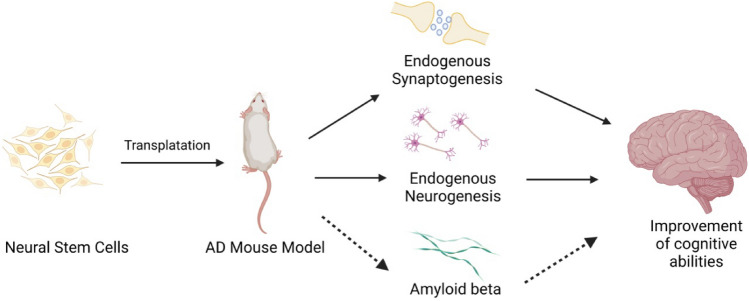
Stem cells have been the subject of research for years due to their enormous therapeutic potential. Most neurological diseases such as multiple sclerosis (MS), amyotrophic lateral sclerosis (ALS), Alzheimer's disease (AD), Parkinson's disease (PD), and Huntington's disease (HD) are incurable or very difficult to treat. Therefore new therapies are sought in which autologous stem cells are used. They are often the patient's only hope for recovery or slowing down the progress of the disease symptoms. The most important conclusions arise after analyzing the literature on the use of stem cells in neurodegenerative diseases. The effectiveness of MSC cell therapy has been confirmed in ALS and HD therapy. MSC cells slow down ALS progression and show early promising signs of efficacy. In HD, they reduced huntingtin (Htt) aggregation and stimulation of endogenous neurogenesis. MS therapy with hematopoietic stem cells (HSCs) inducted significant recalibration of pro-inflammatory and immunoregulatory components of the immune system. iPSC cells allow for accurate PD modeling. They are patient-specific and therefore minimize the risk of immune rejection and, in long-term observation, did not form any tumors in the brain. Extracellular vesicles derived from bone marrow mesenchymal stromal cells (BM-MSC-EVs) and Human adipose-derived stromal/stem cells (hASCs) cells are widely used to treat AD. Due to the reduction of Aβ42 deposits and increasing the survival of neurons, they improve memory and learning abilities. Despite many animal models and clinical trial studies, cell therapy still needs to be refined to increase its effectiveness in the human body.
干细胞因其巨大的治疗潜力而成为多年来的研究对象。大多数神经退行性疾病,如多发性硬化症(MS)、肌萎缩侧索硬化症(ALS)、阿尔茨海默病(AD)、帕金森病(PD)和亨廷顿病(HD),都是不可治愈或难以治疗的。因此,人们寻求新的治疗方法,使用自体干细胞。它们通常是患者恢复或减缓疾病症状进展的唯一希望。通过分析关于干细胞在神经退行性疾病中的应用的文献,可以得出最重要的结论。MSC 细胞疗法在 ALS 和 HD 治疗中的有效性已得到证实。MSC 细胞减缓 ALS 的进展,并显示出早期有希望的疗效迹象。在 HD 中,它们减少了亨廷顿蛋白(Htt)聚集并刺激内源性神经发生。造血干细胞(HSCs)治疗 MS 诱导了免疫系统中促炎和免疫调节成分的显著重新校准。iPSC 细胞允许进行准确的 PD 建模。它们是患者特异性的,因此最大限度地降低了免疫排斥的风险,并且在长期观察中,它们在大脑中没有形成任何肿瘤。来源于骨髓间充质基质细胞(BM-MSC-EVs)和人脂肪来源的基质/干细胞(hASCs)的细胞外囊泡被广泛用于治疗 AD。由于 Aβ42 沉积的减少和神经元存活的增加,它们改善了记忆和学习能力。尽管有许多动物模型和临床试验研究,但细胞疗法仍需要进一步改进,以提高其在人体中的有效性。