Tiangpook Suratsawadee, Nhim Sreyneang, Prangthip Pattaneeya, Pason Patthra, Tachaapaikoon Chakrit, Ratanakhanokchai Khanok, Waeonukul Rattiya
Division of Biochemical Technology, School of Bioresources and Technology, King Mongkut's University of Technology Thonburi (KMUTT), Bangkok 10150, Thailand.
Department of Tropical Nutrition & Food Science, Faculty of Tropical Medicine, Mahidol University, Bangkok 10400, Thailand.
Foods. 2023 Apr 3;12(7):1499. doi: 10.3390/foods12071499.
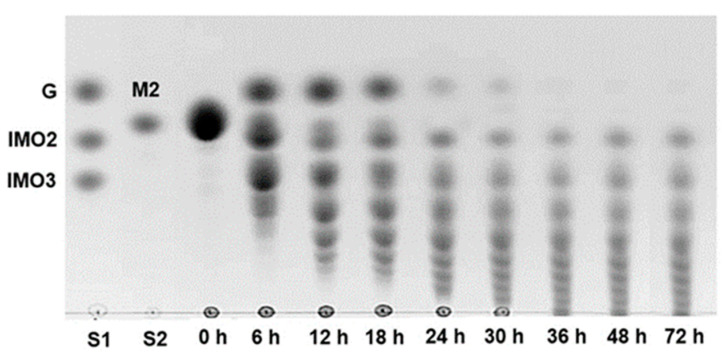
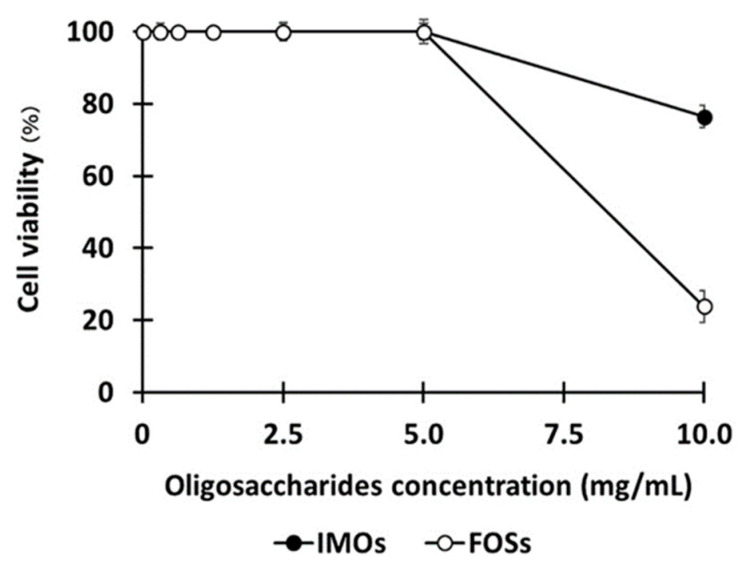
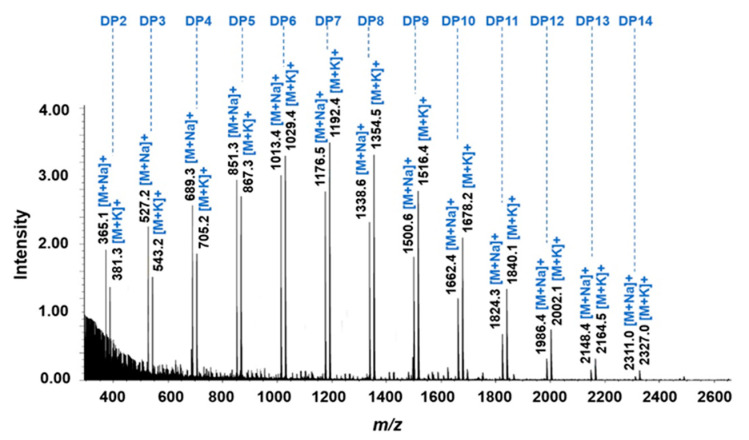
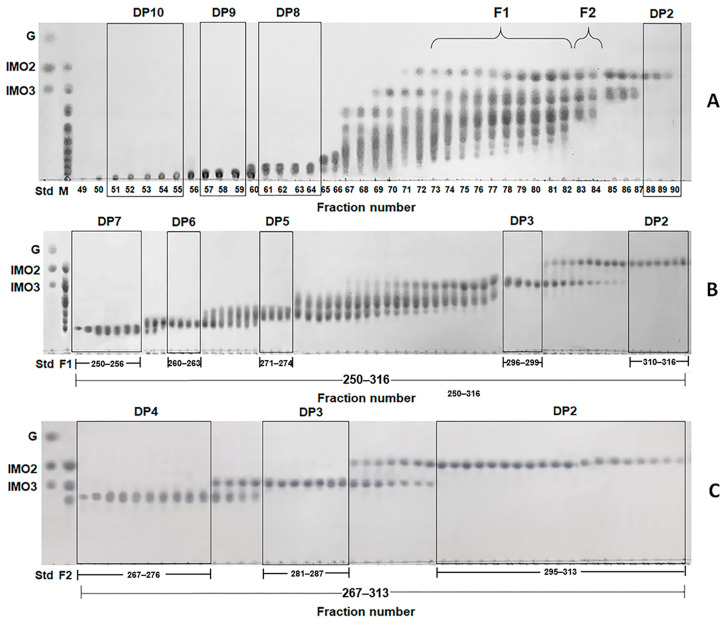
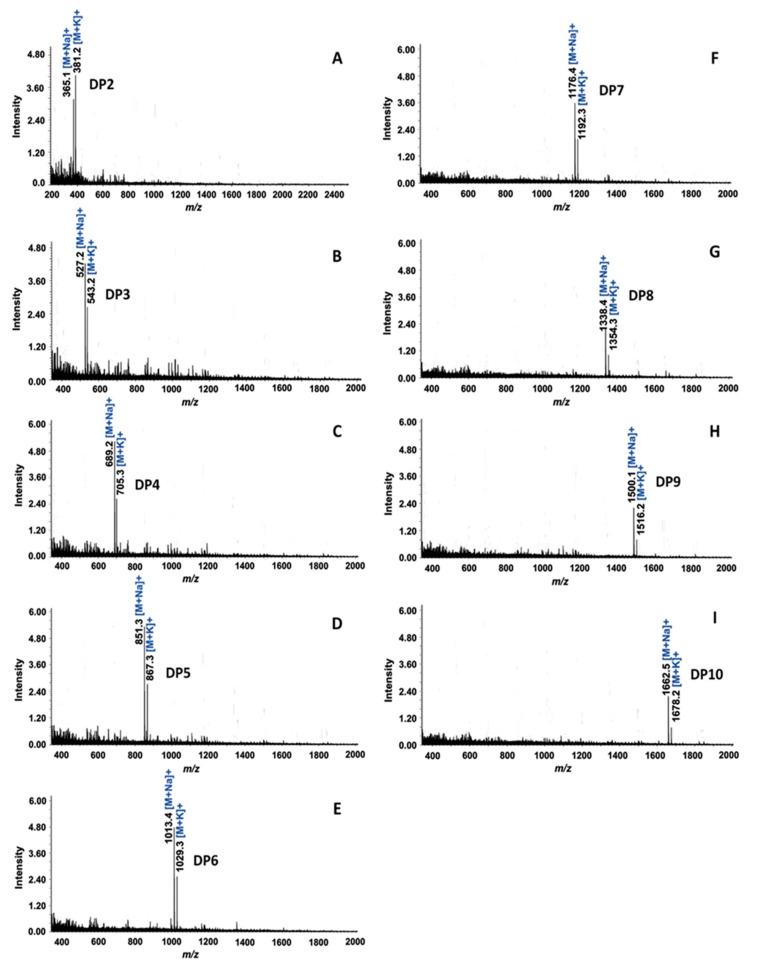
strain AP-1, which produces α-glucosidase with transglucosidase activity, was used to produce a series of long-chain isomaltooligosaccharides (IMOs) with degree of polymerization (DP) ranging from 2 to 14 by direct fermentation of maltose. A total IMOs yield of 36.33 g/L without contabacillusmination from glucose and maltose was achieved at 36 h of cultivation using 50 g/L of maltose, with a yield of 72.7%. IMOs were purified by size exclusion chromatography with a Superdex 30 Increase column. The molecular mass and DP of IMOs were analyzed by matrix-assisted laser desorption/ionization time-of-flight mass spectrometry (MALDI-TOF/MS). Subsequently, linkages in produced oligosaccharides were verified by enzymatic hydrolysis with α-amylase and oligo-α-1,6-glucosidase. These IMOs showed prebiotic properties, namely tolerance to acidic conditions and digestive enzymes of the gastrointestinal tract, stimulation of probiotic bacteria growth to produce short-chain fatty acids and no stimulating effect on pathogenic bacteria growth. Moreover, these IMOs were not toxic to mammalian cells at up to 5 mg/mL, indicating their biocompatibility. Therefore, this research demonstrated a simple and economical method for producing IMOs with DP2-14 without additional operations; moreover, the excellent prebiotic properties of the IMOs offer great prospects for their application in functional foods.
菌株AP-1可产生具有转葡萄糖苷酶活性的α-葡萄糖苷酶,利用该菌株通过麦芽糖直接发酵生产了一系列聚合度(DP)为2至14的长链异麦芽低聚糖(IMOs)。使用50 g/L麦芽糖培养36 h时,IMOs的总产率达到36.33 g/L,且无葡萄糖和麦芽糖的污染,产率为72.7%。使用Superdex 30 Increase柱通过尺寸排阻色谱法对IMOs进行纯化。通过基质辅助激光解吸/电离飞行时间质谱(MALDI-TOF/MS)分析IMOs的分子量和DP。随后,通过用α-淀粉酶和寡聚-α-1,6-葡萄糖苷酶进行酶解来验证所产生的寡糖中的连接。这些IMOs表现出益生元特性,即对胃肠道的酸性条件和消化酶具有耐受性,刺激益生菌生长以产生短链脂肪酸,且对病原菌生长无刺激作用。此外,这些IMOs在浓度高达5 mg/mL时对哺乳动物细胞无毒,表明它们具有生物相容性。因此,本研究证明了一种无需额外操作即可生产DP2-14的IMOs的简单且经济的方法;此外,IMOs优异的益生元特性为其在功能性食品中的应用提供了广阔前景。