Chaudhari Dhananjay, Vohra Rimsha R, Abdefatah Ali Munira, Nadeem Huzaifa, Tarimci Baris, Garg Tulika, Sharari Rawan A, Joseph Abia, Khan Aadil
Department of Psychiatry, Ganesh Shankar Vidyarthi Memorial (GSVM) Medical College and Lala Lajpat Rai (LLR) Hospital, Kanpur, IND.
Internal Medicine, Dow University of Health Sciences, Karachi, PAK.
Cureus. 2023 Mar 12;15(3):e36051. doi: 10.7759/cureus.36051. eCollection 2023 Mar.
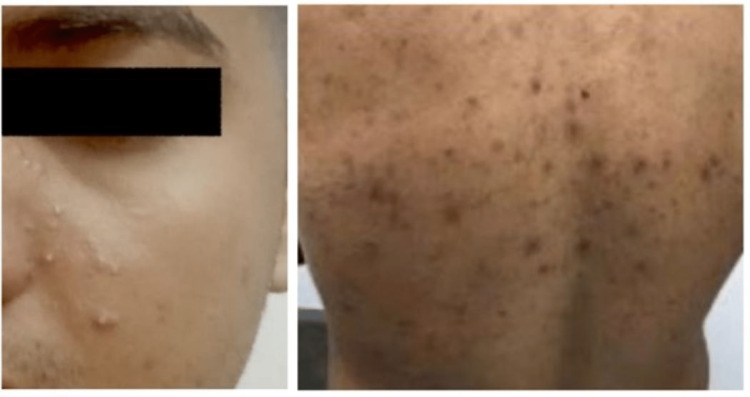
Lithium use has been associated with dermatological issues, including psoriasis, folliculitis, and acneiform outbreaks. The lithium dosage and the therapeutic range of serum lithium levels are closely correlated with the frequency of cutaneous adverse effects. Lithium-induced acne inversa is a less well-known adverse effect, causing significant morbidity. Acne inversa (hidradenitis suppurativa) is a chronic inflammatory illness of the skin seen in the folds of the skin and face and distinguished by the presence of painful nodules and fistulas, as well as a propensity for tissue fibrosis. We report two cases of bipolar affective disorder who received long-term lithium treatment and experienced acne inversa during treatment, which subsided once the lithium was withdrawn.
使用锂盐与皮肤病问题有关,包括银屑病、毛囊炎和痤疮样皮疹。锂盐剂量和血清锂水平的治疗范围与皮肤不良反应的发生频率密切相关。锂盐诱发的化脓性汗腺炎是一种鲜为人知的不良反应,会导致严重的发病率。化脓性汗腺炎是一种皮肤慢性炎症性疾病,见于皮肤褶皱处和面部,其特征为存在疼痛性结节和瘘管,以及有组织纤维化的倾向。我们报告了两例双相情感障碍患者,他们接受了长期锂盐治疗,并在治疗期间出现了化脓性汗腺炎,停用锂盐后病情缓解。