Shi Hanqiang, Xiong Lie, Yan Guang, Du Shuqin, Liu Jie, Shi Yanbo
Central Laboratory of Molecular Medicine Research Center, Jiaxing Traditional Chinese Medicine Hospital Affiliated to Zhejiang Chinese Medical University, Jiaxing, China.
Jiaxing Key Laboratory of Diabetic Angiopathy Research, Jiaxing, China.
Front Mol Biosci. 2023 Mar 31;10:1156062. doi: 10.3389/fmolb.2023.1156062. eCollection 2023.
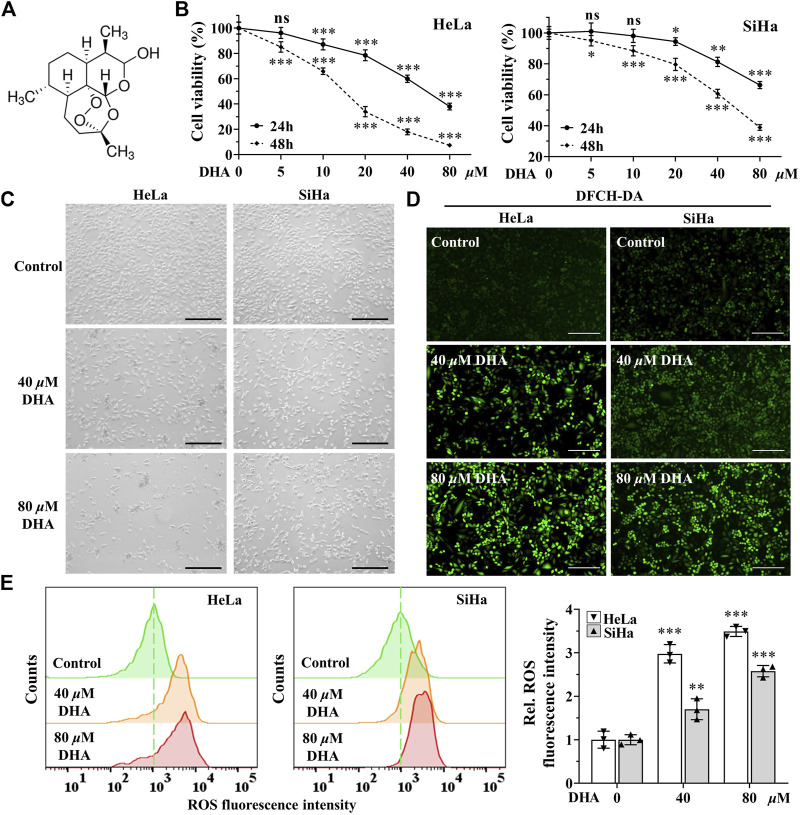
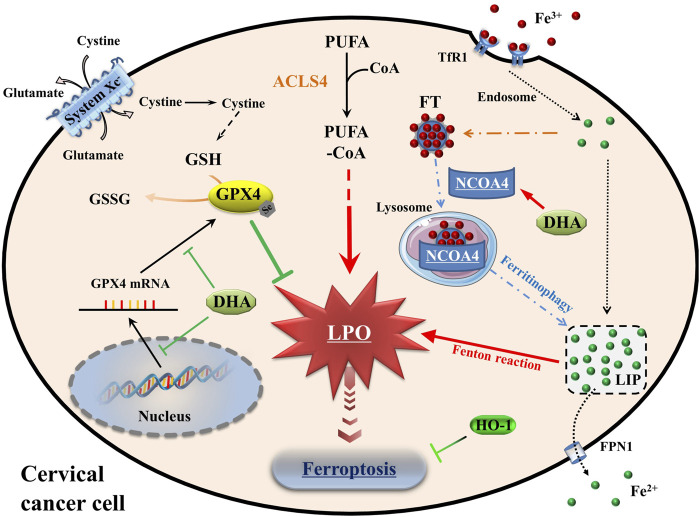
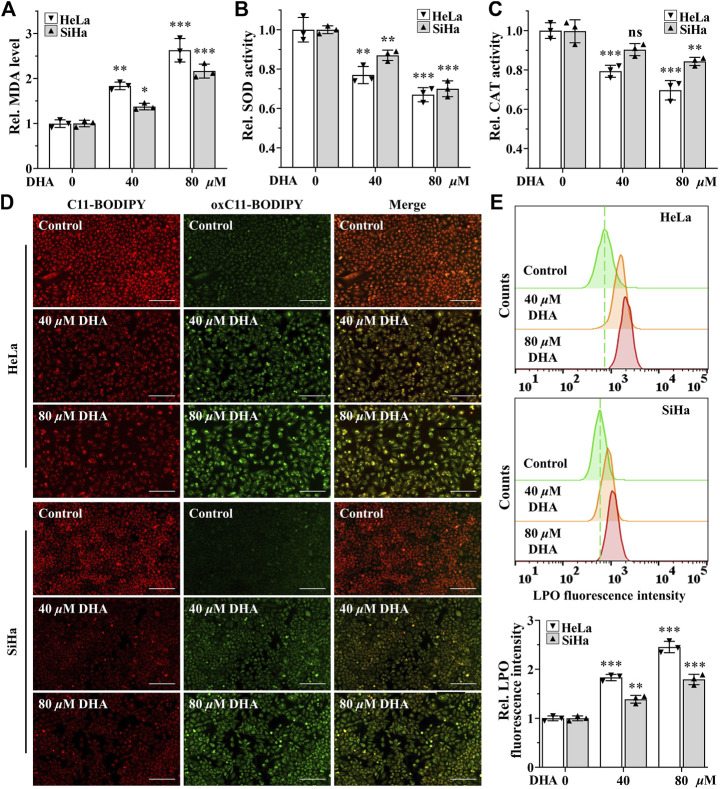
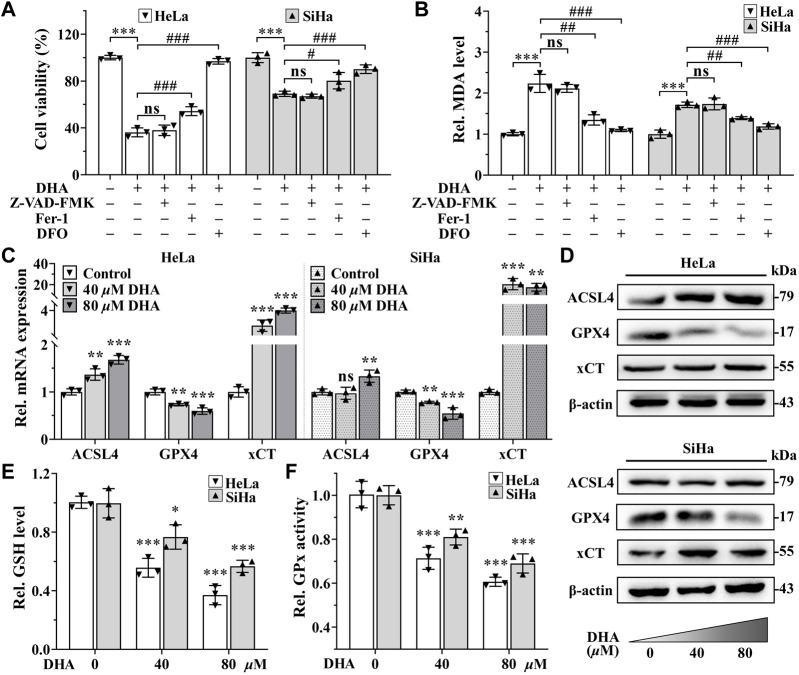
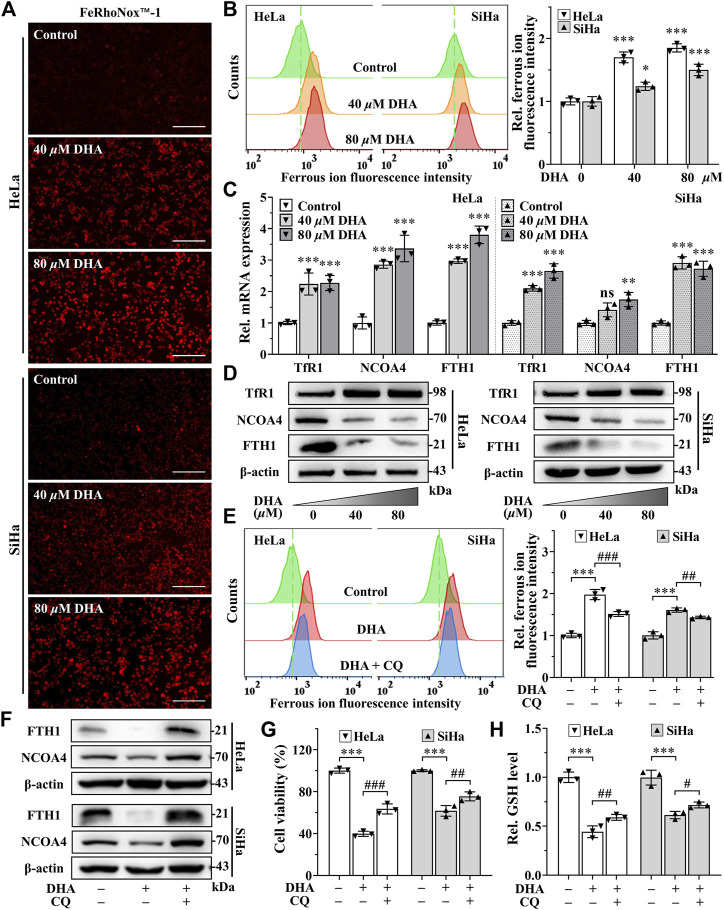
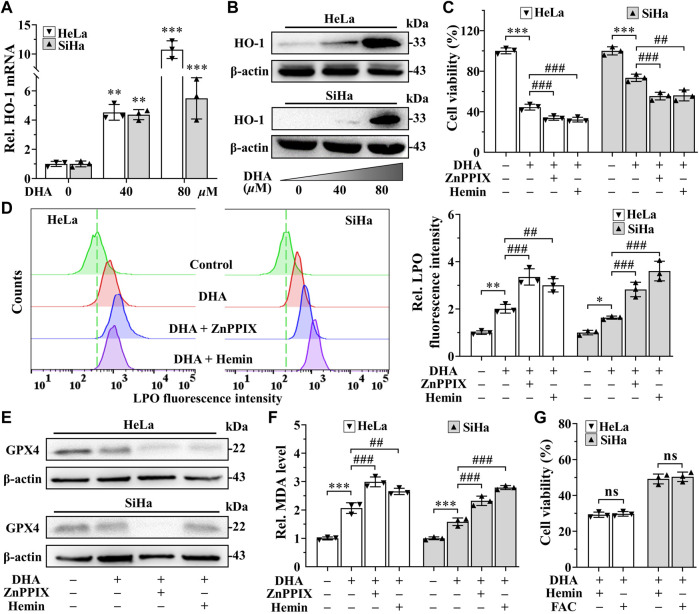
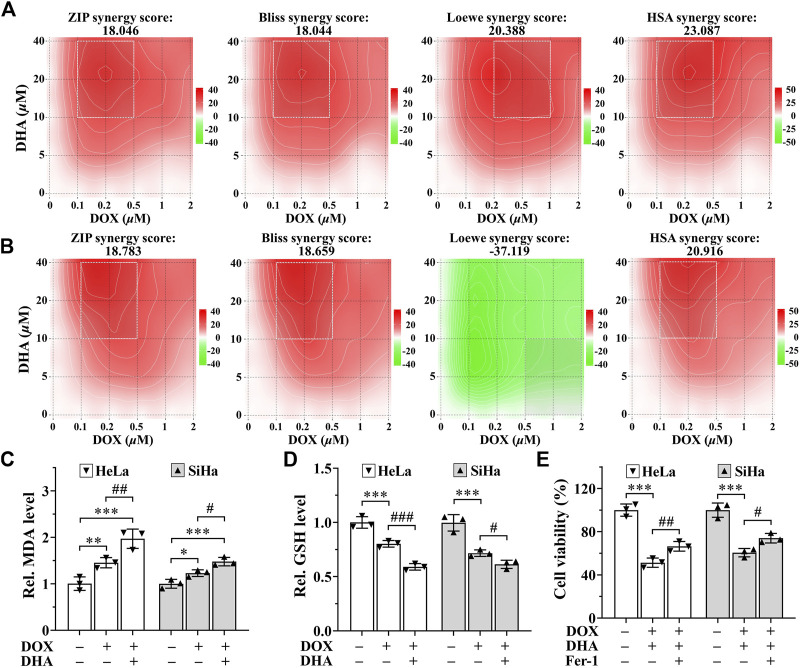
The clinical therapeutics of cervical cancer is limited due to the drug resistance and metastasis of tumor. As a novel target for antitumor therapy, ferroptosis is deemed to be more susceptible for those cancer cells with resistance to apoptosis and chemotherapy. Dihydroartemisinin (DHA), the primary active metabolites of artemisinin and its derivatives, has exhibited a variety of anticancer properties with low toxicity. However, the role of DHA and ferroptosis in cervical cancer remained unclear. Here, we showed that DHA could time-dependently and dose-dependently inhibit the proliferation of cervical cancer cells, which could be alleviated by the inhibitors of ferroptosis rather than apoptosis. Further investigation confirmed that DHA treatment initiated ferroptosis, as evidenced by the accumulation of reactive oxygen species (ROS), malondialdehyde (MDA) and liquid peroxidation (LPO) levels and simultaneously depletion of glutathione peroxidase 4 (GPX4) and glutathione (GSH). Moreover, nuclear receptor coactivator 4 (NCOA4)-mediated ferritinophagy was also induced by DHA leading to subsequent increases of intracellular labile iron pool (LIP), exacerbated the Fenton reaction resulting in excessive ROS production, and enhanced cervical cancer ferroptosis. Among them, we unexpectedly found that heme oxygenase-1 (HO-1) played an antioxidant role in DHA-induced cell death. In addition, the results of synergy analysis showed that the combination of DHA and doxorubicin (DOX) emerged a highly synergistic lethal effect for cervical cancer cells, which was related also to ferroptosis. Overall, our data revealed the molecular mechanisms that DHA triggered ferritinophagy-dependent ferroptosis and sensitized to DOX in cervical cancer, which may provide novel avenues for future therapy development.
由于肿瘤的耐药性和转移,宫颈癌的临床治疗受到限制。作为一种新型的抗肿瘤治疗靶点,铁死亡被认为对那些对凋亡和化疗耐药的癌细胞更敏感。双氢青蒿素(DHA)是青蒿素及其衍生物的主要活性代谢产物,具有多种低毒抗癌特性。然而,DHA和铁死亡在宫颈癌中的作用仍不清楚。在此,我们表明DHA可时间和剂量依赖性地抑制宫颈癌细胞的增殖,这种抑制作用可被铁死亡抑制剂而非凋亡抑制剂所缓解。进一步研究证实,DHA处理引发了铁死亡,表现为活性氧(ROS)、丙二醛(MDA)和脂质过氧化(LPO)水平的积累,同时谷胱甘肽过氧化物酶4(GPX4)和谷胱甘肽(GSH)的消耗。此外,DHA还诱导了核受体辅激活因子4(NCOA4)介导的铁蛋白自噬,导致细胞内不稳定铁池(LIP)增加,加剧芬顿反应,导致过量ROS产生,增强宫颈癌铁死亡。其中,我们意外地发现血红素加氧酶-1(HO-1)在DHA诱导的细胞死亡中发挥抗氧化作用。此外,协同分析结果表明,DHA与阿霉素(DOX)联合对宫颈癌细胞具有高度协同致死作用,这也与铁死亡有关。总体而言,我们的数据揭示了DHA触发铁蛋白自噬依赖性铁死亡并使宫颈癌对DOX敏感的分子机制,这可能为未来的治疗发展提供新途径。