GIPSA-Lab, Grenoble INP, CNRS, Université Grenoble Alpes, 38000 Grenoble, France.
Robin Guillard EIRL, 38000 Grenoble, France.
Int J Environ Res Public Health. 2023 Apr 14;20(8):5509. doi: 10.3390/ijerph20085509.
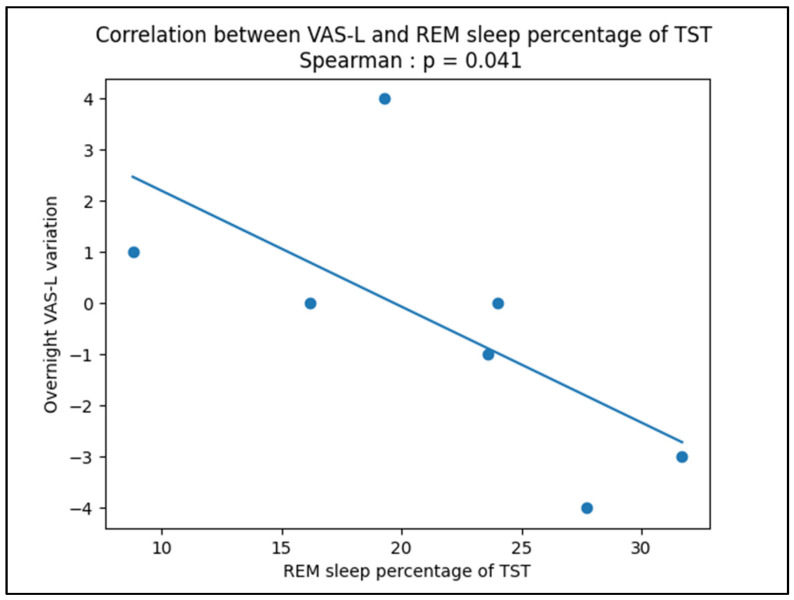
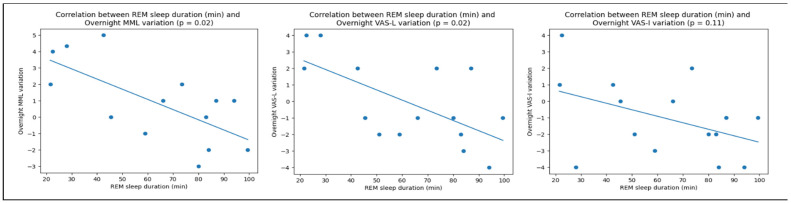
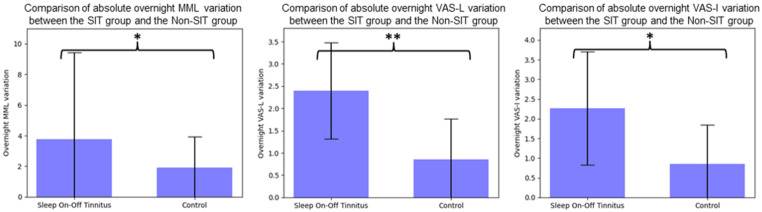
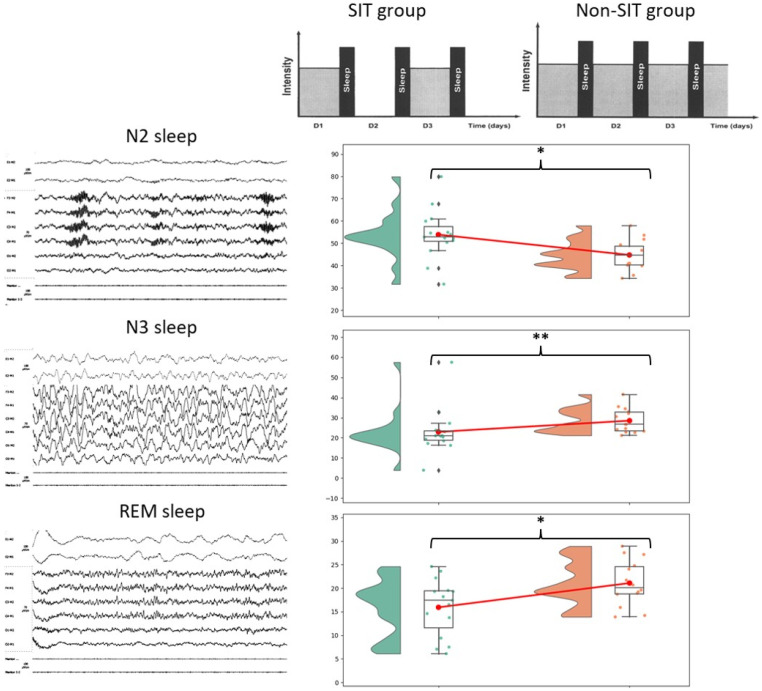
(1) Background: Poor sleep and fragmented sleep are associated with several chronic conditions. Tinnitus is an auditory symptom that often negatively combines with poor sleep and has been associated with sleep impairment and sleep apnea. The relationship between tinnitus psychoacoustic characteristics and sleep is still poorly explored, notably for a particular subgroup of patients, for whom the perceived loudness of their tinnitus is highly modulated by sleep. (2) Methods: For this observational prospective study, 30 subjects with tinnitus were recruited, including 15 "sleep intermittent tinnitus" subjects, who had reported significant modulations of tinnitus loudness related to night sleep and naps, and a control group of 15 subjects displaying constant non-sleep-modulated tinnitus. The control group had matching age, gender, self-reported hearing loss grade and tinnitus impact on quality of life with the study group. All patients underwent a polysomnography (PSG) assessment for one complete night and then were asked to fill in a case report form, as well as a report of tinnitus loudness before and after the PSG. (3) Results: "Sleep Intermittent tinnitus" subjects had less Stage 3 sleep ( < 0.01), less Rapid-Eye Movement (REM) Sleep ( < 0.05) and more Stage 2 sleep ( < 0.05) in proportion and duration than subjects from the control group. In addition, in the "sleep Intermittent tinnitus" sample, a correlation was found between REM sleep duration and tinnitus overnight modulation ( < 0.05), as well as tinnitus impact on quality of life ( < 0.05). These correlations were not present in the control group. (4) Conclusions: This study suggests that among the tinnitus population, patients displaying sleep-modulated tinnitus have deteriorated sleep quality. Furthermore, REM sleep characteristics may play a role in overnight tinnitus modulation. Potential pathophysiological explanations accounting for this observation are hypothesized and discussed.
(1)背景:睡眠质量差和睡眠片段化与多种慢性疾病有关。耳鸣是一种听觉症状,常与睡眠质量差同时出现,并与睡眠障碍和睡眠呼吸暂停有关。耳鸣的心理声学特征与睡眠之间的关系仍未得到充分探索,尤其是对于某些特定亚组的患者,他们的耳鸣感知响度受睡眠影响很大。(2)方法:这项观察性前瞻性研究共纳入 30 名耳鸣患者,其中 15 名为“睡眠间断性耳鸣”患者,他们报告说耳鸣响度与夜间睡眠和小睡有明显的调制关系,对照组为 15 名显示非睡眠调制耳鸣的患者。对照组的年龄、性别、自我报告的听力损失程度和耳鸣对生活质量的影响与研究组相匹配。所有患者均进行了一整晚的多导睡眠图(PSG)评估,然后填写病例报告表,并在 PSG 前后报告耳鸣响度。(3)结果:“睡眠间断性耳鸣”患者的第三阶段睡眠(<0.01)、快速眼动(REM)睡眠(<0.05)和第二阶段睡眠比例(<0.05)和持续时间(<0.05)较少。此外,在“睡眠间断性耳鸣”样本中,发现 REM 睡眠持续时间与耳鸣夜间调制(<0.05)以及耳鸣对生活质量的影响(<0.05)之间存在相关性。这些相关性在对照组中不存在。(4)结论:这项研究表明,在耳鸣患者中,显示睡眠调制耳鸣的患者睡眠质量较差。此外,REM 睡眠特征可能在夜间耳鸣调制中起作用。假设并讨论了可能解释这一观察结果的潜在病理生理学解释。