College of Stomatology, Guangxi Medical University, Nanning, Guangxi, China.
Guangxi Medical University, Nanning, Guangxi, China.
Sci Rep. 2023 Apr 28;13(1):7011. doi: 10.1038/s41598-023-34154-3.
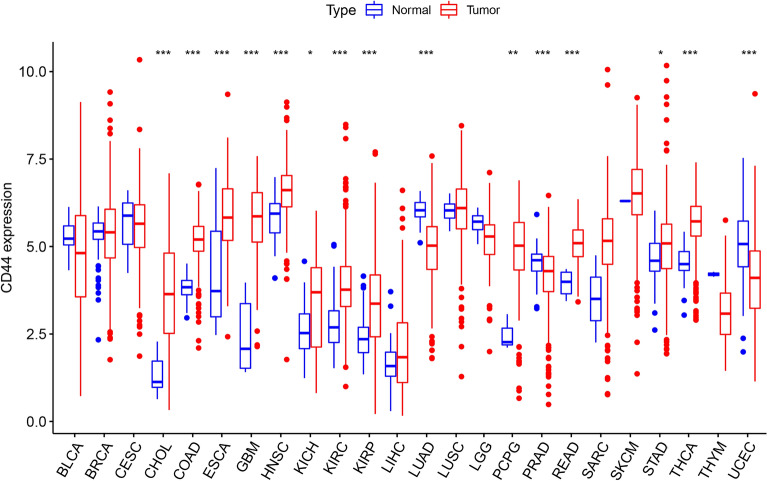
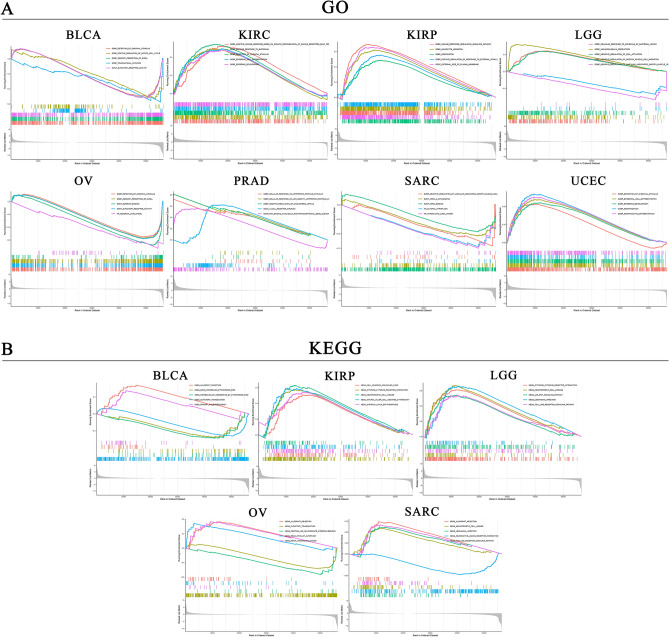
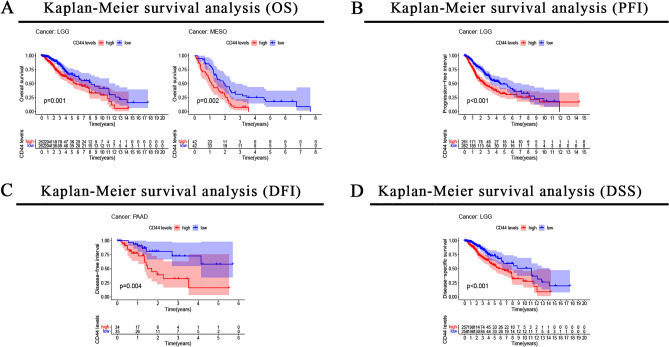
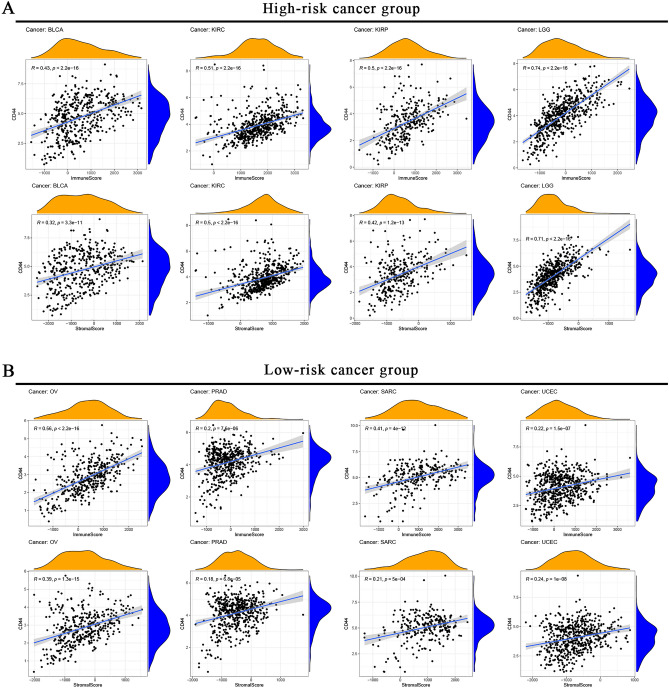
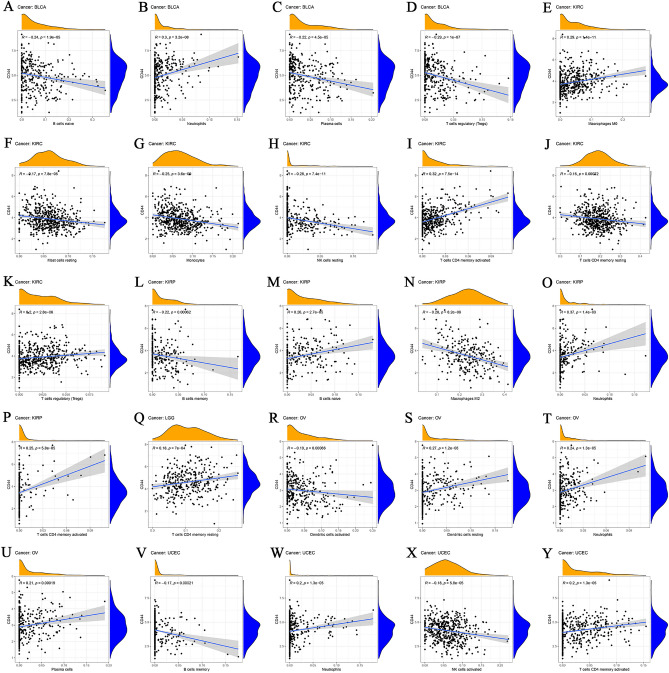
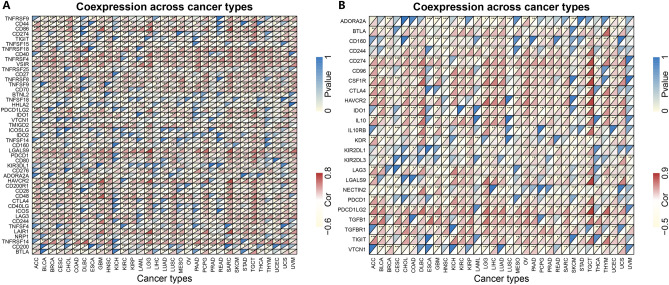
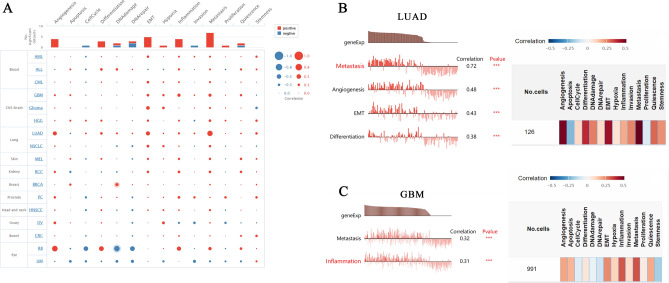
To investigate the correlation between cluster of differentiation-44 (CD44) expression and immunotherapy response and identify its possible predictive value in pan-cancer. Datasets of 33 cancer types from The Cancer Genome Atlas (TCGA) database were applied to investigate the relationship of CD44 expression with prognosis, tumor mutational burden (TMB), and microsatellite instability (MSI), and determine its potential prognostic value in pan-cancer. Patients were split into high-risk and low-risk cancer groups based on the survival outcomes of various cancer types. Additionally, the underlying mechanisms of CD44 in the tumor microenvironment (TME) were analyzed using ESTIMATE and CIBERSORT algorithms and Gene Set Enrichment Analysis (GSEA). Subsequently, the biological role of CD44 at single-cell level was investigated using CancerSEA database. Variable expression levels of CD44 between tumor and adjacent normal tissues were identified in pan-cancer datasets, further survival analysis revealed that CD44 expression was associated with multiple clinical annotations and survival indicators. Besides, the expression of CD44 was significantly associated with TMB and MSI in 10 types and 6 types of cancer, respectively, indicating it could be exploited as a potential biomarker predicting immunotherapy outcomes. Meanwhile, CD44 could influence several crucial immune cell-related pathways. and the results revealed by CancerSEA database denoted the correlation of CD44 with malignant phenotype and functional states, further indicating it can serve as a potential therapeutic target in cancer management. Our study demonstrated that CD44 shows great promise as a prognostic biomarker in numerous cancers, which will assist in developing new strategies in cancer management.
为了研究 CD44 表达与免疫治疗反应之间的相关性,并确定其在泛癌中的可能预测价值。本研究应用来自癌症基因组图谱(TCGA)数据库的 33 种癌症类型的数据集,研究 CD44 表达与预后、肿瘤突变负担(TMB)和微卫星不稳定性(MSI)的关系,并确定其在泛癌中的潜在预后价值。根据各种癌症类型的生存结果,将患者分为高危和低危癌症组。此外,使用 ESTIMATE 和 CIBERSORT 算法以及基因集富集分析(GSEA)分析 CD44 在肿瘤微环境(TME)中的潜在机制。随后,使用 CancerSEA 数据库研究 CD44 在单细胞水平上的生物学作用。在泛癌数据集中鉴定出 CD44 在肿瘤和相邻正常组织之间的可变表达水平,进一步的生存分析表明 CD44 表达与多种临床注释和生存指标相关。此外,CD44 的表达与 10 种和 6 种癌症中的 TMB 和 MSI 显著相关,表明它可作为预测免疫治疗结果的潜在生物标志物。同时,CD44 可影响多种关键免疫细胞相关途径。CancerSEA 数据库的结果表明 CD44 与恶性表型和功能状态相关,进一步表明它可作为癌症管理中潜在的治疗靶点。本研究表明 CD44 作为多种癌症的预后生物标志物具有很大的潜力,将有助于制定癌症管理的新策略。