Wang Tianchang, Li Wentao, Zhang Yuxin, Xu Xiang, Qiang Lei, Miao Weiqiang, Yue Xiaokun, Jiao Xin, Zhou Xianhao, Ma Zhenjiang, Li Shuai, Ding Muliang, Zhu Junfeng, Yang Chi, Wang Hui, Li Tao, Sun Xin, Wang Jinwu
Shanghai Key Laboratory of Orthopedic Implant, Department of Orthopedic Surgery, Shanghai Ninth People's Hospital, Shanghai Jiao Tong University School of Medicine, No. 639 Zhizaoju Road, Shanghai, 200011, China.
Sports Medicine Department, Beijing Key Laboratory of Sports Injuries, Peking University Third Hospital, No.49, North Garden Road, Haidian District, Beijing, 100191, China.
Bioact Mater. 2023 Apr 21;27:377-393. doi: 10.1016/j.bioactmat.2023.02.013. eCollection 2023 Sep.
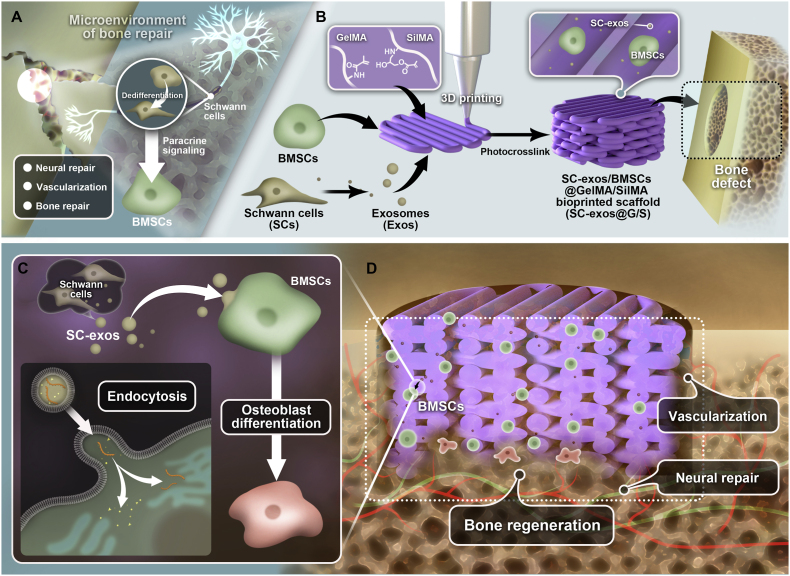
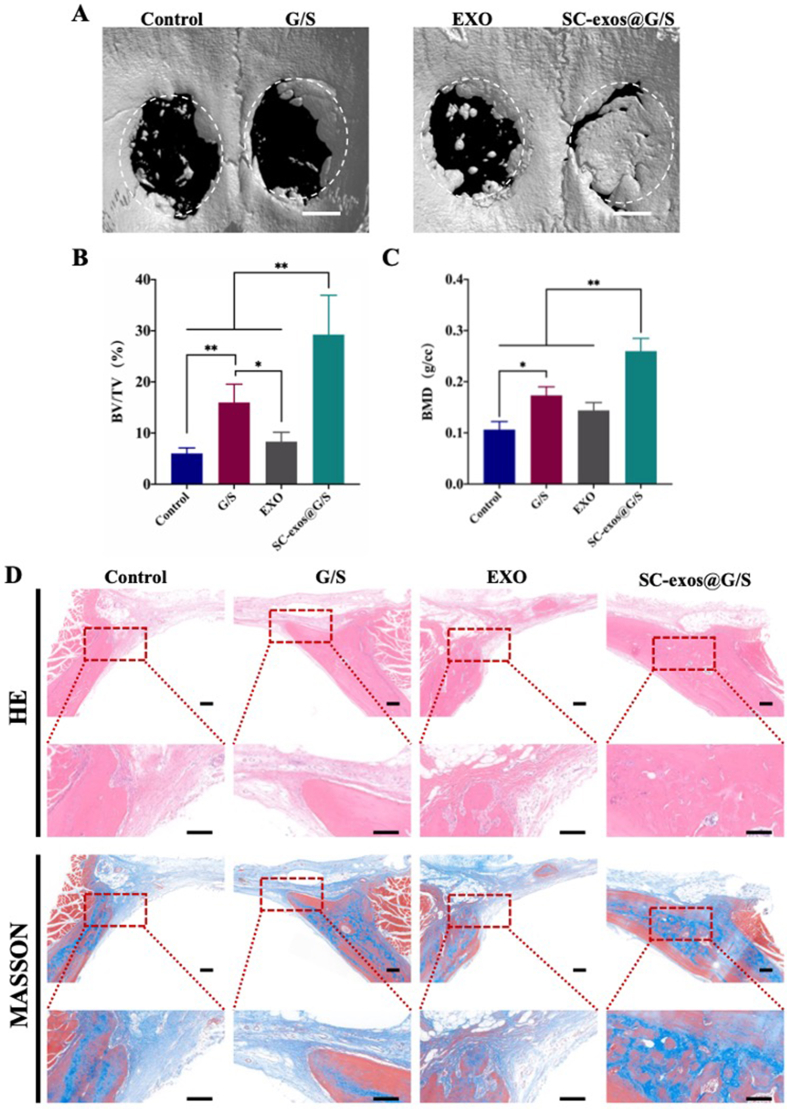
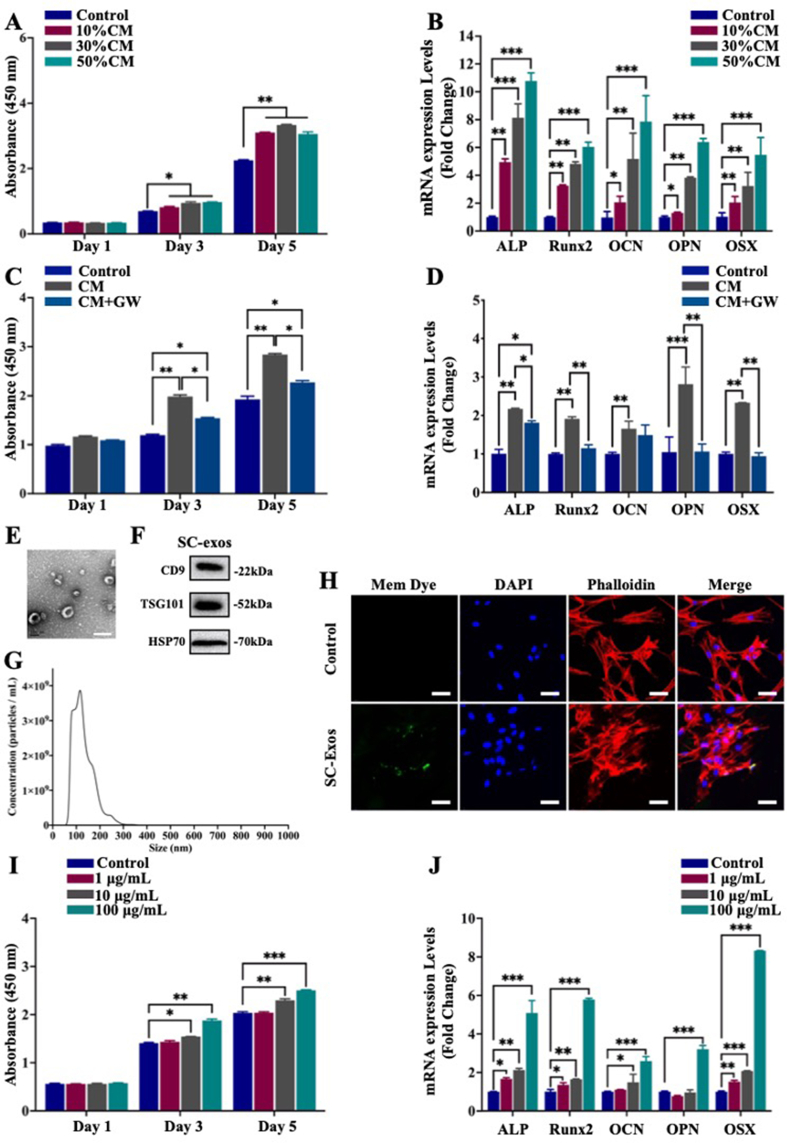
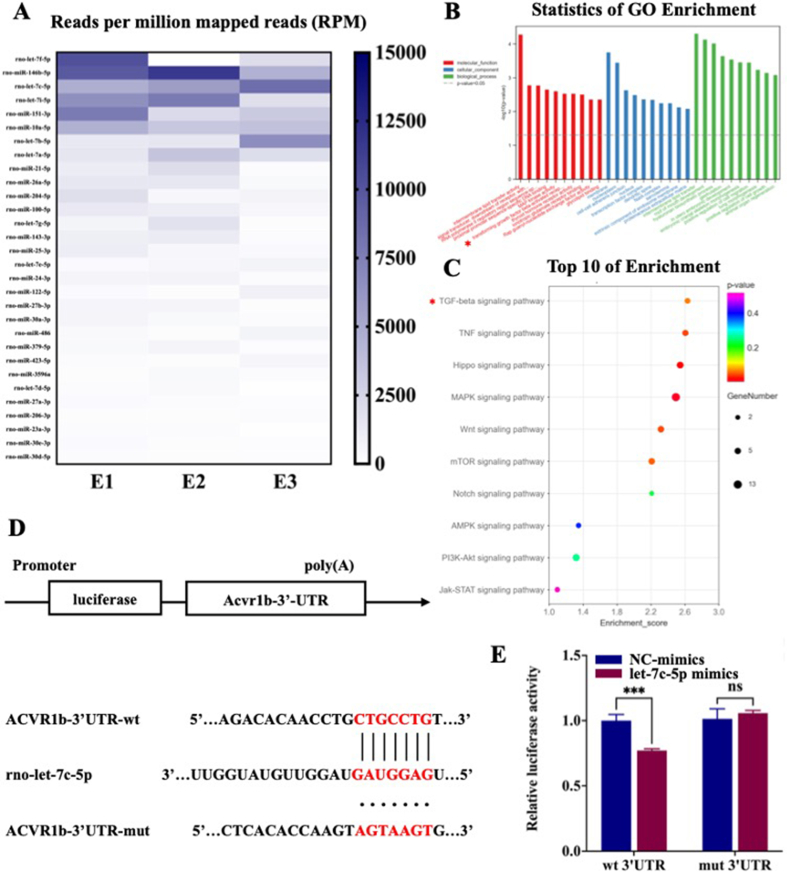
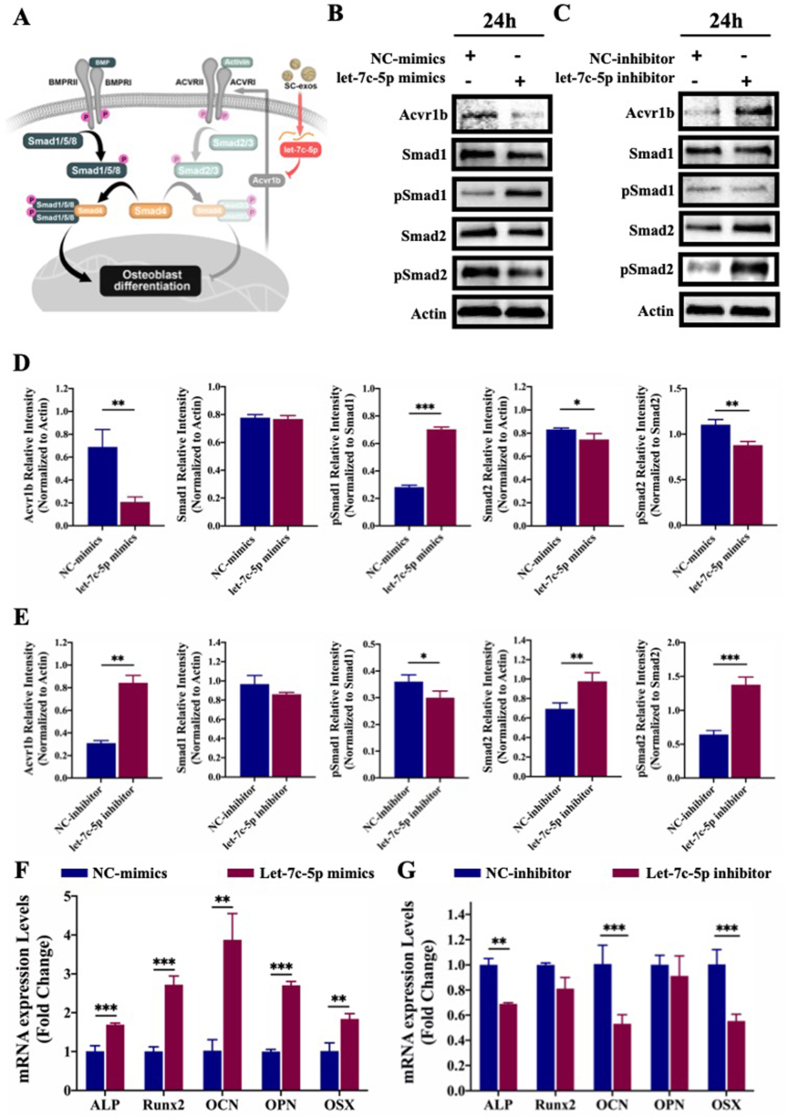
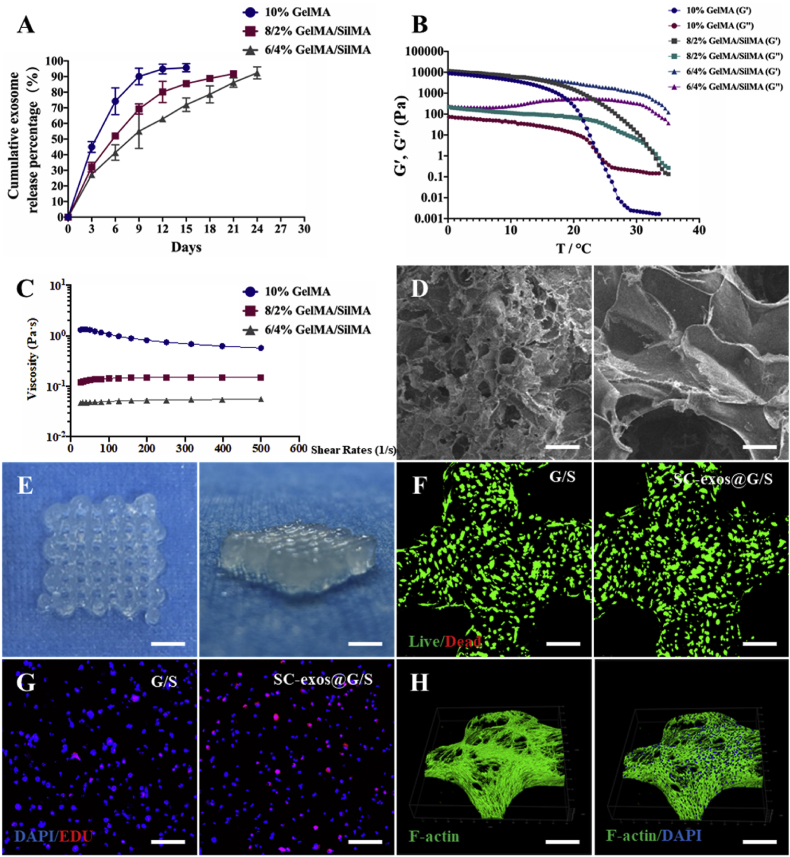
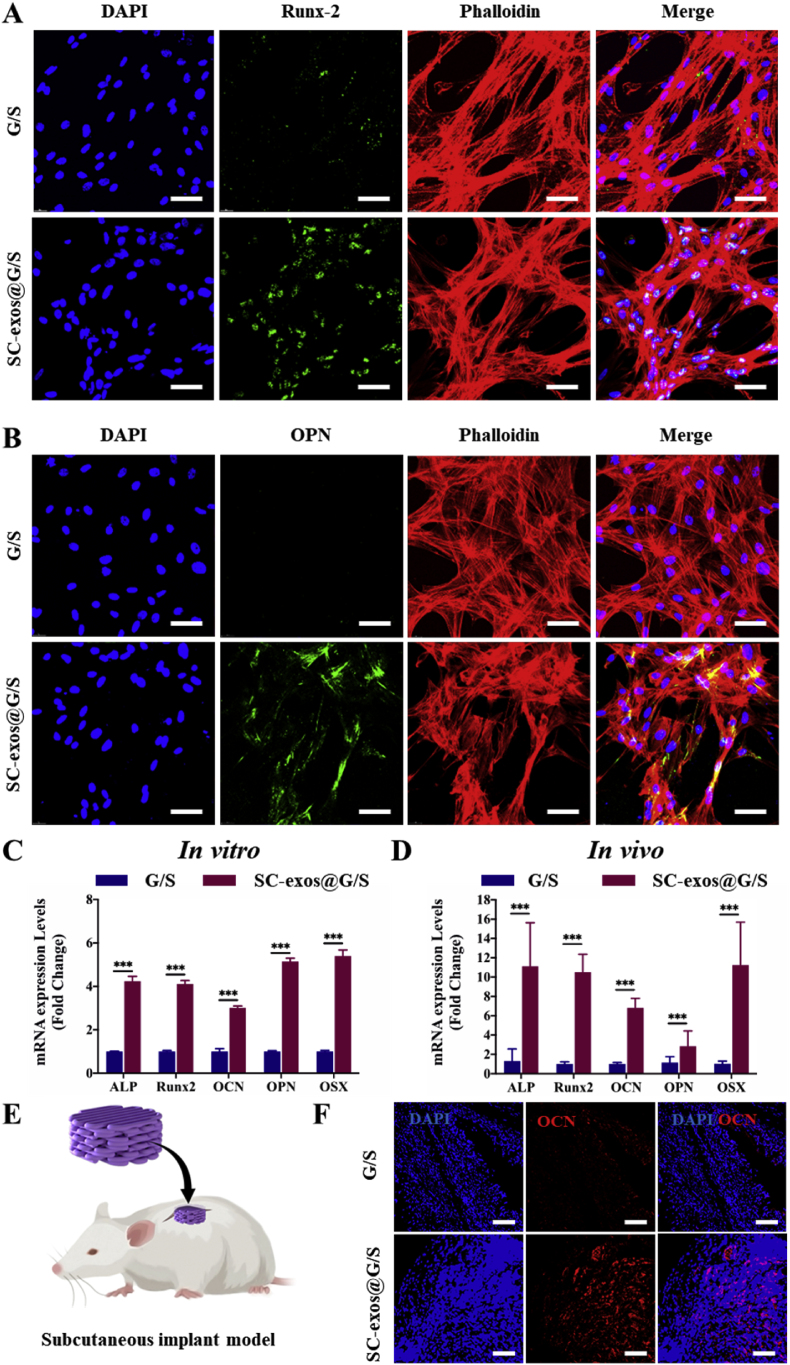
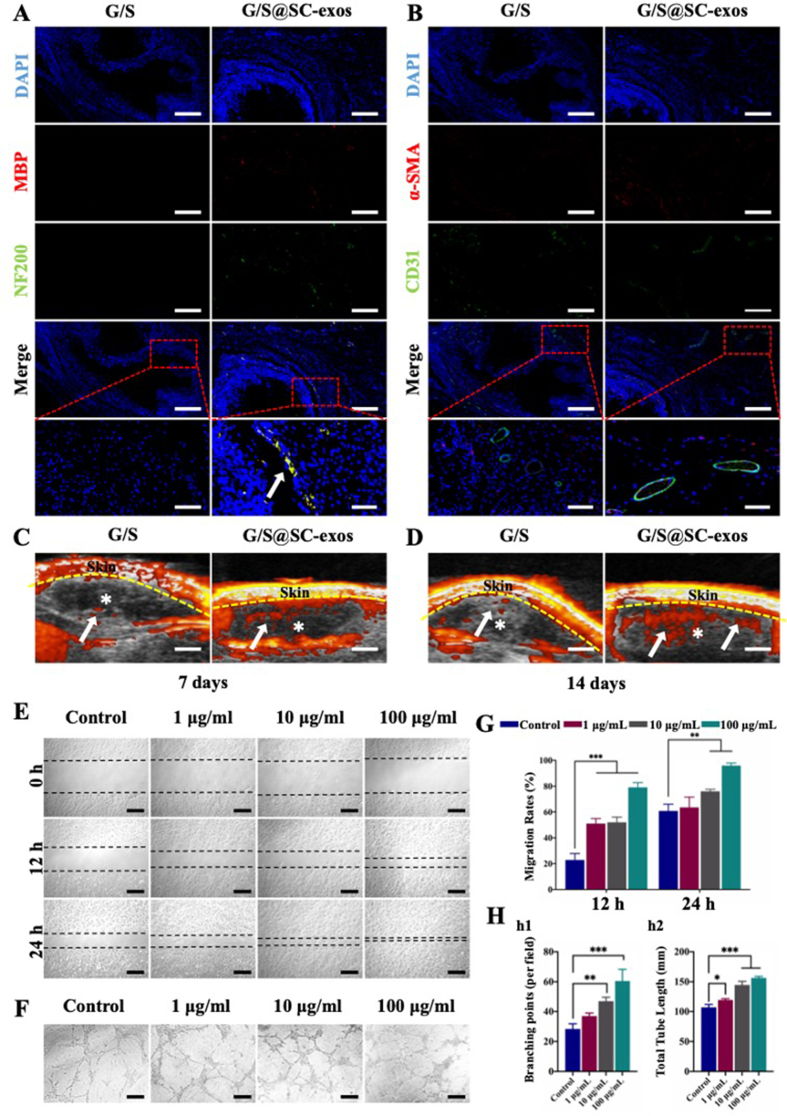
Crosstalk between nerves and bone is essential for bone repair, for which Schwann cells (SCs) are crucial in the regulation of the microenvironment. Considering that exosomes are critical paracrine mediators for intercellular communication that exert important effects in tissue repair, the aim of this study is to confirm the function and molecular mechanisms of Schwann cell-derived exosomes (SC-exos) on bone regeneration and to propose engineered constructs that simulate SC-mediated nerve-bone crosstalk. SCs promoted the proliferation and differentiation of bone marrow mesenchymal stem cells (BMSCs) through exosomes. Subsequent molecular mechanism studies demonstrated that SC-exos promoted BMSC osteogenesis by regulating the TGF-β signaling pathway via let-7c-5p. Interestingly, SC-exos promoted the migration and tube formation performance of endothelial progenitor cells. Furthermore, the SC-exos@G/S constructs were developed by bioprinting technology that simulated SC-mediated nerve-bone crosstalk and improved the bone regeneration microenvironment by releasing SC-exos, exerting the regulatory effect of SCs in the microenvironment to promote innervation, vascularization, and osteogenesis and thus effectively improving bone repair in a cranial defect model. This study demonstrates the important role and underlying mechanism of SCs in regulating bone regeneration through SC-exos and provides a new engineered strategy for bone repair.
神经与骨骼之间的串扰对骨修复至关重要,雪旺细胞(SCs)在其中对微环境的调节起着关键作用。鉴于外泌体是细胞间通讯的关键旁分泌介质,在组织修复中发挥重要作用,本研究旨在证实雪旺细胞衍生外泌体(SC-exos)对骨再生的功能及分子机制,并提出模拟SC介导的神经-骨串扰的工程构建体。SCs通过外泌体促进骨髓间充质干细胞(BMSCs)的增殖和分化。随后的分子机制研究表明,SC-exos通过let-7c-5p调节TGF-β信号通路促进BMSC成骨。有趣的是,SC-exos促进内皮祖细胞的迁移和管形成能力。此外,通过生物打印技术开发了SC-exos@G/S构建体,其模拟SC介导的神经-骨串扰,通过释放SC-exos改善骨再生微环境,发挥SCs在微环境中的调节作用以促进神经支配、血管生成和成骨,并因此有效改善颅骨缺损模型中的骨修复。本研究证明了SCs通过SC-exos调节骨再生的重要作用及潜在机制,并为骨修复提供了一种新的工程策略。