Zhang Yiting, Gan Meiqi, He Yuqin, Liu Tingting, Xu Mei
The First Affiliated Hospital of Chongqing Medical University, Chongqing Key Laboratory of Ophthalmology, Chongqing Eye Institute, Chongqing Branch of National Clinical Research Center for Ocular Diseases, Chongqing Municipality Division, National Clinical Research Center for Ocular Diseases, Chongqing, People's Republic of China.
Int J Gen Med. 2023 May 9;16:1735-1746. doi: 10.2147/IJGM.S405225. eCollection 2023.
Primary Sjögren's syndrome (pSS), a disease that is associated with a high prevalence of psychological disorders, has become increasingly important. Interactions between the gut microbiota and ocular conditions have been identified in pSS. As mental intervention is frequently needed, this study aims to investigate the relationship between anxiety disorders and the gut microbiome in patients with pSS-mediated dry eye.
Demographics and self-administered questionnaires were obtained. Faecal samples were evaluated using 16S ribosomal RNA gene sequencing.
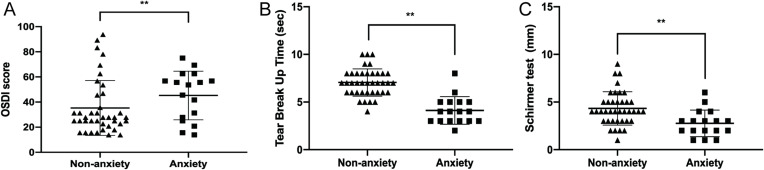
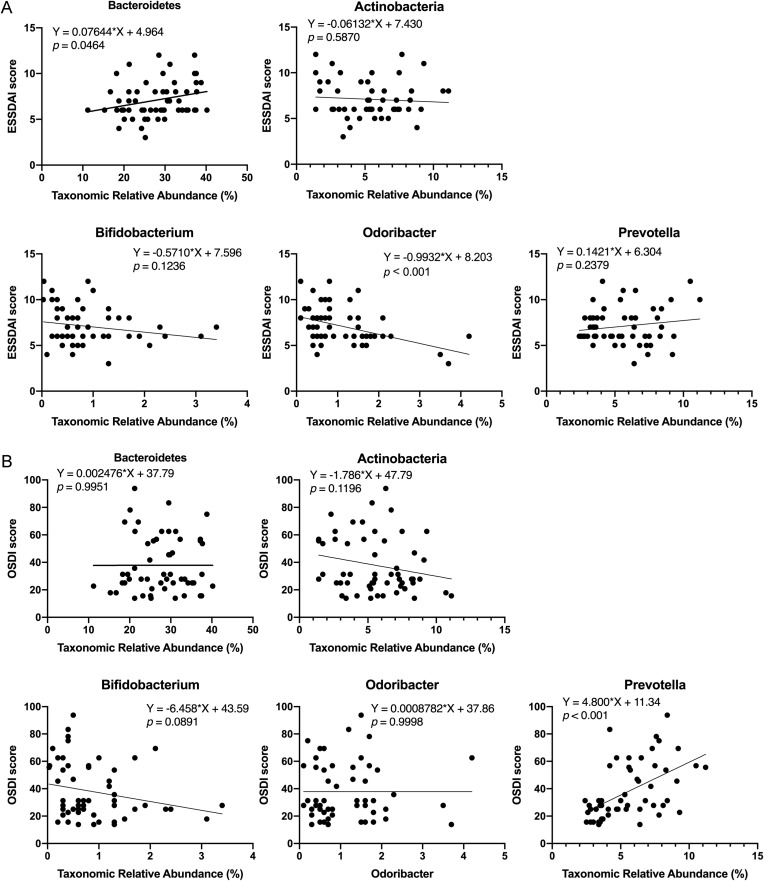
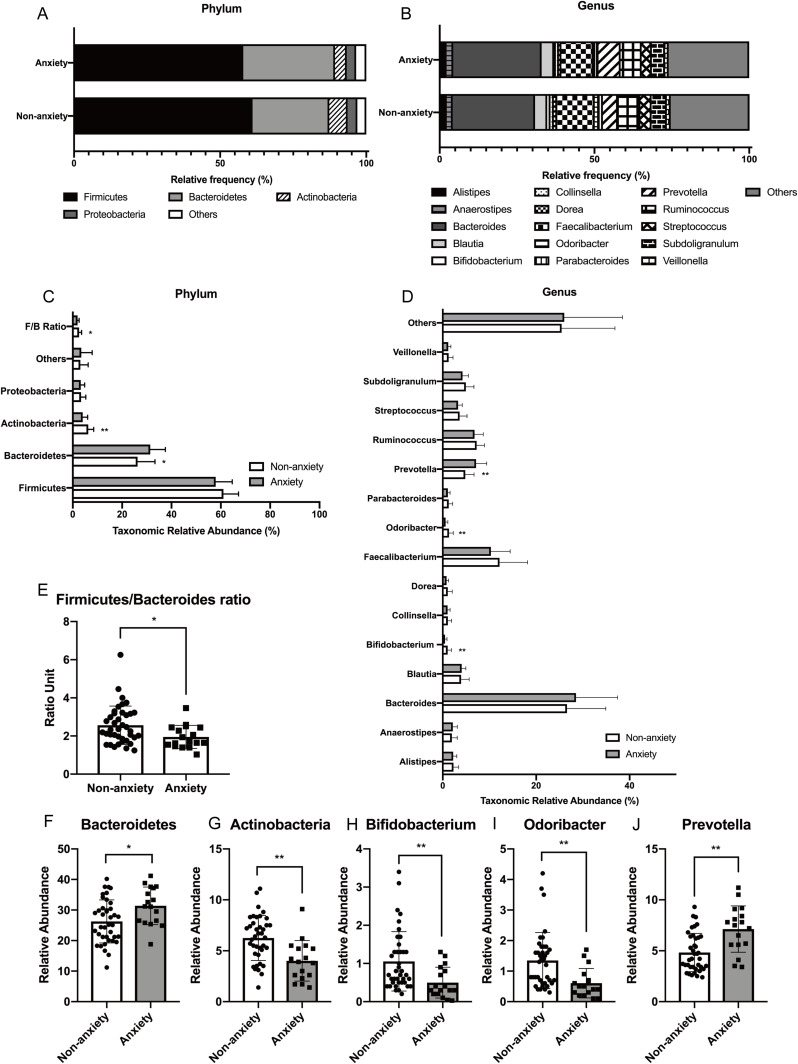
The Hospital Anxiety and Depression Scale (HADS-A) cut-off point of ≥ 8 points showed a sensitivity and specificity of 76.5% and 80.0%, respectively. In all participants, we found that the prevalence of anxiety disorder was 30.4%. Dry eye discomfort could promote an anxious state, and conversely, anxiety could threaten tear film and increase the risk of pSS activity. There was a certain correlation between anxiety disorder and gut dysbiosis. Prevotella was associated with dry eye severity ( <0.001). Bacteroidetes ( =0.046) and Odoribacter ( =0.001) were correlated with pSS activity.
There is a bidirectional relationship between anxiety disorder and the gut microbiota in pSS-mediated dry eye. Alterations in certain classes of gut microbiota are associated with pSS activity and dry eye severity. Main gut microbiota alterations that have a facilitating impact on anxiety are emerging in pSS-mediated dry eye. Future studies are needed to explore specific therapeutic targets for improving mental health in pSS-mediated dry eye by microbiota intervention.
原发性干燥综合征(pSS)与心理障碍的高患病率相关,其重要性日益凸显。pSS中已发现肠道微生物群与眼部疾病之间存在相互作用。由于经常需要进行心理干预,本研究旨在探讨pSS介导的干眼症患者焦虑症与肠道微生物群之间的关系。
获取人口统计学资料和自行填写的问卷。使用16S核糖体RNA基因测序对粪便样本进行评估。
医院焦虑抑郁量表(HADS - A)≥8分的临界值显示敏感性和特异性分别为76.5%和80.0%。在所有参与者中,我们发现焦虑症的患病率为30.4%。干眼不适可促进焦虑状态,反之,焦虑可威胁泪膜并增加pSS活动的风险。焦虑症与肠道菌群失调之间存在一定相关性。普雷沃氏菌与干眼严重程度相关(<0.001)。拟杆菌属(=0.046)和气味杆菌属(=0.001)与pSS活动相关。
pSS介导的干眼症中,焦虑症与肠道微生物群之间存在双向关系。某些肠道微生物群类别的改变与pSS活动和干眼严重程度相关。在pSS介导的干眼症中,对焦虑有促进作用的主要肠道微生物群改变正在显现。未来需要开展研究,以探索通过微生物群干预改善pSS介导的干眼症患者心理健康的具体治疗靶点。