School of Natural Sciences and Health, Tallinn University, Tallinn, Estonia.
Competence Center on Health Technologies, Tartu, Estonia.
Acta Obstet Gynecol Scand. 2023 Jul;102(7):921-934. doi: 10.1111/aogs.14598. Epub 2023 May 23.
Despite the considerable progress made in assisted reproductive technologies (ART), the implantation rate of transferred embryos remains low and in many cases, the reasons for failure remain unclear. We aimed to determine the potential impact of female and male partners' reproductive tract microbiome composition on ART outcome.
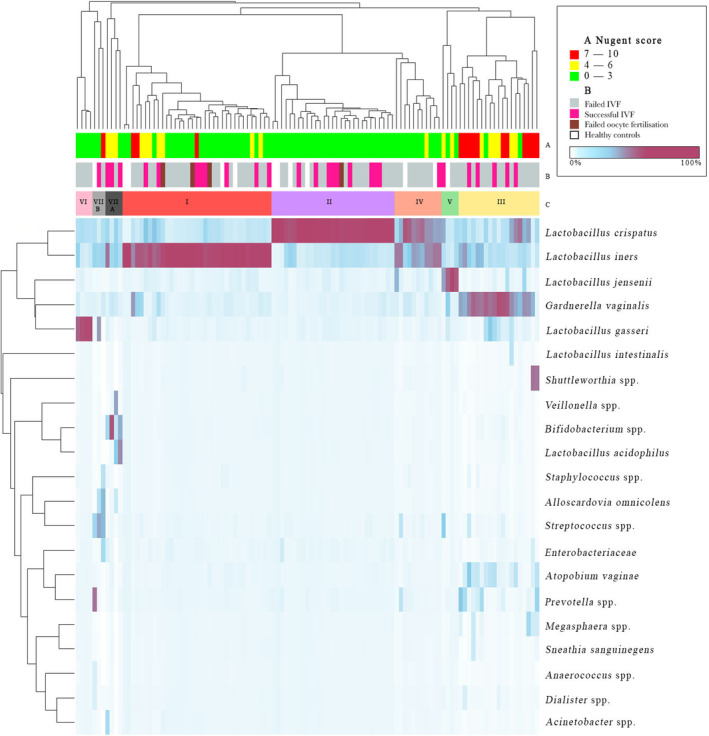
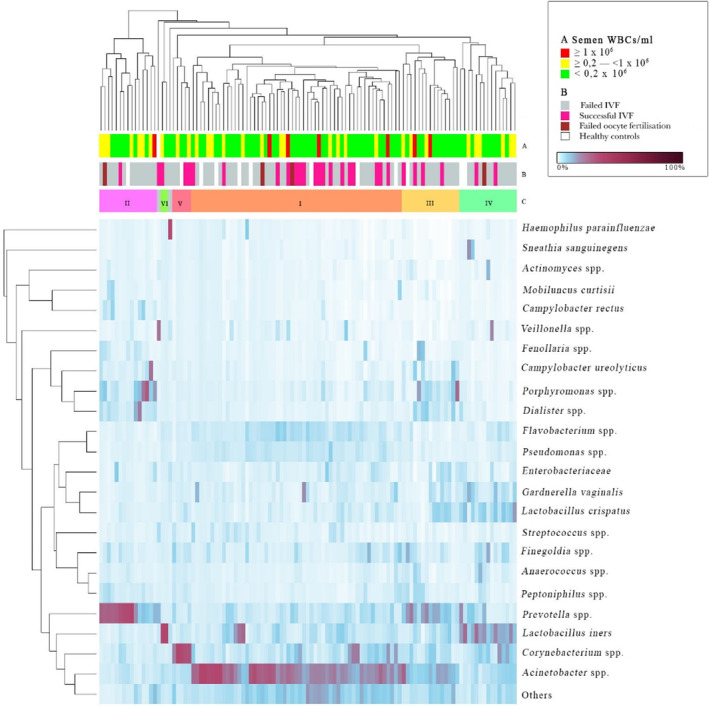
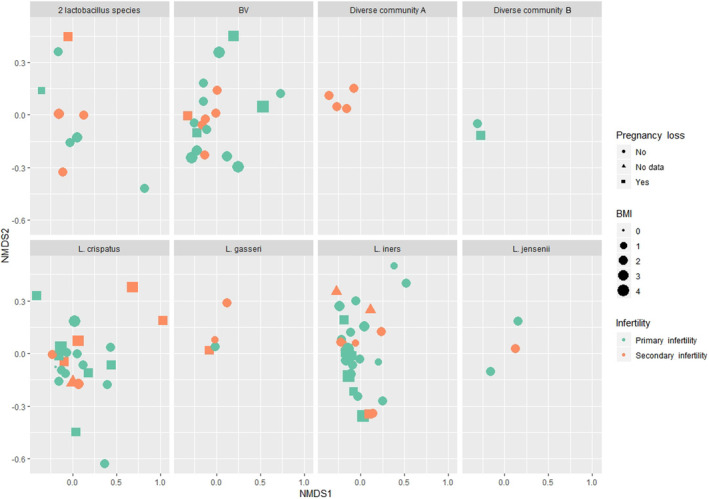
The ART couples (n = 97) and healthy couples (n = 12) were recruited into the study. The smaller healthy group underwent a careful selection according to their reproductive and general health criteria. Both vaginal and semen samples were subjected to 16S rDNA sequencing to reveal the bacterial diversity and identify distinct microbial community types. Ethics statement The study was approved by the Ethics Review Committee on Human Research of Tartu University, Tartu, Estonia (protocol no. 193/T-16) on 31 May 2010. Participation in the research was voluntary. Written informed consent was obtained from all study participants.
The men with Acinetobacter-associated community who had children in the past, had the highest ART success rate (P < 0.05). The women with bacterial vaginosis vaginal microbiome community and with L. iners-predominant and L. gasseri-predominant microbiome had a lower ART success rate than women with the L. crispatus-predominant or the mixed lactic-acid-bacteria-predominant type (P < 0.05). The 15 couples where both partners had beneficial microbiome types had a superior ART success rate of 53%, when compared with the rest of the couples (25%; P = 0.023).
Microbiome disturbances in the genital tract of both partners tend to be associated with couple's infertility as well as lower ART success levels and may thus need attention before the ART procedure. The incorporation of genitourinary microbial screening as a part of the diagnostic evaluation process may become routine for ART patients if our results are confirmed by other studies.
尽管辅助生殖技术(ART)取得了相当大的进展,但胚胎的着床率仍然很低,而且在许多情况下,失败的原因仍不清楚。我们旨在确定女性和男性伴侣生殖道微生物组组成对 ART 结局的潜在影响。
将 ART 夫妇(n=97)和健康夫妇(n=12)纳入研究。较小的健康组根据其生殖和一般健康标准进行了精心选择。对阴道和精液样本进行 16S rDNA 测序,以揭示细菌多样性并确定不同的微生物群落类型。
该研究于 2010 年 5 月 31 日获得爱沙尼亚塔尔图大学人类研究伦理审查委员会(协议号 193/T-16)的批准。研究参与是自愿的。从所有研究参与者处获得了书面知情同意。
过去有孩子的男性中存在不动杆菌相关群落,ART 成功率最高(P<0.05)。患有细菌性阴道病阴道微生物群和以 L. iners 为主和以 L. gasseri 为主的微生物群的女性比以 L. crispatus 为主或混合乳酸杆菌为主的女性的 ART 成功率更低(P<0.05)。15 对夫妇中,如果双方都具有有益的微生物群类型,则 ART 成功率为 53%,而其余夫妇的成功率为 25%(P=0.023)。
双方生殖道微生物组的紊乱往往与夫妇的不孕以及较低的 ART 成功率相关,因此在进行 ART 程序之前可能需要关注。如果我们的结果得到其他研究的证实,那么将泌尿生殖道微生物筛查纳入诊断评估过程可能成为 ART 患者的常规做法。