Key Laboratory of Forest Disaster Warning and Control of Yunnan Province, Southwest Forestry University, Kunming, China.
Key Laboratory for Forest Resources Conservation and Utilization in the Southwest Mountains of China, Ministry of Education, Southwest Forestry University, Kunming, China.
BMC Genomics. 2023 Jun 20;24(1):339. doi: 10.1186/s12864-023-09445-8.
The plant bug, Pachypeltis micranthus Mu et Liu (Hemiptera: Miridae), is an effective potential biological control agent for Mikania micrantha H.B.K. (Asteraceae; one of the most notorious invasive weeds worldwide). However, limited knowledge about this species hindered its practical application and research. Accordingly, sequencing the genome of this mirid bug holds great significance in controlling M. micrantha.
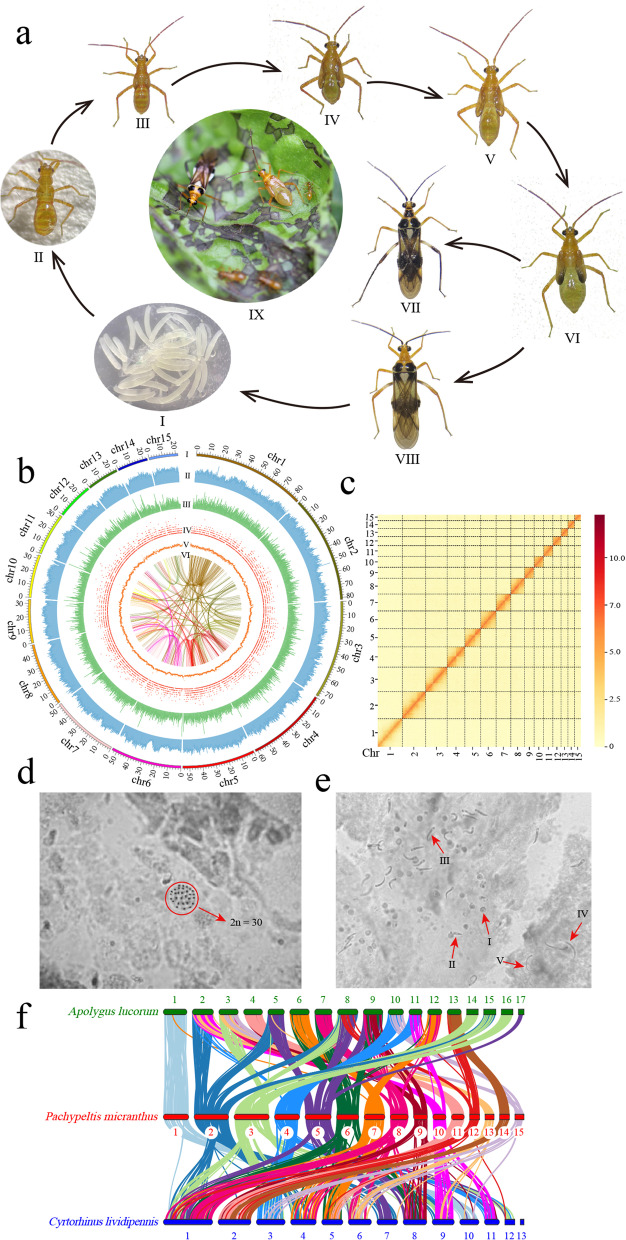
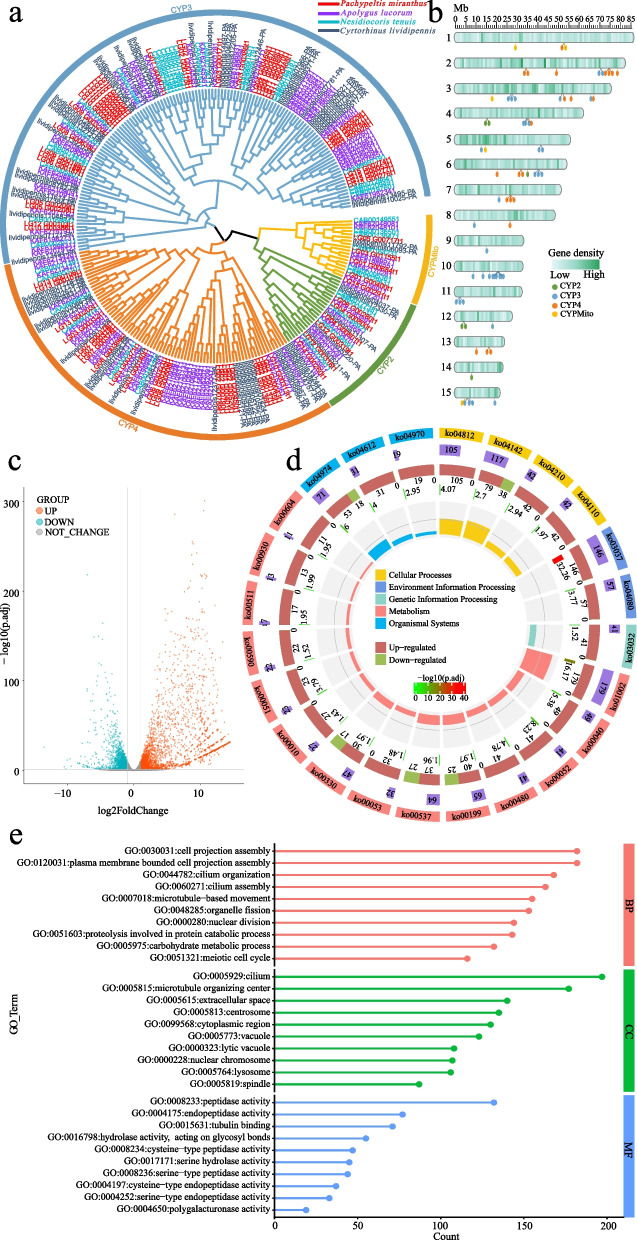
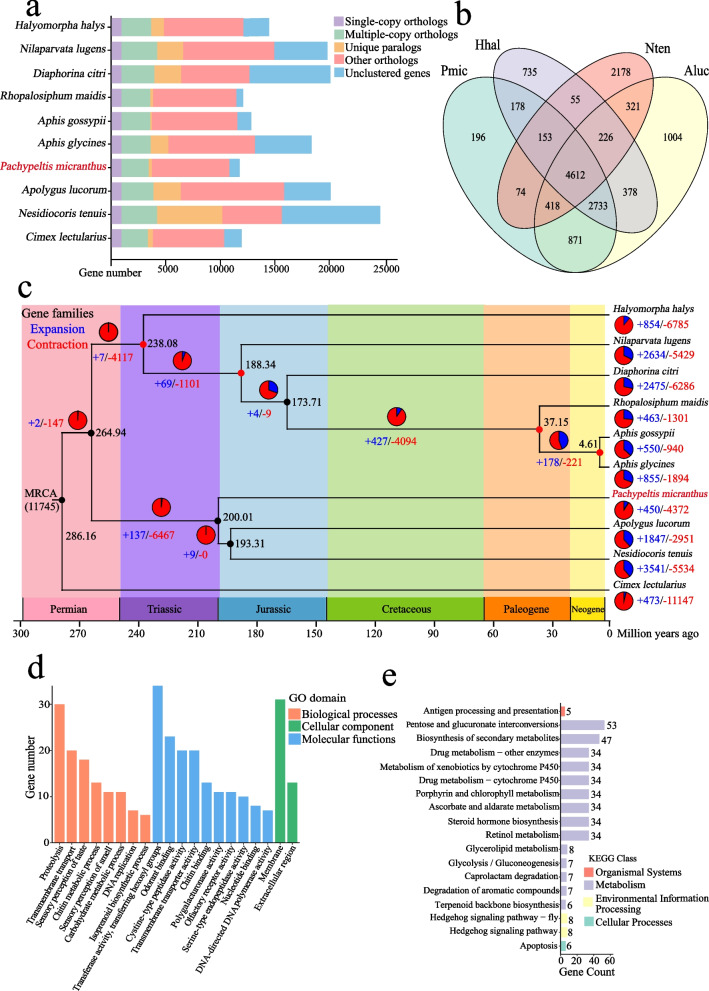
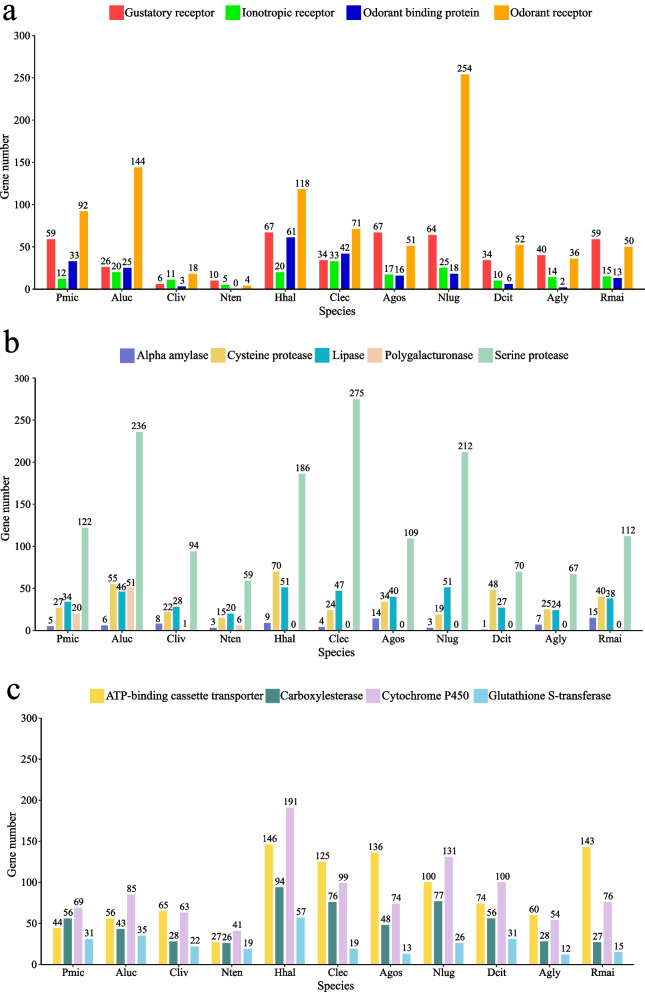
Here, 712.72 Mb high-quality chromosome-level scaffolds of P. micranthus were generated, of which 707.51 Mb (99.27%) of assembled sequences were anchored onto 15 chromosome-level scaffolds with contig N50 of 16.84 Mb. The P. micranthus genome had the highest GC content (42.43%) and the second highest proportion of repetitive sequences (375.82 Mb, 52.73%) than the three other mirid bugs (i.e., Apolygus lucorum, Cyrtorhinus lividipennis, and Nesidiocoris tenuis). Phylogenetic analysis showed that P. micranthus clustered with other mirid bugs and diverged from the common ancestor approximately 200 million years ago. Gene family expansion and/or contraction were analyzed, and significantly expanded gene families associated with P. micranthus feeding and adaptation to M. micrantha were manually identified. Compared with the whole body, transcriptome analysis of the salivary gland revealed that most of the upregulated genes were significantly associated with metabolism pathways and peptidase activity, particularly among cysteine peptidase, serine peptidase, and polygalacturonase; this could be one of the reasons for precisely and highly efficient feeding by the oligophagous bug P. micranthus on M. micrantha.
Collectively, this work provides a crucial chromosome-level scaffolds resource to study the evolutionary adaptation between mirid bug and their host. It is also helpful in searching for novel environment-friendly biological strategies to control M. micrantha.
植食蝽,Pachypeltis micranthus Mu 与 Liu(半翅目:Miridae),是防治薇甘菊(菊科;世界上最臭名昭著的入侵杂草之一)的有效潜在生物防治剂。然而,对该物种的了解有限,阻碍了它的实际应用和研究。因此,对这种盲蝽的基因组进行测序对于控制薇甘菊具有重要意义。
本文生成了 712.72 Mb 高质量的植食蝽染色体水平基因组,其中组装序列的 707.51 Mb(99.27%)锚定在 15 个染色体水平基因组上,其 contig N50 为 16.84 Mb。与其他三种盲蝽(即,Apolygus lucorum、Cyrtorhinus lividipennis 和 Nesidiocoris tenuis)相比,植食蝽基因组的 GC 含量最高(42.43%)和重复序列比例第二高(375.82 Mb,52.73%)。系统发育分析表明,植食蝽与其他盲蝽聚类,并在大约 2 亿年前从共同祖先分化出来。分析基因家族的扩张和/或收缩,并手动鉴定与植食蝽取食和适应薇甘菊相关的显著扩张基因家族。与整个身体相比,唾液腺的转录组分析表明,上调基因主要与代谢途径和肽酶活性显著相关,特别是半胱氨酸肽酶、丝氨酸肽酶和多聚半乳糖醛酸酶;这可能是植食性盲蝽 P. micranthus 对薇甘菊进行精确和高效取食的原因之一。
总之,这项工作提供了一个关键的染色体水平基因组资源,用于研究盲蝽与宿主之间的进化适应。它还有助于寻找新的环保生物策略来控制薇甘菊。