Department of Chemistry, Kavli Institute for Nanoscience Discovery, Dorothy Crowfoot Hodgkin Building, University of Oxford, South Parks Rd, Oxford OX1 3QU, U.K.
Biochem Soc Trans. 2023 Jun 28;51(3):1405-1416. doi: 10.1042/BST20230164.
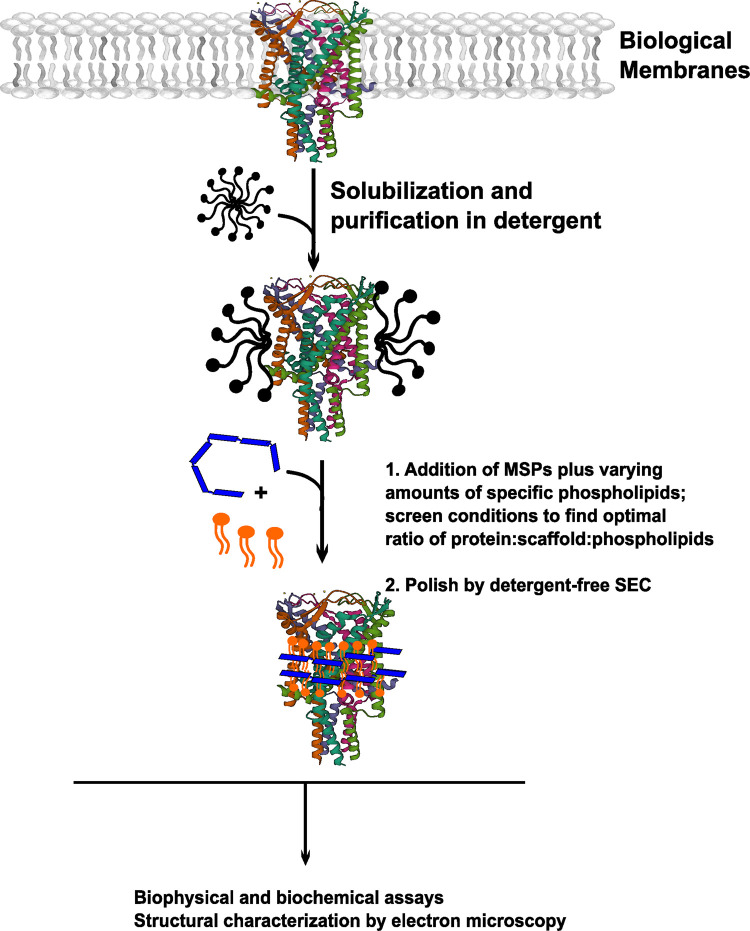
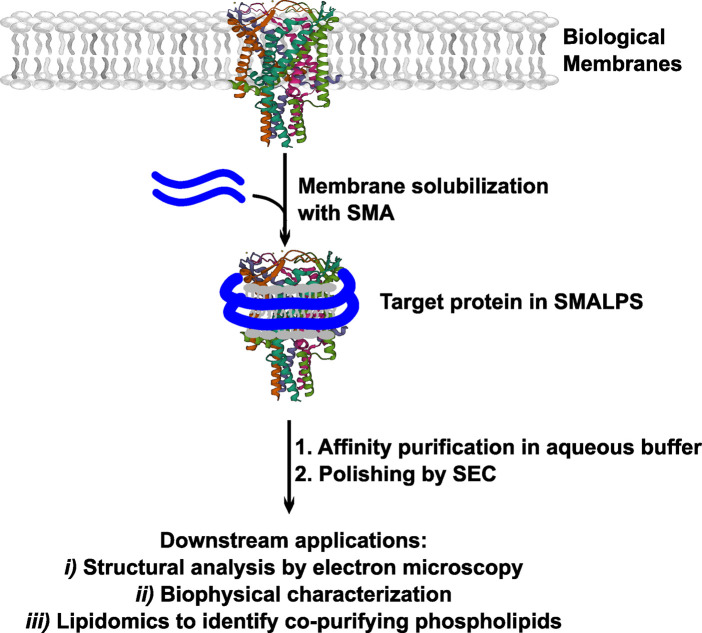
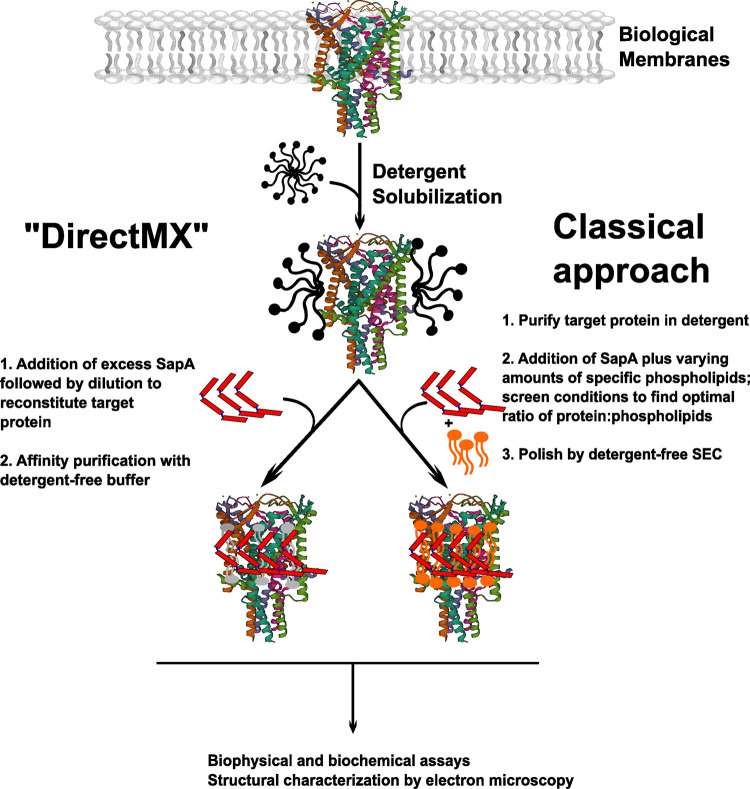
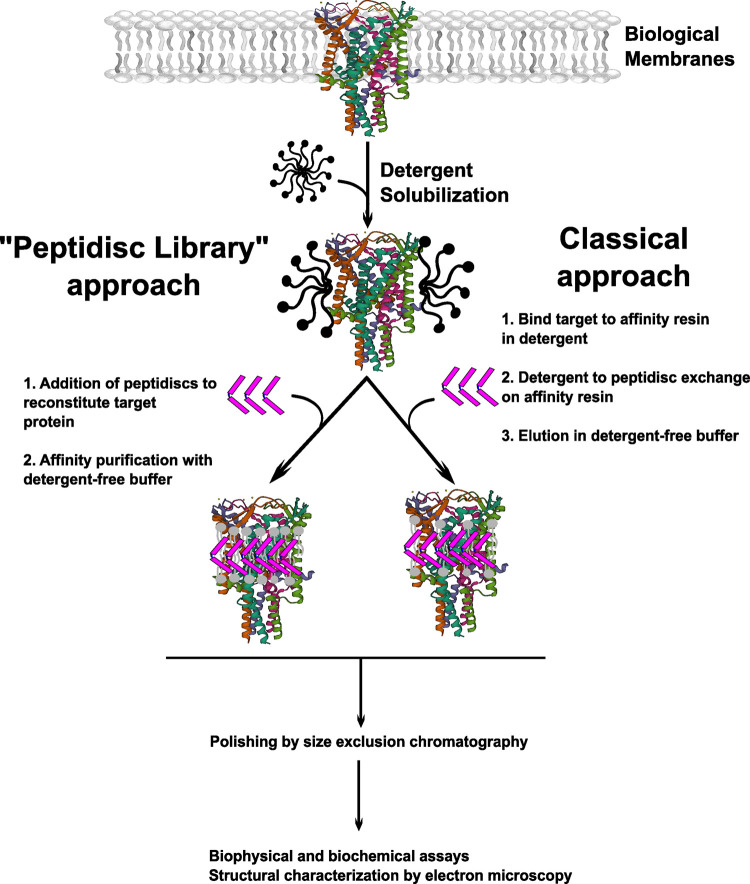
Membrane proteins are a highly relevant class of biological molecules and comprise ∼60% of current drug targets. Before being analyzed by structural, biochemical, and biophysical methods, membrane proteins must first be extracted from cellular membranes - often using detergents. Detergent-extracted membrane proteins are amenable to analysis by structural, biochemical, and biophysical techniques. In certain cases, however, detergents can disturb native protein conformations and/or biological activity. This has led to the development of membrane mimetics, which stabilize membrane proteins in a native membrane-like environment that is water-soluble and detergent-free. This review provides an overview of recent developments in the membrane mimetic field, with a focus on nanodiscs, Saposin lipid nanoparticles (SapNPs), peptidiscs, and SMA lipid particles (SMALPs) - and highlights their utility for supporting biophysical, biochemical, and structural characterization of membrane proteins and complexes.
膜蛋白是一类具有重要生物学意义的分子,约占目前药物靶点的 60%。在使用结构、生化和生物物理方法进行分析之前,膜蛋白必须首先从细胞膜中提取出来——通常使用去污剂。去污剂提取的膜蛋白适用于结构、生化和生物物理技术的分析。然而,在某些情况下,去污剂会干扰天然蛋白质构象和/或生物活性。这导致了膜模拟物的发展,其在水溶性且无去污剂的类似于天然膜的环境中稳定膜蛋白。本文综述了膜模拟物领域的最新进展,重点介绍了纳米盘、类脂体纳米颗粒(SapNPs)、肽盘和 SMA 类脂体(SMALPs),并强调了它们在支持膜蛋白和复合物的生物物理、生化和结构表征方面的应用。