Williams James A, Paez Patrick A
Research & Development, Aldevron, 4055 41st Avenue S, Fargo, ND 58104, USA.
Mol Ther Nucleic Acids. 2023 Apr 7;32:494-503. doi: 10.1016/j.omtn.2023.04.003. eCollection 2023 Jun 13.
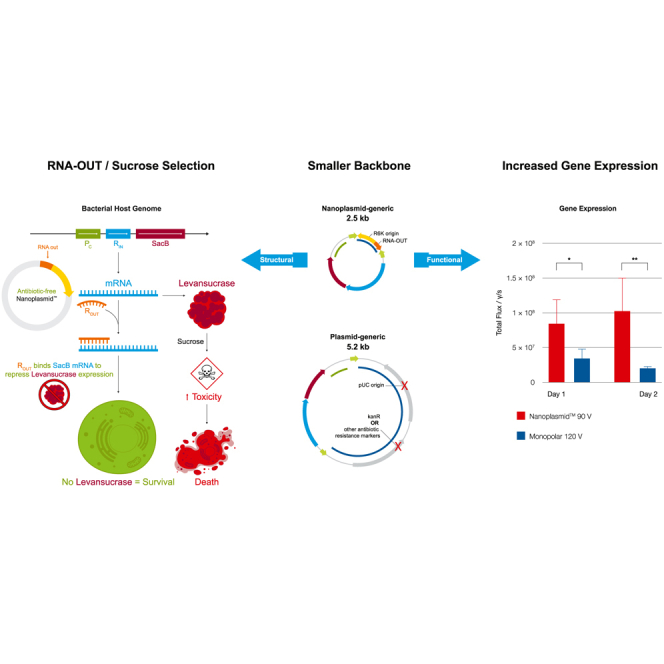
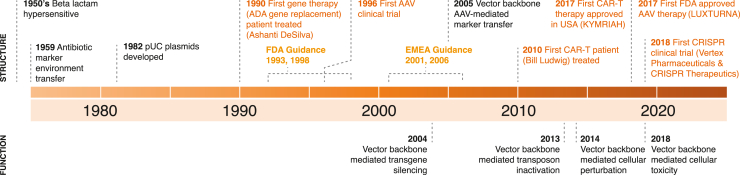
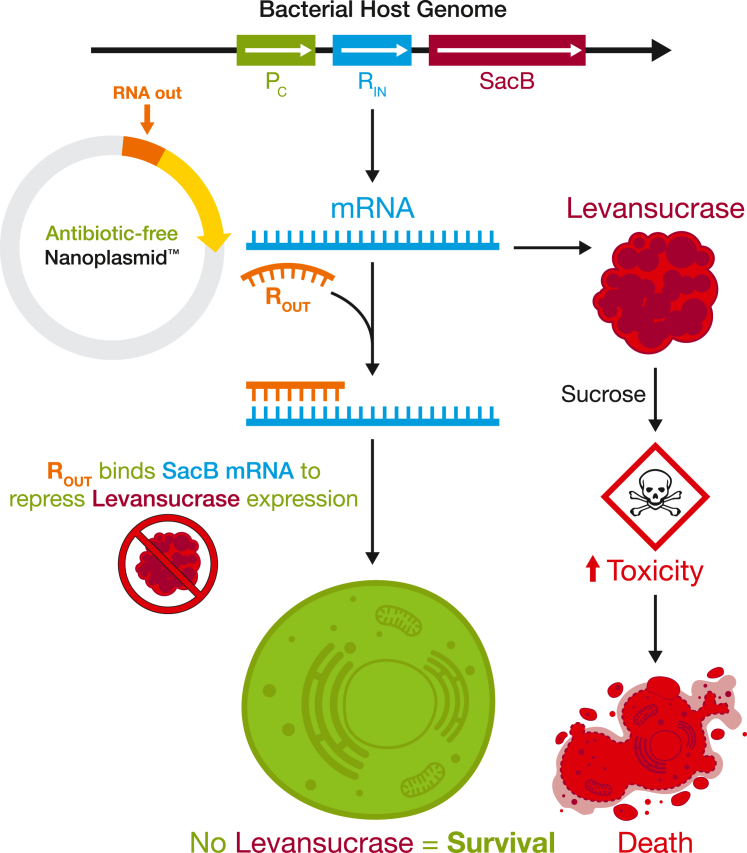
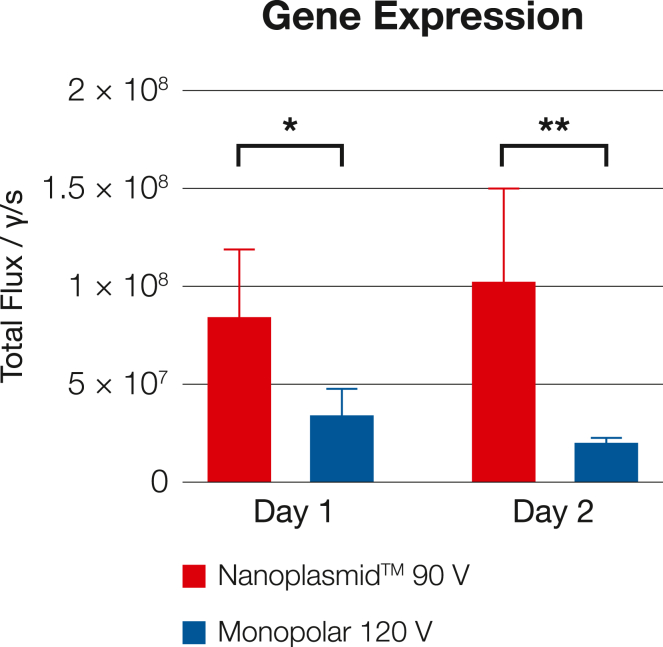
The cell and gene therapy industry has employed the same plasmid technology for decades in vaccination, cell and gene therapy, and as a raw material in viral vector and RNA production. While canonical plasmids contain antibiotic resistance markers in bacterial backbones greater than 2,000 base pairs, smaller backbones increase expression level and durability and reduce the cell-transfection-associated toxicity and transgene silencing that can occur with canonical plasmids. Therefore, the small backbone and antibiotic-free selection method of Nanoplasmid vectors have proven to be a transformative replacement in a wide variety of applications, offering a greater safety profile and efficiency than traditional plasmids. This review provides an overview of the Nanoplasmid technology and highlights its specific benefits for various applications with examples from recent publications.
细胞与基因治疗行业在疫苗接种、细胞与基因治疗中采用相同的质粒技术已有数十年,并且该技术还用作病毒载体和RNA生产的原材料。传统质粒在大于2000个碱基对的细菌骨架中含有抗生素抗性标记,而较小的骨架可提高表达水平和持久性,并减少与细胞转染相关的毒性以及传统质粒可能出现的转基因沉默。因此,纳米质粒载体的小骨架和无抗生素筛选方法已被证明是多种应用中的变革性替代品,与传统质粒相比具有更高的安全性和效率。本文综述了纳米质粒技术,并通过近期出版物中的实例突出了其在各种应用中的具体优势。