The Interdisciplinary Graduate Program in Integrative Biotechnology and Translational Medicine, Yonsei University, Incheon 21983, Republic of Korea.
Faculty of Natural and Basic Sciences, University of Turbat, Balochistan 92600, Pakistan.
J Chem Inf Model. 2024 Apr 8;64(7):2733-2745. doi: 10.1021/acs.jcim.3c00536. Epub 2023 Jun 27.
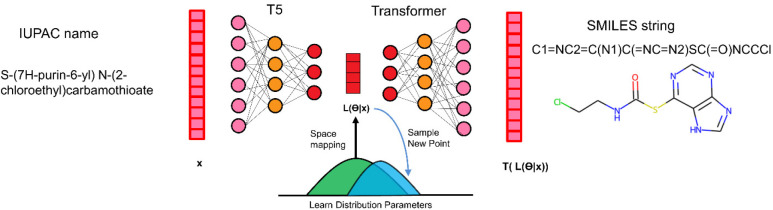
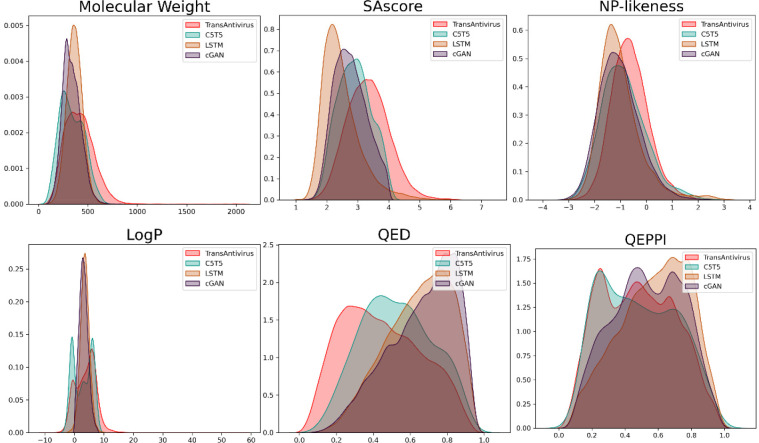
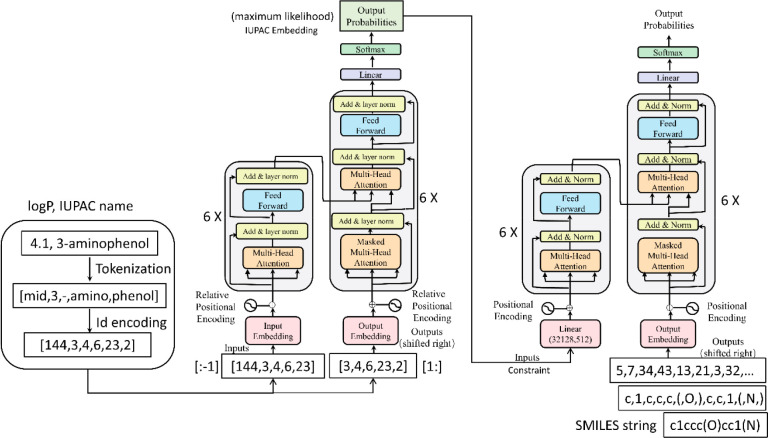
Since the Simplified Molecular Input Line Entry System (SMILES) is oriented to the atomic-level representation of molecules and is not friendly in terms of human readability and editable, however, IUPAC is the closest to natural language and is very friendly in terms of human-oriented readability and performing molecular editing, we can manipulate IUPAC to generate corresponding new molecules and produce programming-friendly molecular forms of SMILES. In addition, antiviral drug design, especially analogue-based drug design, is also more appropriate to edit and design directly from the functional group level of IUPAC than from the atomic level of SMILES, since designing analogues involves altering the R group only, which is closer to the knowledge-based molecular design of a chemist. Herein, we present a novel data-driven self-supervised pretraining generative model called "TransAntivirus" to make select-and-replace edits and convert organic molecules into the desired properties for design of antiviral candidate analogues. The results indicated that TransAntivirus is significantly superior to the control models in terms of novelty, validity, uniqueness, and diversity. TransAntivirus showed excellent performance in the design and optimization of nucleoside and non-nucleoside analogues by chemical space analysis and property prediction analysis. Furthermore, to validate the applicability of TransAntivirus in the design of antiviral drugs, we conducted two case studies on the design of nucleoside analogues and non-nucleoside analogues and screened four candidate lead compounds against anticoronavirus disease (COVID-19). Finally, we recommend this framework for accelerating antiviral drug discovery.
由于简化分子输入行-entry 系统(SMILES)面向分子的原子级表示,在人类可读性和可编辑性方面并不友好,而国际纯粹与应用化学联合会(IUPAC)则最接近自然语言,在面向人类的可读性和执行分子编辑方面非常友好,因此我们可以操纵 IUPAC 生成相应的新分子,并产生对编程友好的 SMILES 分子形式。此外,抗病毒药物设计,特别是基于类似物的药物设计,从 IUPAC 的官能团级别直接编辑和设计比从 SMILES 的原子级别更合适,因为设计类似物只涉及改变 R 基团,这更接近化学家基于知识的分子设计。在此,我们提出了一种新颖的数据驱动自监督生成模型,称为“TransAntivirus”,用于进行选择和替换编辑,并将有机分子转换为设计抗病毒候选类似物所需的性质。结果表明,在新颖性、有效性、独特性和多样性方面,TransAntivirus 明显优于对照模型。通过化学空间分析和性质预测分析,TransAntivirus 在核苷和非核苷类似物的设计和优化方面表现出优异的性能。此外,为了验证 TransAntivirus 在抗病毒药物设计中的适用性,我们进行了两项核苷类似物和非核苷类似物设计的案例研究,并筛选出了四种针对抗冠状病毒病(COVID-19)的候选先导化合物。最后,我们推荐该框架用于加速抗病毒药物的发现。