Miranda Nadia, Hoyer Katrina K
Quantitative Systems Biology Graduate Program, University of California Merced, Merced, CA 95343, USA.
Department of Molecular and Cell Biology, School of Natural Sciences, University of California Merced, Merced, CA 95343, USA.
J Fungi (Basel). 2023 Jun 9;9(6):650. doi: 10.3390/jof9060650.
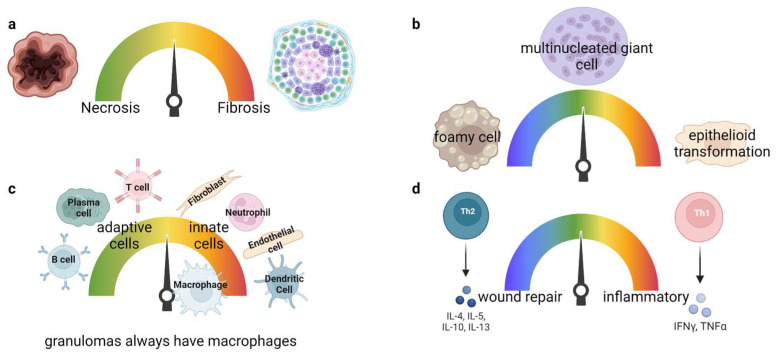
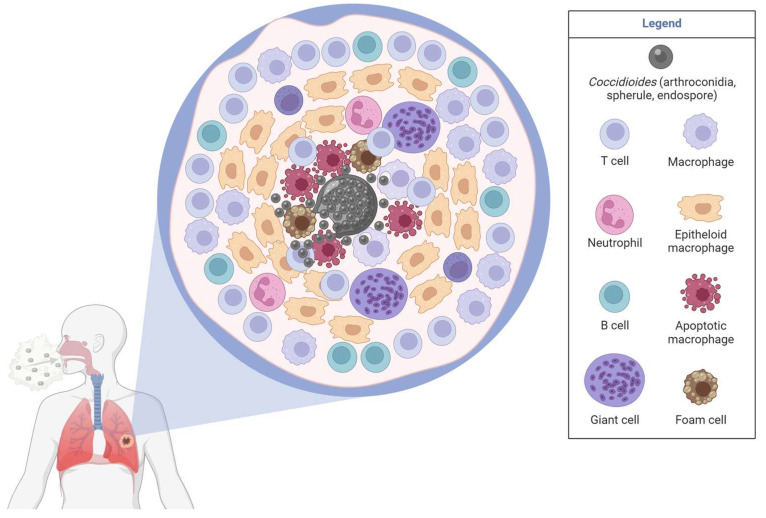
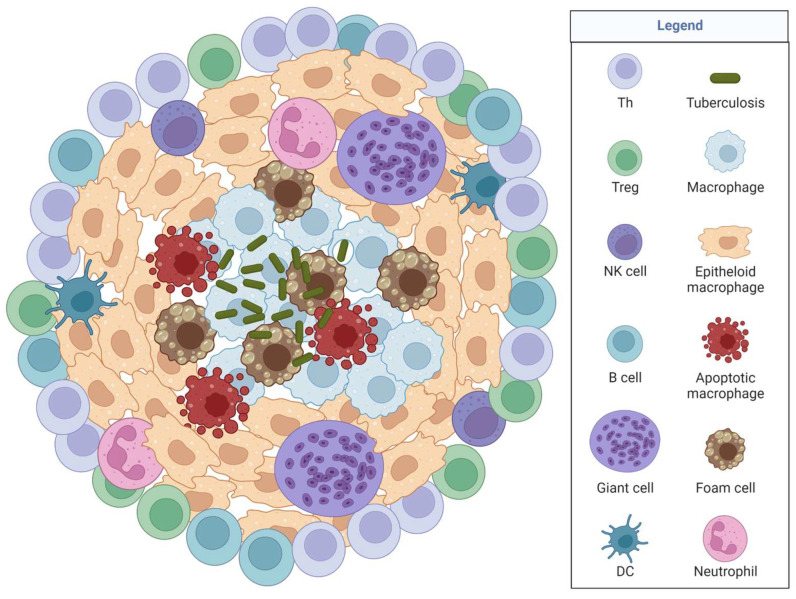
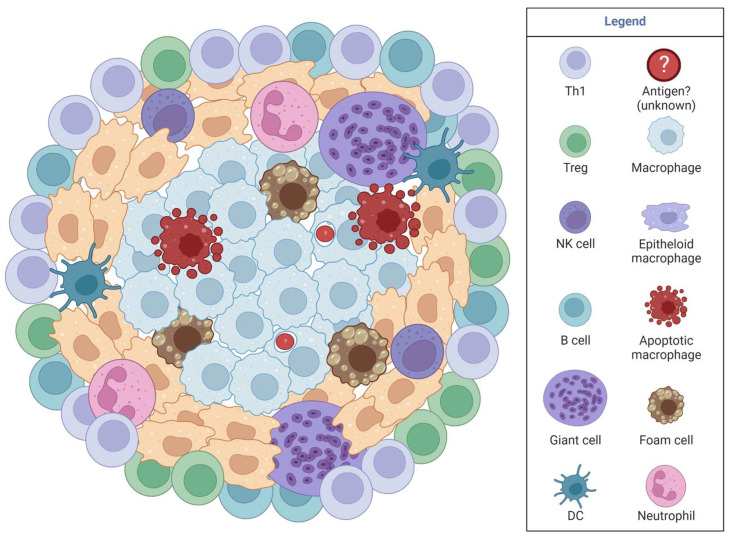
Valley fever is a respiratory disease caused by a soil fungus, , that is inhaled upon soil disruption. One mechanism by which the host immune system attempts to control and eliminate is through granuloma formation. However, very little is known about granulomas during infection. Granulomas were first identified in tuberculosis (TB) lungs as early as 1679, and yet many gaps in our understanding of granuloma formation, maintenance, and regulation remain. Granulomas are best defined in TB, providing clues that may be leveraged to understand infections. Granulomas also form during several other infectious and spontaneous diseases including sarcoidosis, chronic granulomatous disease (CGD), and others. This review explores our current understanding of granulomas, as well as potential mechanisms, and applies this knowledge to unraveling coccidioidomycosis granulomas.
山谷热是一种由土壤真菌引起的呼吸道疾病,这种真菌在土壤受到扰动时会被吸入。宿主免疫系统试图控制和消除该真菌的一种机制是通过形成肉芽肿。然而,对于该真菌感染期间的肉芽肿,人们了解甚少。肉芽肿早在1679年就在肺结核(TB)肺部被首次发现,但我们对肉芽肿形成、维持和调节的理解仍存在许多空白。在肺结核中对肉芽肿的定义最为明确,这为理解该真菌感染提供了可利用的线索。肉芽肿也在其他几种传染性和自发性疾病中形成,包括结节病、慢性肉芽肿病(CGD)等。本综述探讨了我们目前对肉芽肿的理解以及潜在机制,并将这些知识应用于阐明球孢子菌病肉芽肿。