Anbari Samira, Wang Hanwen, Zhang Yu, Wang Jun, Pilvankar Minu, Nickaeen Masoud, Hansel Steven, Popel Aleksander S
Department of Biomedical Engineering, Johns Hopkins University School of Medicine, Baltimore, MD, United States.
Biotherapeutics Discovery Research, Boehringer Ingelheim Pharmaceuticals Inc., Ridgefield, CT, United States.
Front Pharmacol. 2023 Jun 20;14:1163432. doi: 10.3389/fphar.2023.1163432. eCollection 2023.
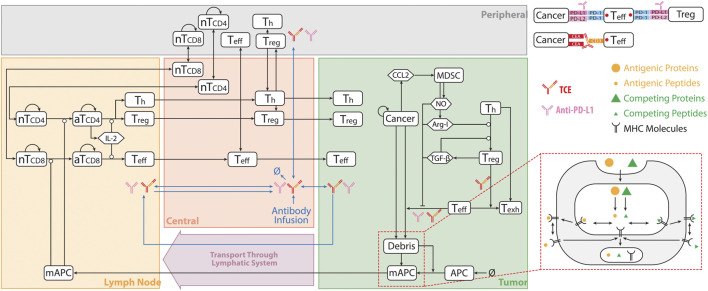
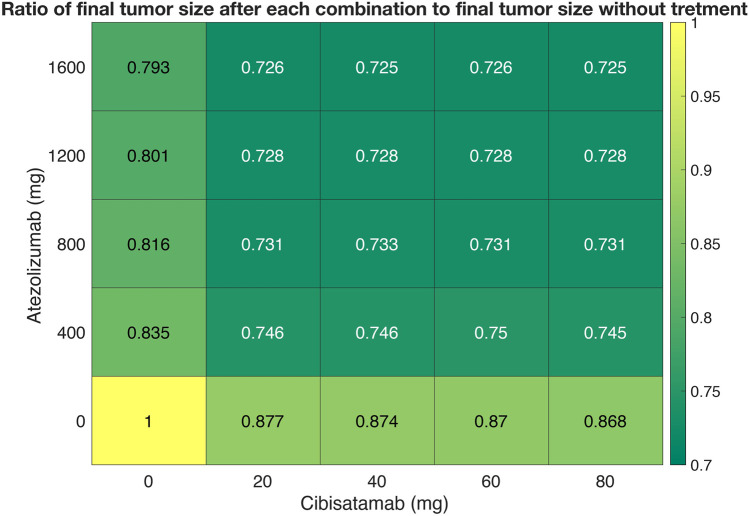
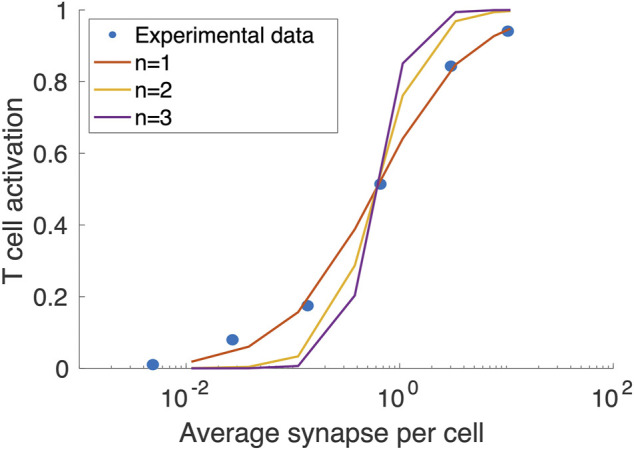
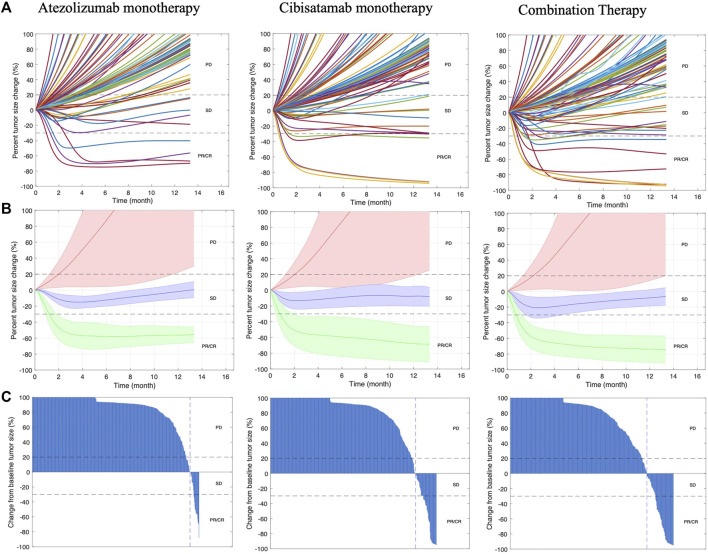
Although immune checkpoint blockade therapies have shown evidence of clinical effectiveness in many types of cancer, the outcome of clinical trials shows that very few patients with colorectal cancer benefit from treatments with checkpoint inhibitors. Bispecific T cell engagers (TCEs) are gaining popularity because they can improve patients' immunological responses by promoting T cell activation. The possibility of combining TCEs with checkpoint inhibitors to increase tumor response and patient survival has been highlighted by preclinical and clinical outcomes. However, identifying predictive biomarkers and optimal dose regimens for individual patients to benefit from combination therapy remains one of the main challenges. In this article, we describe a modular quantitative systems pharmacology (QSP) platform for immuno-oncology that includes specific processes of immune-cancer cell interactions and was created based on published data on colorectal cancer. We generated a virtual patient cohort with the model to conduct virtual clinical trials for combination therapy of a PD-L1 checkpoint inhibitor (atezolizumab) and a bispecific T cell engager (cibisatamab). Using the model calibrated against the clinical trials, we conducted several virtual clinical trials to compare various doses and schedules of administration for two drugs with the goal of therapy optimization. Moreover, we quantified the score of drug synergy for these two drugs to further study the role of the combination therapy.
尽管免疫检查点阻断疗法已在多种癌症类型中显示出临床有效性的证据,但临床试验结果表明,很少有结直肠癌患者能从检查点抑制剂治疗中获益。双特异性T细胞衔接器(TCEs)越来越受欢迎,因为它们可以通过促进T细胞活化来改善患者的免疫反应。临床前和临床结果突出了将TCEs与检查点抑制剂联合使用以提高肿瘤反应和患者生存率的可能性。然而,确定预测性生物标志物和最佳剂量方案以使个体患者从联合治疗中获益仍然是主要挑战之一。在本文中,我们描述了一种用于免疫肿瘤学的模块化定量系统药理学(QSP)平台,该平台包括免疫癌细胞相互作用的特定过程,并基于已发表的结直肠癌数据创建。我们用该模型生成了一个虚拟患者队列,以进行PD-L1检查点抑制剂(阿替利珠单抗)和双特异性T细胞衔接器(西必沙妥单抗)联合治疗的虚拟临床试验。使用针对临床试验校准的模型,我们进行了多项虚拟临床试验,比较了两种药物的不同剂量和给药方案,以优化治疗。此外,我们对这两种药物的药物协同评分进行了量化,以进一步研究联合治疗的作用。