Department of Anesthesia, Cihan University - Sulaimaniya, Sulaymaniyah, Kurdistan Region, Iraq.
Medical Doctor (MD), School of Medicine, Ahvaz Jondishapour University of Medical Sciences, Ahvaz, Iran.
Biomed Eng Online. 2023 Jul 10;22(1):68. doi: 10.1186/s12938-023-01132-9.
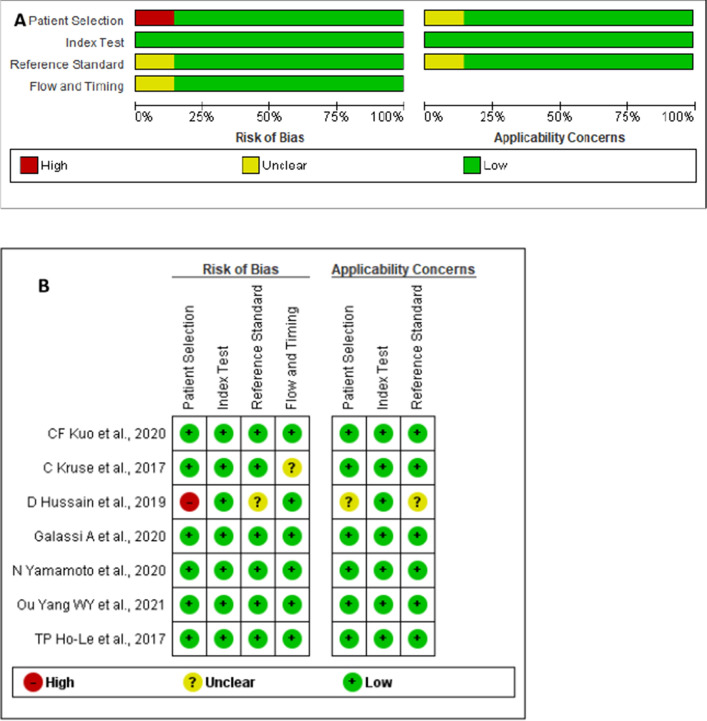
Osteoporosis is a significant health problem in the skeletal system, associated with bone tissue changes and its strength. Machine Learning (ML), on the other hand, has been accompanied by improvements in recent years and has been in the spotlight. This study is designed to investigate the Diagnostic Test Accuracy (DTA) of ML to detect osteoporosis through the hip dual-energy X-ray absorptiometry (DXA) images.
The ISI Web of Science, PubMed, Scopus, Cochrane Library, IEEE Xplore Digital Library, CINAHL, Science Direct, PROSPERO, and EMBASE were systematically searched until June 2023 for studies that tested the diagnostic precision of ML model-assisted for predicting an osteoporosis diagnosis.
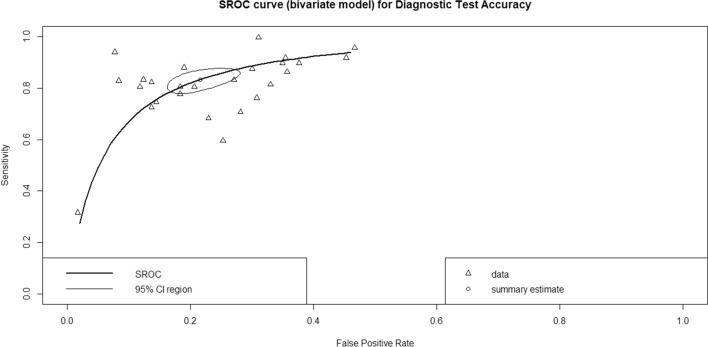
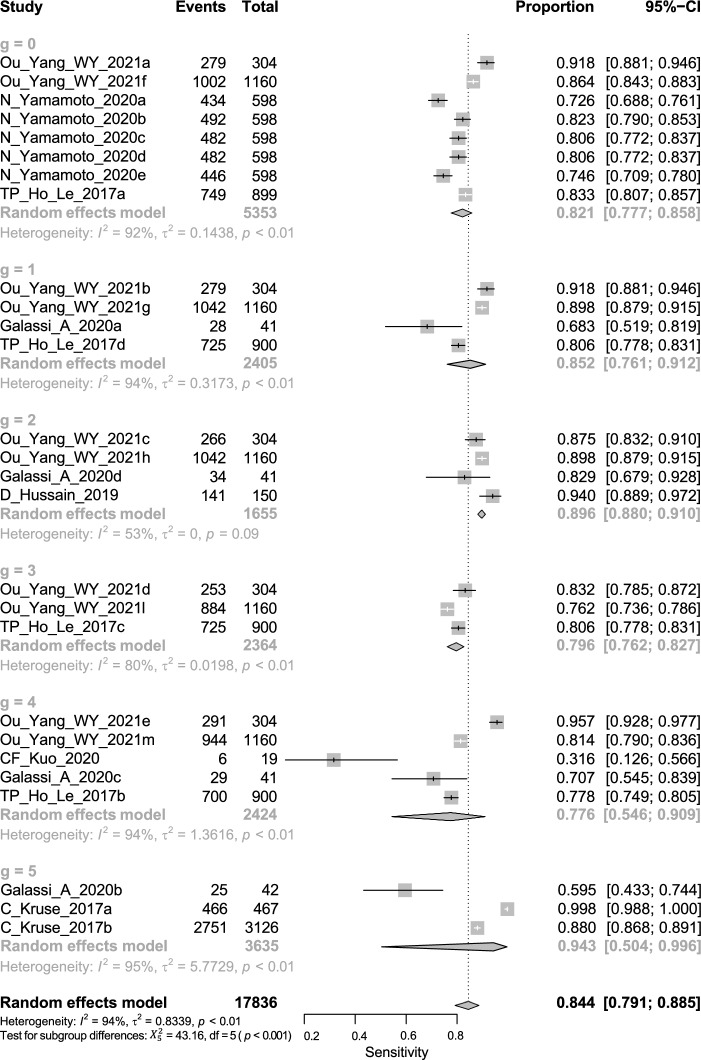
The pooled sensitivity of univariate analysis of seven studies was 0.844 (95% CI 0.791 to 0.885, I = 94% for 7 studies). The pooled specificity of univariate analysis was 0.781 (95% CI 0.732 to 0.824, I = 98% for 7 studies). The pooled diagnostic odds ratio (DOR) was 18.91 (95% CI 14.22 to 25.14, I = 93% for 7 studies). The pooled mean positive likelihood ratio (LR) and the negative likelihood ratio (LR) were 3.7 and 0.22, respectively. Also, the summary receiver operating characteristics (sROC) of the bivariate model has an AUC of 0.878.
Osteoporosis can be diagnosed by ML with acceptable accuracy, and hip fracture prediction was improved via training in an Architecture Learning Network (ALN).
骨质疏松症是骨骼系统的一个重大健康问题,与骨组织变化及其强度有关。另一方面,机器学习(ML)近年来得到了改进,并受到了关注。本研究旨在通过髋关节双能 X 射线吸收法(DXA)图像研究 ML 检测骨质疏松症的诊断测试准确性(DTA)。
系统检索 ISI Web of Science、PubMed、Scopus、Cochrane 图书馆、IEEE Xplore 数字图书馆、CINAHL、Science Direct、PROSPERO 和 EMBASE,直到 2023 年 6 月,以查找测试 ML 模型辅助预测骨质疏松症诊断的诊断精度的研究。
七项研究的单变量分析汇总敏感性为 0.844(95%CI 0.791-0.885,I=94%,7 项研究)。单变量分析汇总特异性为 0.781(95%CI 0.732-0.824,I=98%,7 项研究)。汇总诊断比值比(DOR)为 18.91(95%CI 14.22-25.14,I=93%,7 项研究)。汇总阳性似然比(LR)和阴性似然比(LR)分别为 3.7 和 0.22。此外,双变量模型的汇总受试者工作特征(sROC)曲线的 AUC 为 0.878。
ML 可以以可接受的准确度诊断骨质疏松症,并且通过在架构学习网络(ALN)中进行训练,可以提高髋部骨折预测的准确性。