Cao Xiaxin, Zhu Jiaqi, Zhang Changze, Xian Jiaru, Li Mengting, Nath Varma Swastina, Qin Ziyu, Deng Qiaoyuan, Zhang Xinyue, Yang Wei, Liu Chaozong
Hainan Provincial Fine Chemical Engineering Research Center, Hainan University, Haikou 570228, China.
Institute of Orthopaedic & Musculoskeletal Science, University College London, Royal National Orthopaedic Hospital, London HA7 4LP, UK.
J Funct Biomater. 2023 Jul 24;14(7):390. doi: 10.3390/jfb14070390.
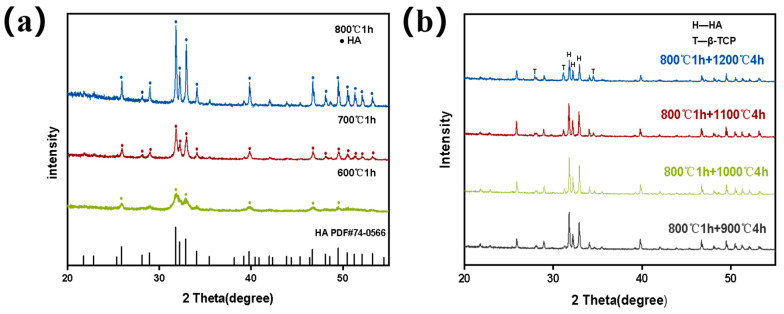
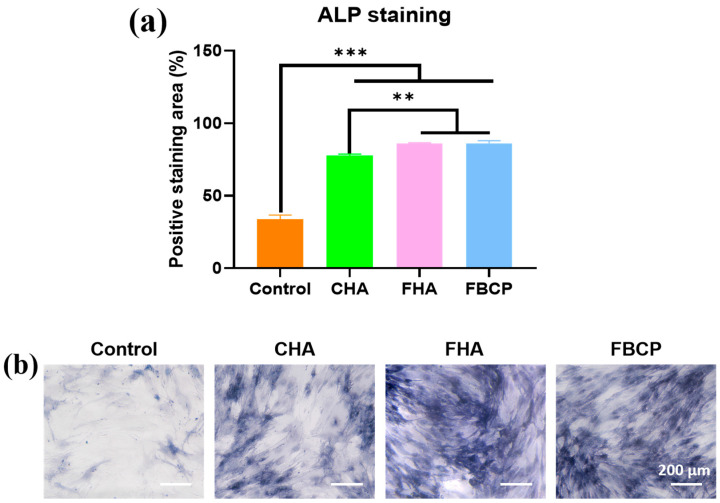
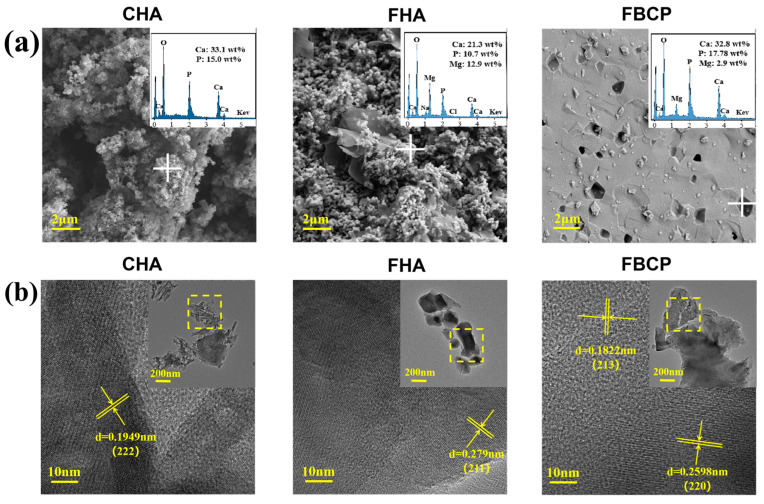
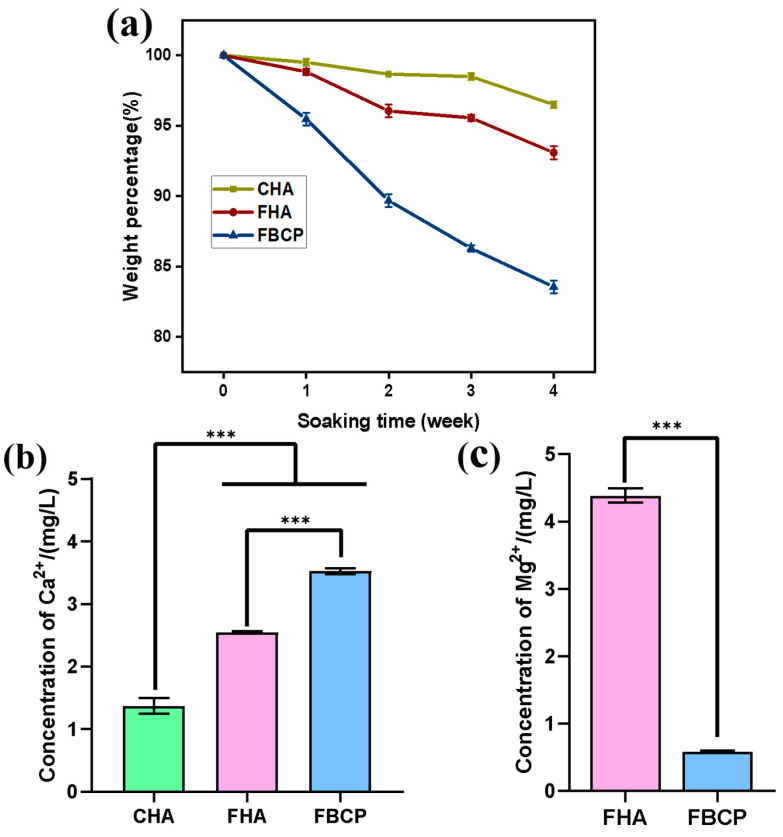
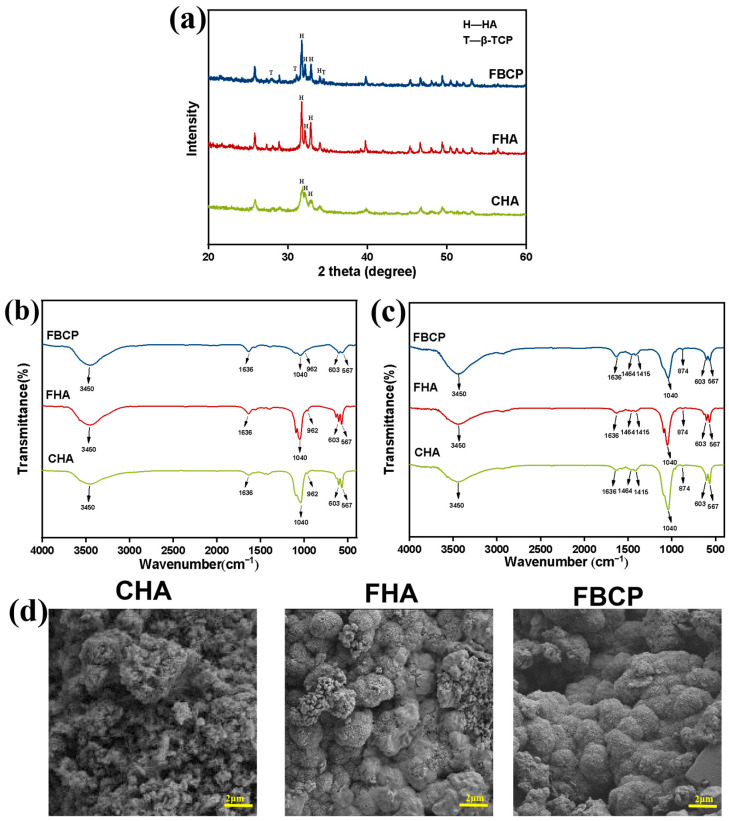
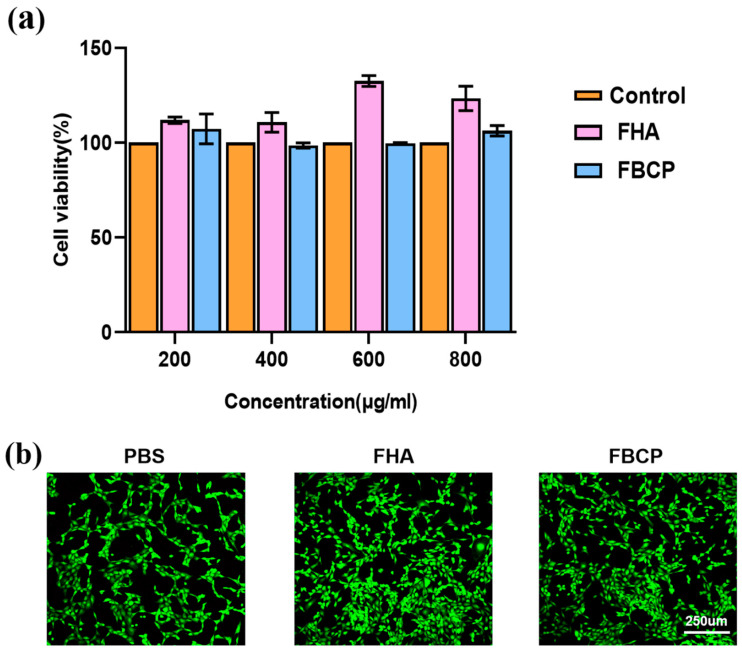
We extracted magnesium-rich calcium phosphate bioceramics from tilapia bone using a gradient thermal treatment approach and investigated their chemical and physicochemical properties. X-ray diffraction showed that tilapia fish bone-derived hydroxyapatite (FHA) was generated through the first stage of thermal processing at 600-800 °C. Using FHA as a precursor, fish bone biphasic calcium phosphate (FBCP) was produced after the second stage of thermal processing at 900-1200 °C. The beta-tricalcium phosphate content in the FBCP increased with an increasing calcination temperature. The fact that the lattice spacing of the FHA and FBCP was smaller than that of commercial hydroxyapatite (CHA) suggests that Mg-substituted calcium phosphate was produced via the gradient thermal treatment. Both the FHA and FBCP contained considerable quantities of magnesium, with the FHA having a higher concentration. In addition, the FHA and FBCP, particularly the FBCP, degraded faster than the CHA. After one day of degradation, both the FHA and FBCP released Mg, with cumulative amounts of 4.38 mg/L and 0.58 mg/L, respectively. Furthermore, the FHA and FBCP demonstrated superior bone-like apatite formation; they are non-toxic and exhibit better osteoconductive activity than the CHA. In light of our findings, bioceramics originating from tilapia bone appear to be promising in biomedical applications such as fabricating tissue engineering scaffolds.
我们采用梯度热处理方法从罗非鱼骨头中提取富镁磷酸钙生物陶瓷,并研究了它们的化学和物理化学性质。X射线衍射表明,在600 - 800°C的热处理第一阶段生成了源自罗非鱼骨头的羟基磷灰石(FHA)。以FHA为前驱体,在900 - 1200°C的热处理第二阶段后制备出了鱼骨双相磷酸钙(FBCP)。FBCP中的β-磷酸三钙含量随着煅烧温度的升高而增加。FHA和FBCP的晶格间距小于商业羟基磷灰石(CHA)这一事实表明,通过梯度热处理生成了镁取代的磷酸钙。FHA和FBCP都含有大量的镁,其中FHA的浓度更高。此外,FHA和FBCP,尤其是FBCP,比CHA降解得更快。降解一天后,FHA和FBCP都释放出镁,累积量分别为4.38 mg/L和0.58 mg/L。此外,FHA和FBCP表现出优异的类骨磷灰石形成能力;它们无毒,并且比CHA表现出更好的骨传导活性。根据我们的研究结果,源自罗非鱼骨头的生物陶瓷在诸如制造组织工程支架等生物医学应用中似乎很有前景。