Department of Health Sciences, Université du Québec en Abitibi-Témiscamingue, Rouyn-Noranda, Quebec, Canada
Chronic Pain Epidemiology Laboratory, Université du Québec en Abitibi-Témiscamingue, Rouyn-Noranda, Quebec, Canada.
BMJ Open. 2023 Jul 30;13(7):e070509. doi: 10.1136/bmjopen-2022-070509.
Chronic pain (CP) is a poorly recognised and frequently inadequately treated condition affecting one in five adults. Reflecting on sociodemographic disparities as barriers to CP care in Canada was recently established as a federal priority. The objective of this study was to assess sex and gender differences in healthcare utilisation trajectories among workers living with CP.
Retrospective cohort study.
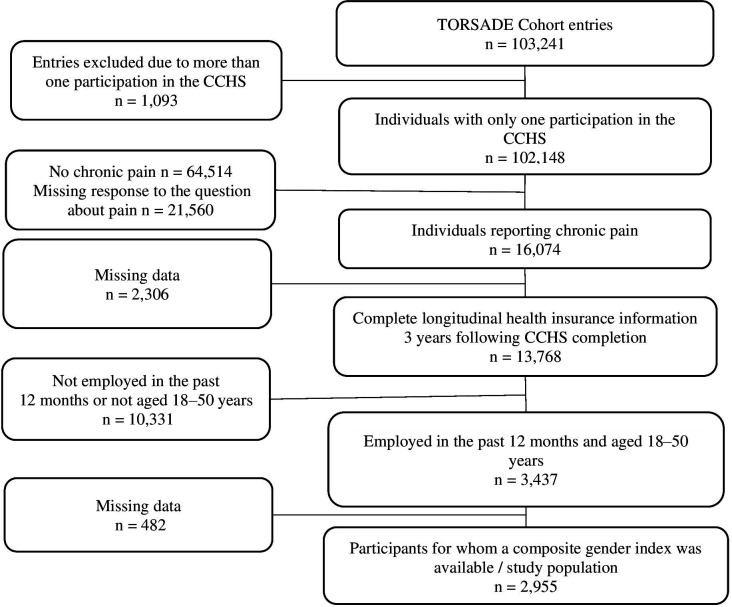
This study was conducted using the TorSaDE Cohort which links the 2007-2016 Canadian Community Health Surveys and Quebec administrative databases (longitudinal claims). Among 2955 workers living with CP, the annual number of healthcare contacts was computed during the 3 years after survey completion.
Group-based trajectory modelling was used to identify subgroups of individuals with similar patterns of healthcare utilisation over time (healthcare utilisation trajectories).
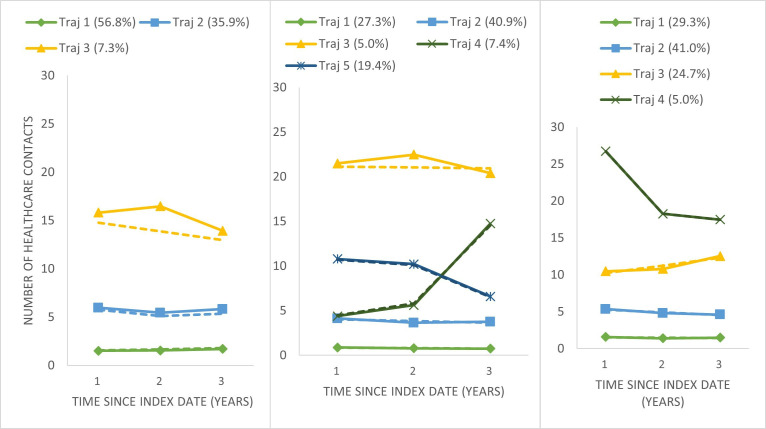
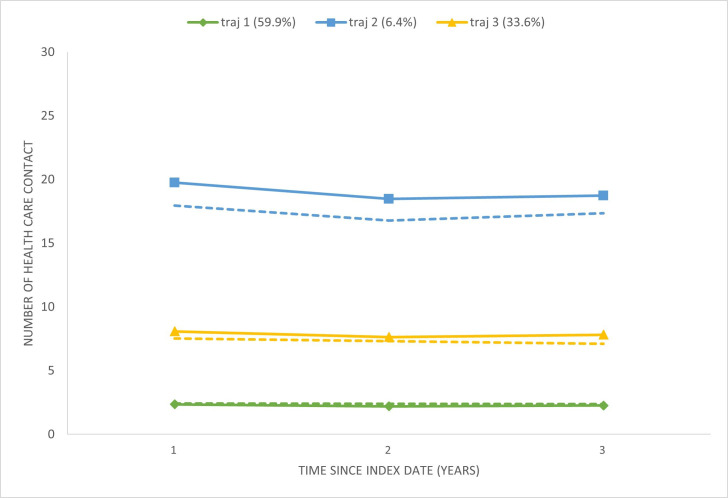
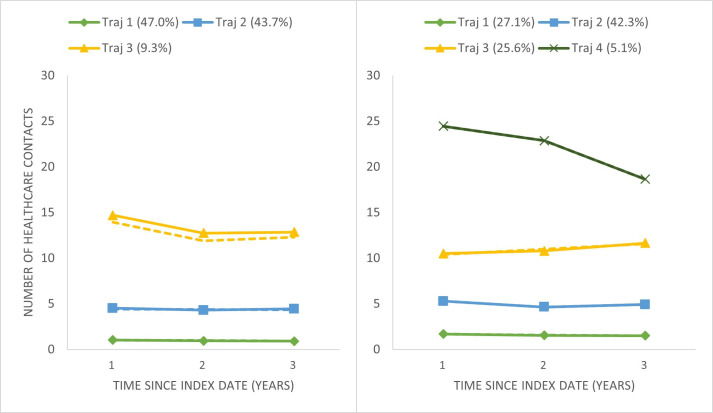
Across the study population, three distinct 3-year healthcare utilisation trajectories were found: (1) low healthcare users (59.9%), (2) moderate healthcare users (33.6%) and (3) heavy healthcare users (6.4%). Sex and gender differences were found in the number of distinct trajectories and the stability of the number of healthcare contacts over time. Multivariable analysis revealed that independent of other sociodemographic characteristics and severity of health condition, sex-but not gender-was associated with the heavy healthcare utilisation longitudinal trajectory (with females showing a greater likelihood; OR 2.6, 95% CI 1.6 to 4.1).
Our results underline the importance of assessing sex-based disparities in help-seeking behaviours, access to healthcare and resource utilisation among persons living with CP.
慢性疼痛(CP)是一种在五分之一成年人中普遍存在但认识不足且治疗不足的疾病。最近,人们认识到社会人口差异是加拿大 CP 护理障碍的一个因素,并将其作为联邦优先事项。本研究的目的是评估患有 CP 的工人在医疗保健利用轨迹方面的性别差异。
回顾性队列研究。
这项研究使用了 TorSaDE 队列,该队列将 2007-2016 年加拿大社区健康调查和魁北克行政数据库(纵向索赔)联系起来。在 2955 名患有 CP 的工人中,在完成调查后的 3 年内计算了每年的医疗保健接触次数。
使用基于群组的轨迹建模来识别具有相似医疗保健利用模式随时间变化的个体亚组(医疗保健利用轨迹)。
我们的研究结果强调了评估 CP 患者寻求帮助、获得医疗保健和资源利用方面基于性别的差异的重要性。