Casas-Yrurzum Sergio, Gimeno Jesús, Casanova-Salas Pablo, García-Pereira Inma, García Del Olmo Eva, Salvador Antonio, Guijarro Ricardo, Zaragoza Cristóbal, Fernández Marcos
Institute of Robotics and Information Technology and Communication (IRTIC), University of Valencia, Valencia, Spain.
General and Gastrointestinal Surgery, Fundación Investigación Consorcio Hospital General Universitario de Valencia (FIHGUV), Valencia, Spain.
Health Inf Sci Syst. 2023 Aug 2;11(1):34. doi: 10.1007/s13755-023-00238-7. eCollection 2023 Dec.
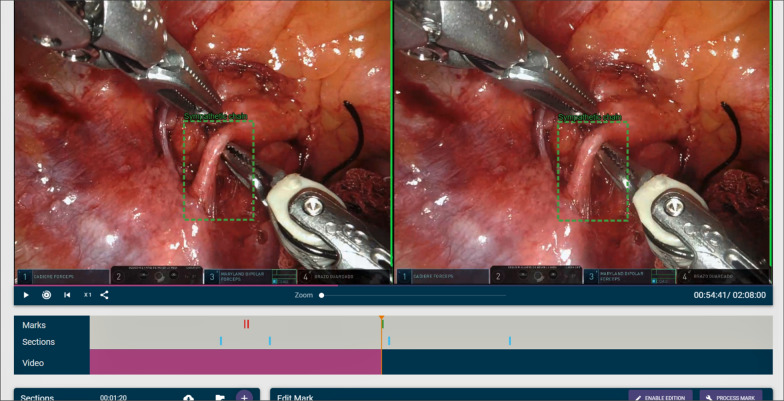
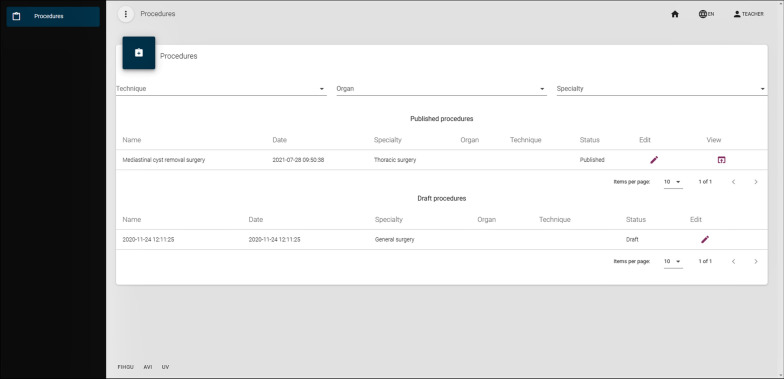
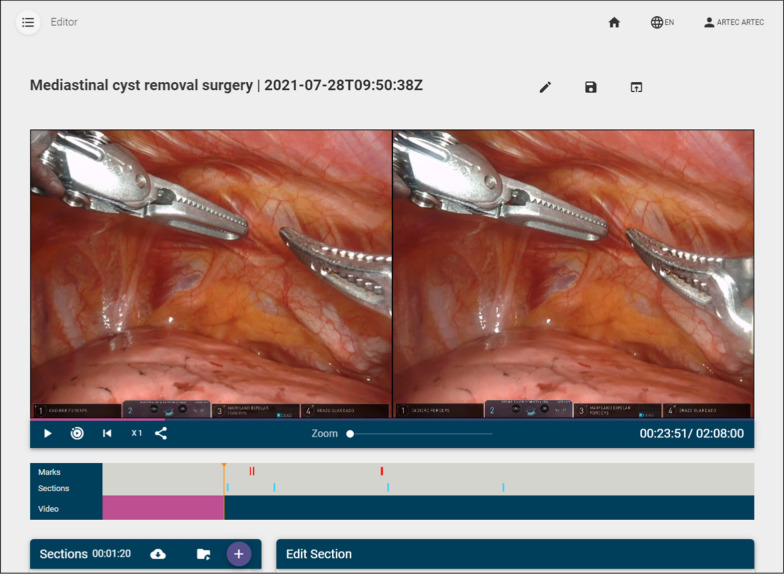
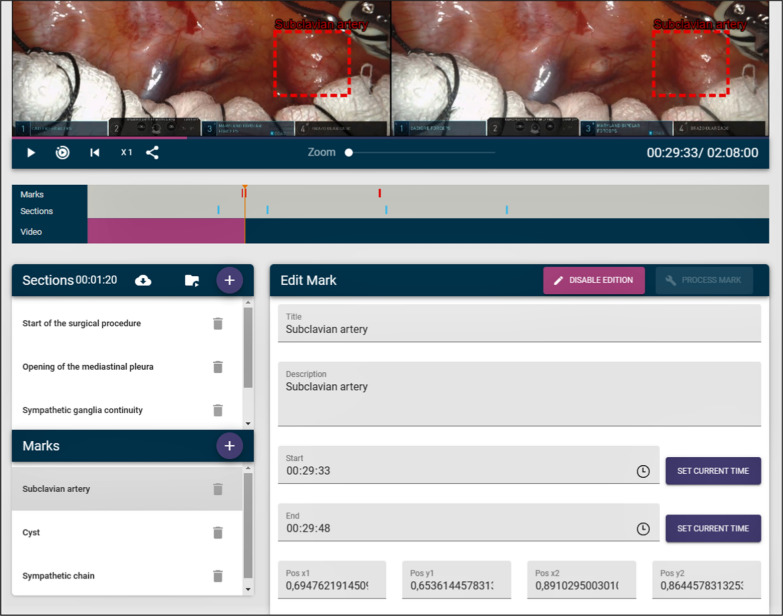
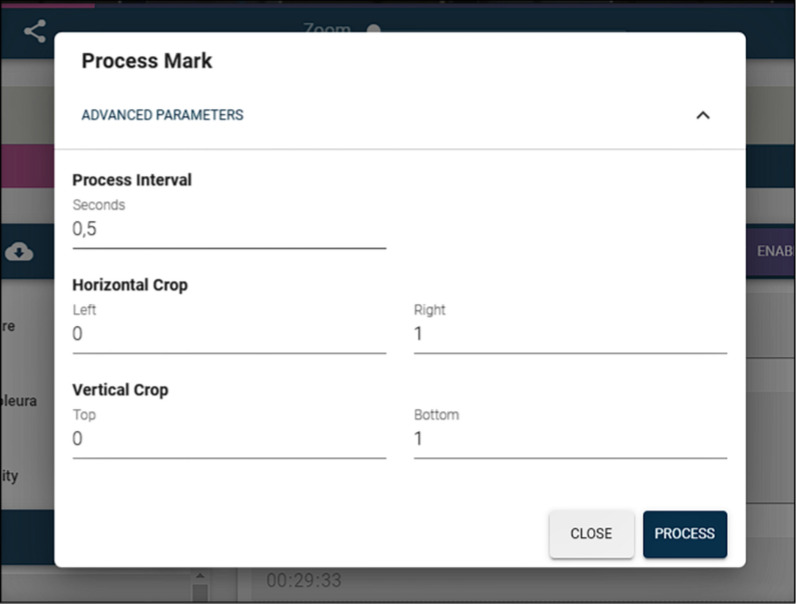
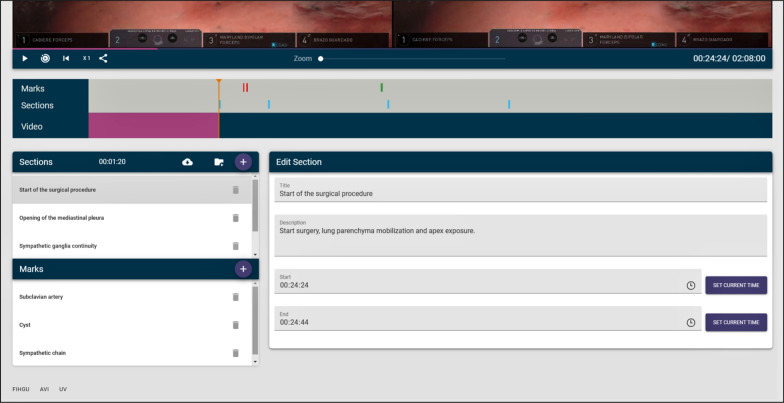
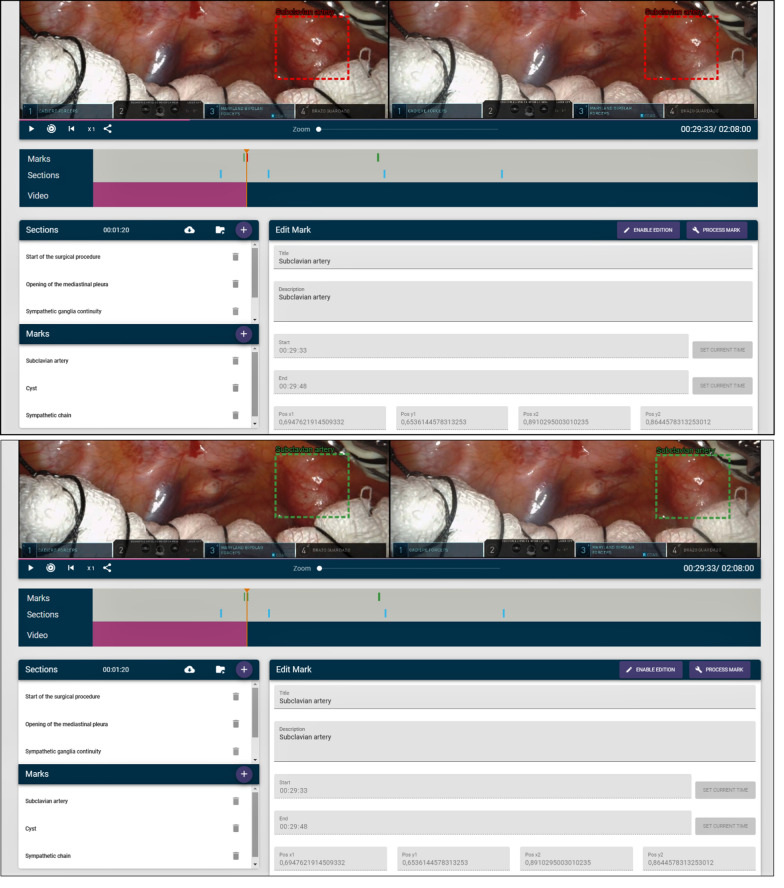
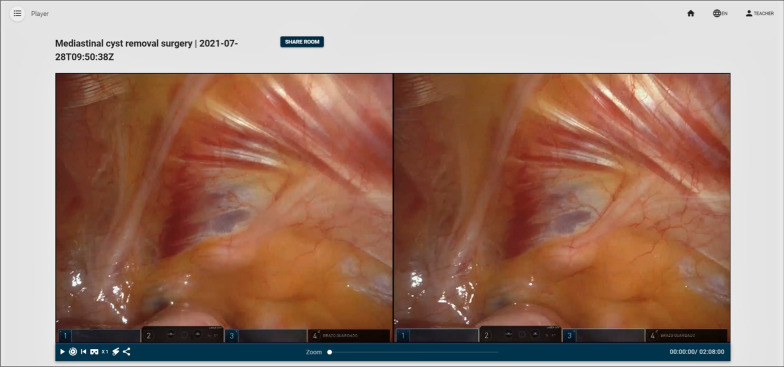
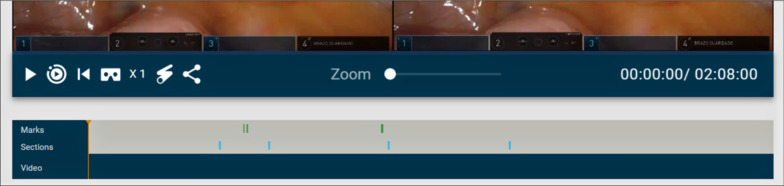
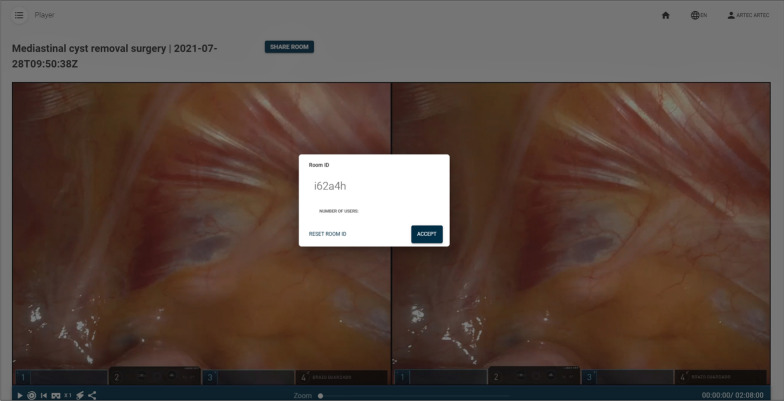
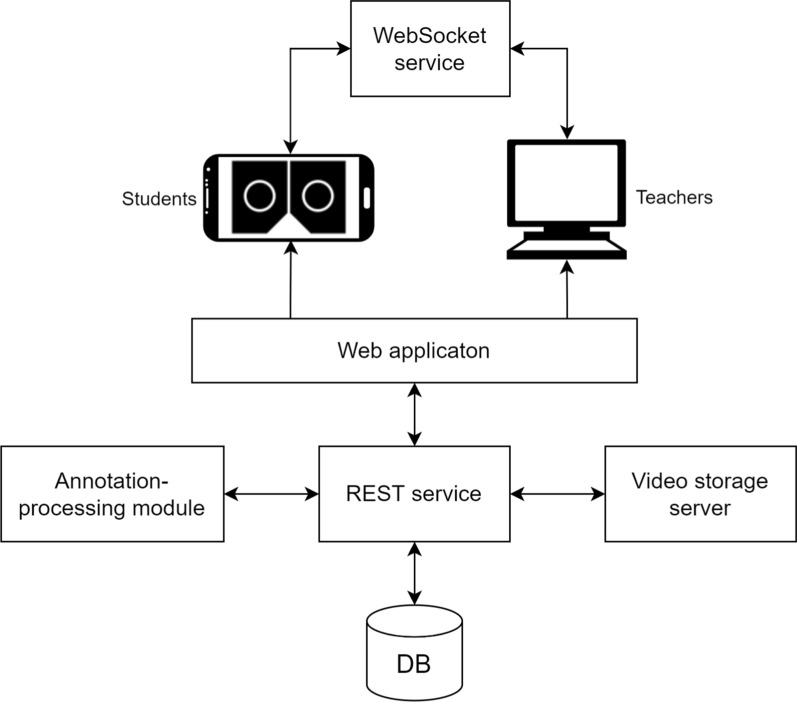
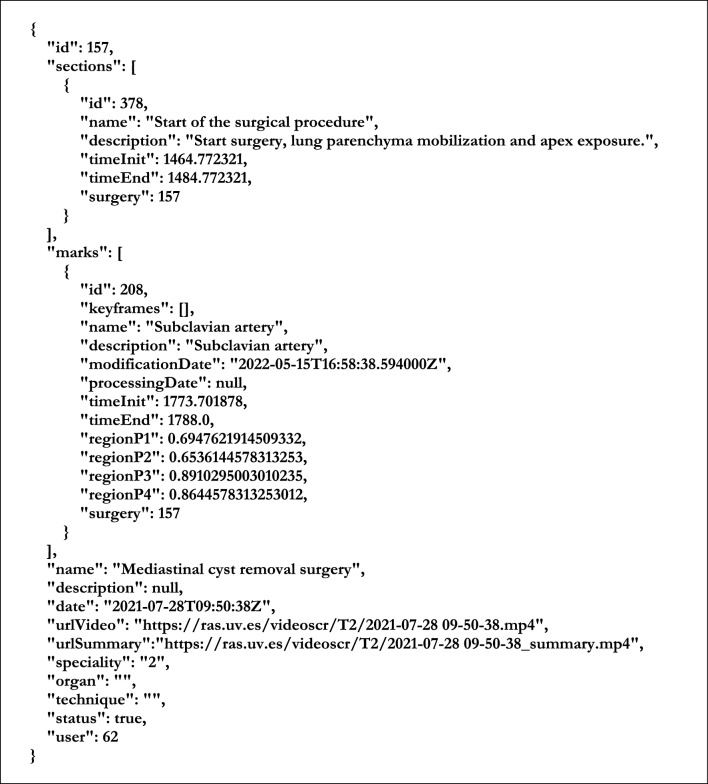
Robotic-assisted surgery (RAS) is developing an increasing role in surgical practice. Therefore, it is of the utmost importance to introduce this paradigm into surgical training programs. However, the steep learning curve of RAS remains a problem that hinders the development and widespread use of this surgical paradigm. For this reason, it is important to be able to train surgeons in the use of RAS procedures. RAS involves distinctive features that makes its learning different to other minimally invasive surgical procedures. One of these features is that the surgeons operate using a stereoscopic console. Therefore, it is necessary to perform RAS training stereoscopically. This article presents a mixed-reality (MR) tool for the stereoscopic visualization, annotation and collaborative display of RAS surgical procedures. The tool is an MR application because it can display real stereoscopic content and augment it with virtual elements (annotations) properly registered in 3D and tracked over time. This new tool allows the registration of surgical procedures, teachers (experts) and students (trainees), so that the teacher can share a set of videos with their students, annotate them with virtual information and use a shared virtual pointer with the students. The students can visualize the videos within a web environment using their personal mobile phones or a desktop stereo system. The use of the tool has been assessed by a group of 15 surgeons during a robotic-surgery master's course. The results show that surgeons consider that this tool can be very useful in RAS training.
机器人辅助手术(RAS)在外科手术实践中发挥着越来越重要的作用。因此,将这种模式引入外科培训项目至关重要。然而,RAS陡峭的学习曲线仍然是阻碍这种手术模式发展和广泛应用的一个问题。出于这个原因,能够培训外科医生使用RAS手术程序非常重要。RAS具有独特的特征,使其学习过程不同于其他微创手术程序。其中一个特征是外科医生使用立体控制台进行操作。因此,有必要进行立体的RAS培训。本文介绍了一种用于RAS手术程序的立体可视化、标注和协作显示的混合现实(MR)工具。该工具是一个MR应用程序,因为它可以显示真实的立体内容,并使用在3D中正确注册并随时间跟踪的虚拟元素(标注)对其进行增强。这个新工具允许对手术程序、教师(专家)和学生(受训人员)进行注册,以便教师可以与学生分享一组视频,用虚拟信息对其进行标注,并与学生使用共享的虚拟指针。学生可以使用他们的个人手机或桌面立体系统在网络环境中可视化这些视频。一组15名外科医生在机器人手术硕士课程中对该工具的使用进行了评估。结果表明,外科医生认为该工具在RAS培训中非常有用。